Freeze a city in amber and it dies. It really is that simple.
Every few months, the international press rediscovers Casablanca’s 20th-century architectural heritage. The narrative never changes. Heartbroken preservationists wring their hands over greedy real estate developers tearing down 1930s Art Deco facades to build glass office towers and high-density apartments. City officials nod solemnly, draft new heritage protection registries, and promise to save the "White City" from itself.
They are selling you a romantic lie.
If Casablanca actually succeeds in locking down its historic core under rigid preservation mandates, it will choke its own economy, accelerate suburban sprawl, and price out the very residents who give the city its pulse. Protecting old concrete at the expense of urban vitality is not cultural stewardship. It is economic self-sabotage disguised as good taste.
The Lie of the Museum City
Walk down Boulevard Mohammed V or Avenue Hassan II. Look up past the crumbling plaster, the tangled electrical wires, and the rusting wrought-iron balconies. You will see the geometric triumphs of Marius Boyer, Albert Laprade, and Edmond Brion. Between 1912 and the 1950s, French colonial administrators used Morocco as an urban laboratory, blending European modernism with traditional Moroccan craftsmanship—zellige tilework, carved cedar, and Moorish arches—to birth a distinct Neo-Moorish and Art Deco hybrid.
It looks magnificent on an architectural tour. It is a nightmare to own, insure, or inhabit.
The lazy consensus in urban planning assumes that heritage preservation automatically generates economic value. Look at Paris, they say. Look at Rome. Look at Barcelona.
Casablanca is not Paris. It is Morocco’s undisputed economic engine, generating roughly a third of the nation’s GDP. Millions of young Moroccans move to the Greater Casablanca region looking for jobs, housing, and upward mobility. When heritage boards slap blanket protection orders on thousands of decaying mid-rise buildings in the city center, they instantly freeze the land supply in the exact places where density is needed most.
I have watched municipal authorities across North Africa and Southern Europe fall into this exact trap. They pass sweeping preservation decrees without allocating a single dirham to help property owners pay for the restoration. Then they act shocked when those buildings rot from the inside out.
The Economics of Decay
Let’s look at the actual mechanics of owning a protected Art Deco building in downtown Casablanca.
- The Inheritance Fragmentation Trap: Many of these properties are caught in decades-old indivision—divided among dozens of heirs who cannot agree on whether to sell, repair, or abandon the asset.
- Rent Control Paralysis: Historic leases keep commercial and residential rents artificially suppressed, leaving landlords with zero cash flow to fund structural maintenance.
- The Restoration Cost Multiplier: Restoring lime-rendered facades, custom ironwork, and early reinforced concrete costs anywhere from three to five times more than standard contemporary construction.
When a city bans demolition without offering massive tax credits, transferable development rights, or direct subsidies, it creates an economic dead zone. Owners cannot legally tear the building down. They cannot afford to fix it up. So they wait for the rain, the Atlantic salt air, and gravity to do the work for them. A roof collapses. A balcony falls onto the sidewalk. The municipality declares the structure an imminent danger, and the building is demolished anyway—years later, after wasting prime urban land for a decade.
What You Actually Need to Know About Casablanca's Urban Crisis
If you are looking at Casablanca's real estate market as an investor, an architect, or a traveler trying to understand why the city feels stuck between decay and hyper-modernity, you are probably asking the wrong questions.
Should Casablanca stop developers from tearing down Art Deco buildings?
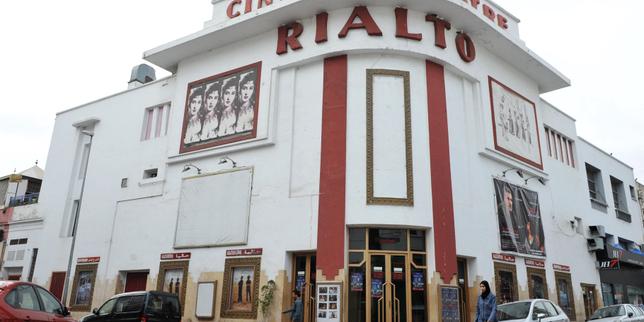
No. Blanket bans are lazy policy. What Casablanca needs is ruthless triage. Roughly 20% of its historic stock consists of genuine architectural masterpieces—buildings like the Cinema Rialto, the Wilaya headquarters, or the Villa des Arts—that define the city’s visual identity. The other 80% is unremarkable, structurally compromised infill built with poor-quality early concrete that is actively failing due to chloride-induced rebar corrosion. Trying to save everything guarantees you will save nothing well.
Does historic preservation boost tourism revenue?
Only if tourists can safely walk the streets and stay in functional neighborhoods. Preserving a facade while the street level turns into a desolate row of shuttered storefronts and crumbling parking lots does not attract high-spending travelers. Tourism follows living culture, safety, and walkability—not decaying plaster.
Are real estate developers the villains ruining the city's soul?
Developers respond to incentives. When the municipal zoning code makes it impossible to renovate an old building profitably, capital naturally flows toward clearing the site or abandoning the core entirely to build sterile, car-dependent suburbs like Bouskoura and Dar Bouazza. Blaming developers for following basic math is like blaming water for running downhill.
The Gentrification Trap Nobody Admits
Let’s address the elephant in the courtyard. Even when heritage preservation "works," who does it actually work for?
Organizations like Casamémoire have done heroic work cataloging the city’s architectural inventory and raising public awareness. Their documentation is unmatched. Yet the global playbook for "successful" urban heritage revival almost always ends in the exact same outcome: aggressive gentrification.
Imagine a scenario where foreign investment funds sweep into central Casablanca, buy up distressed Art Deco blocks at fire-sale prices, restore the facades to gleaming perfection, and convert the interiors into boutique hotels, luxury lofts, and upscale coworking spaces.
The architecture survives. The soul of the neighborhood vanishes.
The cobblers, the neighborhood cafés, the low-margin tailors, and the working-class families who have lived in those apartments for three generations get evicted overnight. Downtown Casablanca becomes a sterile theme park for European weekenders and wealthy expats, while the actual working population gets pushed two hours out to the urban periphery, clogging the highways and straining the tramway system.
Jane Jacobs warned urban planners about this sixty years ago in The Death and Life of Great American Cities. A city’s vitality comes from messy, mixed-use density and buildings of varying ages and price points. When you turn an entire historic district into a high-end heritage showcase, you sterilize the exact street-level chaos that made Casablanca magnetic in the first place.
Colonial Nostalgia vs. African Reality
There is also an uncomfortable cultural truth that international commentators routinely gloss over.
Much of Casablanca’s celebrated Art Deco architecture was built by the French Protectorate to project imperial permanence and segregate the European city from the Moroccan medina. Henri Prost, the chief urban planner under Resident-General Hubert Lyautey, literally designed the wide boulevards and radiating avenues to separate populations while creating a showcase of French colonial modernity.
Over the past seventy years, Moroccans took that colonial shell and made it their own. They adapted the ground-floor arcades into bustling commercial arteries. They transformed European apartment layouts to fit Moroccan family life.
Yet today, international heritage advocates often treat the 1930s colonial blueprint as sacred scripture, viewing any modern Moroccan alteration—enclosed balconies, rooftop additions, bold commercial signage—as a "defacement" of the original design.
Think about the arrogance of that premise. It suggests that Casablanca’s highest architectural achievement occurred under foreign occupation, and that contemporary Moroccans should act as unpaid museum guards for buildings designed for their colonizers.
A living African metropolis has every right to evolve, build upward, and express its own 21st-century identity. Look at the Casablanca Finance City tower or the Grand Théâtre de Casablanca designed by Christian de Portzamparc. Modern Casablanca does not need to apologize for wanting density, glass, steel, and climate-controlled efficiency.
The Brutal Trade-Offs of My Approach
I am not arguing for a bulldozer free-for-all. If you let speculative developers flatten every historic block without oversight, you end up with soulless, wind-swept concrete canyons that look indistinguishable from any second-tier boomtown in the Gulf or East Asia. You lose your competitive edge. You erase the visual memory that makes Casablanca recognizable in a single frame.
Selective demolition and aggressive densification carry real risks:
- Irreversible Loss: Once a hand-carved zellige frieze or a Marius Boyer staircase is crushed into gravel, no amount of money can bring it back.
- Infrastructure Overload: Replacing five-story walk-ups with twenty-story towers puts crushing pressure on Casablanca’s aging water, sewage, and electrical grids.
- Heat Island Acceleration: Replacing thick, thermally massive stone and plaster walls with cheap, poorly insulated curtain-wall glass turns streets into ovens during North African summers.
Acknowledging those downsides is precisely why lazy preservation laws fail. You cannot manage a complex living organism with a binary "save everything" or "tear everything down" switch.
How to Actually Save Casablanca Without Killing It
If municipal leaders want to protect Casablanca’s architectural DNA without strangling its housing supply and economy, they need to abandon performative heritage lists and deploy hard-nosed financial engineering.
1. Institute Transferable Development Rights (TDR)
Stop punishing owners for holding historic property. If a building in the city center is designated as a top-tier architectural landmark, calculate the unused vertical air rights above it. Allow the owner to sell those air rights to developers building in designated high-density zones like Anfa or Casa Finance City. The preservationist gets a funded restoration; the developer gets extra floors elsewhere; the city pays nothing out of pocket.
2. Legalize Facadism—Selectively
Architectural purists hate facadism—the practice of preserving a historic building’s exterior shell while gutting the interior to build a modern, high-density structure behind or above it. Let them complain. For the middle tier of Casablanca’s Art Deco stock—buildings with great street-level character but rotten plumbing, terrible layouts, and failing slabs—facadism is the only financially viable compromise. Keep the streetscape intact, and build twelve stories of modern apartments set back behind the historic roofline.
3. Enforce "Use It or Lose It" Vacancy Taxes
Speculators sit on crumbling downtown buildings for decades, waiting for heritage restrictions to lift or land values to spike. Hit vacant, unmaintained historic properties with a punitive annual tax that doubles every twenty-four months. Force owners to either renovate, sell to someone who will, or surrender the asset to a municipal land bank.
4. Triage the Inventory Ruthlessly
Cut the protected heritage list in half. Concentrate every available dirham of public grant money, technical expertise, and tax relief on the top 15% to 20% of irreplaceable architectural landmarks. Release the remaining mediocre, structurally unsound buildings from heritage purgatory so developers can replace them with high-density, transit-oriented housing.
Cities are not paintings. You do not hang them on a wall, dim the lights, and tell everyone to keep their voices down. Cities are machines for human ambition.
Casablanca’s Art Deco buildings were radical, audacious, and unapologetically modern when they went up a century ago. The architects who built them did not spend their days weeping over the structures they tore down to make room for their vision. They built for the future in front of them.
If Casablanca wants to honor its architectural legacy, it should stop trying to preserve the past and start building with the exact same nerve.