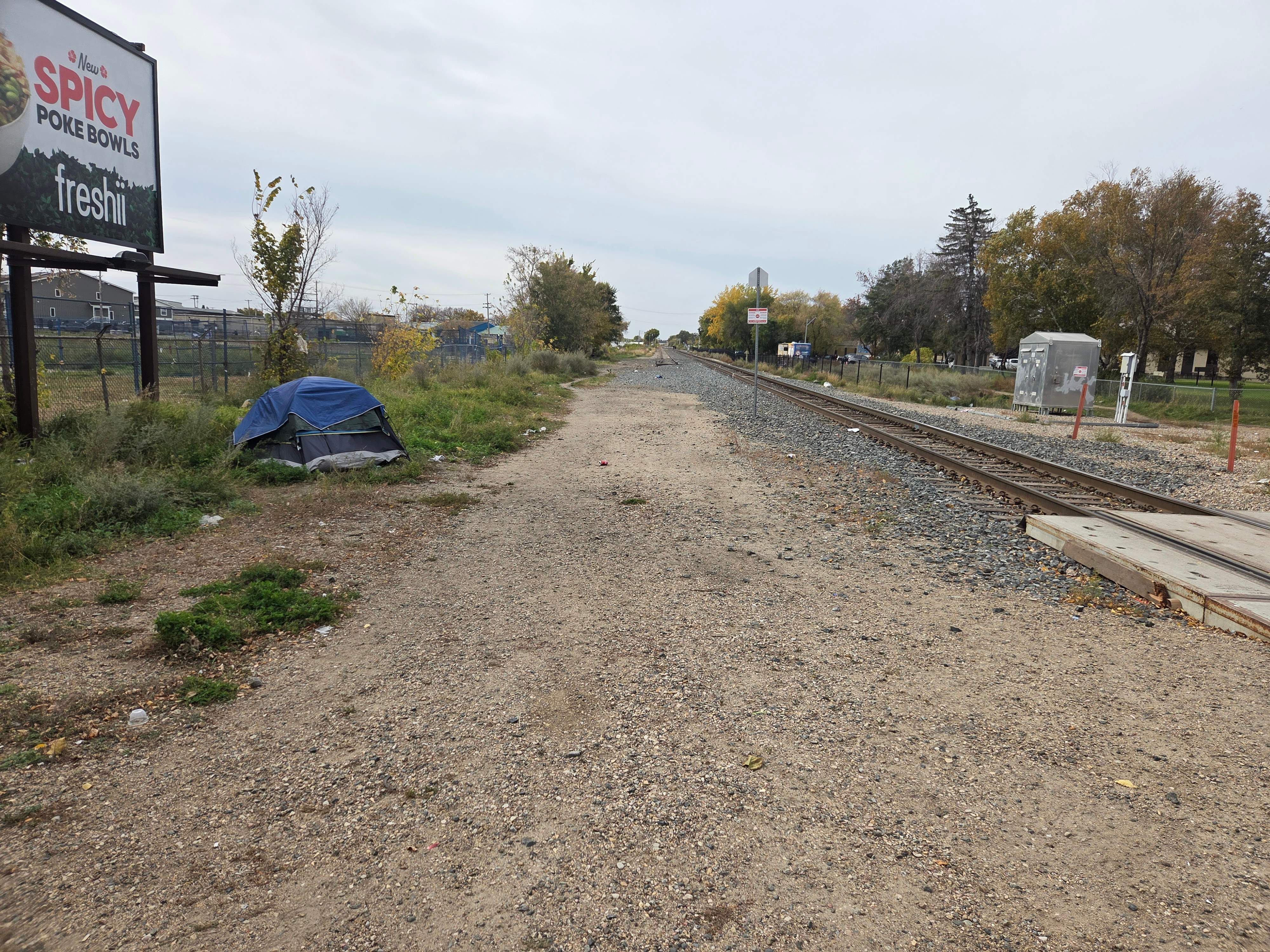
Every autumn in Saskatchewan, the same ritual unfolds before the mercury drops below minus 20 degrees Celsius. Advocates plead for shelter beds and compassion. City councils debate encampment removals and community safety. Governments announce emergency warming spaces or incremental grants that arrive weeks or months late. Yet the underlying housing deficit keeps widening across Saskatoon, Regina, and the province's smaller cities.
Emergency cots keep people from freezing overnight. They do not end homelessness.
In Saskatoon, the city's Point-in-Time Count recorded 1,931 individuals experiencing homelessness in 2025, an increase of 432 people over 2024 after years of sharp climbs. Unsheltered residents and people in encampments made up a large share of that tally, alongside hundreds in transitional homes, hidden homelessness, or institutional systems. In Regina, homelessness nearly quadrupled between 2015 and 2024, rising by 255% from 232 people to 824, with unsheltered individuals accounting for 63% of those counted in 2024.
When advocates warn of winter dangers, they are not speaking in abstractions. Exposure deaths have haunted Saskatchewan's prairie winters for decades. When temperatures plunge, a missing bus fare, a full shelter, or a sudden eviction turns an ordinary evening into a life-threatening emergency.
How Seasonal Crisis Politics Replaces Real Housing
Watch a municipal committee meeting in October or November, and you will see a predictable cycle. Encampments are cleared from parks or riverbanks, displacing residents who often view those tents as imperfect communities of mutual protection. When outreach workers or officials arrive with offers of shelter or housing supports, uptake on the day of removal can be tiny—sometimes just one or two people out of dozens or more.
Officials often treat low immediate uptake as proof of stubbornness or service resistance. Field workers know better. People living in encampments frequently fear shelters due to theft, strict curfews, sobriety rules, crowding, or trauma from past institutional settings. Moving from a familiar camp into an unfamiliar facility without guaranteed long-term housing feels like trading one set of risks for another.
Meanwhile, autumn announcements frequently focus on warming centres and temporary shelter expansions. In late November 2026, funding allocations in Regina and Saskatoon included money to expand warming spaces—such as boosting capacity at the Nēwo Yōtina Friendship Centre's Seven Fires Warming Centre from 25 to 85 people and expanding Awasiw warming centre from 35 to 100 people—alongside federal-provincial agreement plans aimed at doubling Regina's emergency shelter capacity from more than 100 spaces to over 200 by next winter.
Those additions matter when frost bites hard. Ward 3 Coun. David Froh noted during Regina council discussions that keeping people from freezing to death is vital, while stressing that warming centres do not solve homelessness. Housing does.
"Warming centres don't solve homelessness. Housing solves homelessness." — Ward 3 Coun. David Froh, Regina City Council
When governments treat winter shelter expansions as the centerpiece of policy rather than a stopgap beside permanent housing production, the crisis resets every spring. Staff burn out. Non-profits scramble on short-term grants. Residents cycle between streets, hospitals, jails, and temporary rooms without ever getting a key to a permanent door.
The Structural Roots Beneath the Street Counts
Counting people on a single night captures the symptoms, not the machinery driving them onto the sidewalk. Several interlocking pressures explain why Saskatchewan's numbers keep climbing despite recurring pledges.
- Housing supply and affordability: When entry-level rents rise faster than income assistance or minimum-wage earnings, low-income households lose their margin for error. A single rent hike, utility arrears notice, or job loss can push a tenant out of private market housing with almost no affordable buffer.
- Indigenous overrepresentation: Data from Regina's 2024 state of homelessness report showed 75% of people counted identified as Indigenous, compared with roughly 10% of the city's general population. That gap reflects colonial history, residential school fallout, child welfare involvement, housing shortages on and off reserve, and barriers to culturally grounded care.
- Health and addiction gaps: Many unhoused residents live with overlapping mental health conditions, substance use challenges, and physical disabilities or mobility limits. In Regina's 2024 report, 54% of respondents reported mental health conditions and 71% faced substance use challenges, while healthcare engagement remained low—only 37% accessed doctors' services and 17% received mental health care.
- Fragmented jurisdictions: Homelessness sits at the intersection of municipal bylaws, provincial health and social assistance programs, and federal funding streams. Finger-pointing over who pays for permanent supportive housing versus municipal policing or park maintenance slows down action while people sleep outside.
Consider a hypothetical scenario to see how quickly a household slips through the cracks. Imagine a single parent or a person living with a chronic illness in a Saskatchewan city whose income assistance falls short of market rent after a landlord raises the lease. Without a rent supplement or rapid rehousing support, a couple of missed months trigger an eviction order, forcing a move into a crowded relative's living room or a motel—and once that temporary arrangement ends, into unsheltered homelessness.
Why Quick Fixes Spark Fierce Backlash
Public frustration runs high on every side of this debate. Residents and business owners near encampments or downtown corridors report safety concerns, open substance use, discarded needles, and property damage. Councillors face relentless pressure to restore order and keep public spaces usable.
At the same time, advocates and residents push back when cities debate multi-million-dollar capital projects—such as arenas or major civic upgrades—while hundreds of people lack basic shelter. Even when critics overstate or oversimplify budget trade-offs, the core moral contrast resonates with voters: a province rich in agricultural, potash, and energy wealth struggles to house its most vulnerable citizens before sub-zero weather hits.
There are also real operational trade-offs that advocates and policymakers must confront honestly. Supportive housing—permanent homes paired with on-site mental health, addiction, and life-skills support—has a strong track record of keeping high-acuity tenants housed longer than shelter-only models. Yet building and staffing supportive housing takes capital, time, and neighborhood acceptance, and it cannot succeed overnight when construction costs and staffing shortages bite.
Similarly, low-barrier shelters reach people who avoid strict abstinence rules, but without adequate security, health care, and case management, facilities can become chaotic or unsafe for both staff and residents. Pretending there are cost-free or frictionless choices only delays hard budget decisions.
| Approach | Primary Strength | Core Limitation | Role in Winter Strategy |
|---|---|---|---|
| Warming centres | Immediate warmth during extreme cold | Overnight only; no permanent stability | Life-safety backstop during cold snaps |
| Emergency shelters | Short-term bed and basic services | High turnover; barriers for some residents | Bridge while housing placements are arranged |
| Supportive housing | Long-term stability with wrap-around care | Higher upfront capital and staffing needs | Core solution for chronic and complex needs |
| Encampment sweeps | Clears public spaces quickly | Often scatters people without housing | Should never substitute for housing offers |
What Real Accountability Looks Like Between Winters
Stopping the annual autumn panic requires shifting public attention from short-term crises to measurable year-round targets. Advocacy groups like the Regina Anti-Poverty Ministry and front-line service providers have pointed out that normalizing emergency warming spaces risks treating survival as success.
Progress can be judged plainly by what changes on the ground rather than by press releases. If municipal, provincial, and federal partners want different results next November, several concrete shifts matter most:
- Publish transparent housing flow data: Track not just how many people are counted on one night, but how many move from shelters or streets into permanent housing each month, and how many fall back into homelessness.
- Align capital and operating funding: Pair federal and provincial capital grants with multi-year operating dollars for supportive housing and Indigenous-led service providers so new buildings do not sit half-empty or understaffed.
- Bridge health and income gaps early: Connect people leaving hospitals, treatment centres, or custody directly to housing navigators and realistic income supports before they hit the street.
- Plan winter capacity in spring, not autumn: Lock in staffing, leases, and outreach protocols months before cold weather arrives so front-line teams are building stability rather than scrambling at the first frost.
Winter in Saskatchewan never negotiates, and neither should the standard of accountability applied to the people who govern when temperatures fall.