Japan is currently dismantling the psychological and legal scaffolding that has defined its global identity since 1945. This isn't a sudden whim. It is a calculated, multi-decade pivot that has reached its boiling point in the person of Sanae Takaichi. While international observers often focus on the broad shifts in Tokyo’s defense spending, the real story lies in the ideological engine driving the Liberal Democratic Party (LDP) toward a total rewrite of Article 9. This is the "peace clause" that technically forbids Japan from maintaining a military with "war potential."
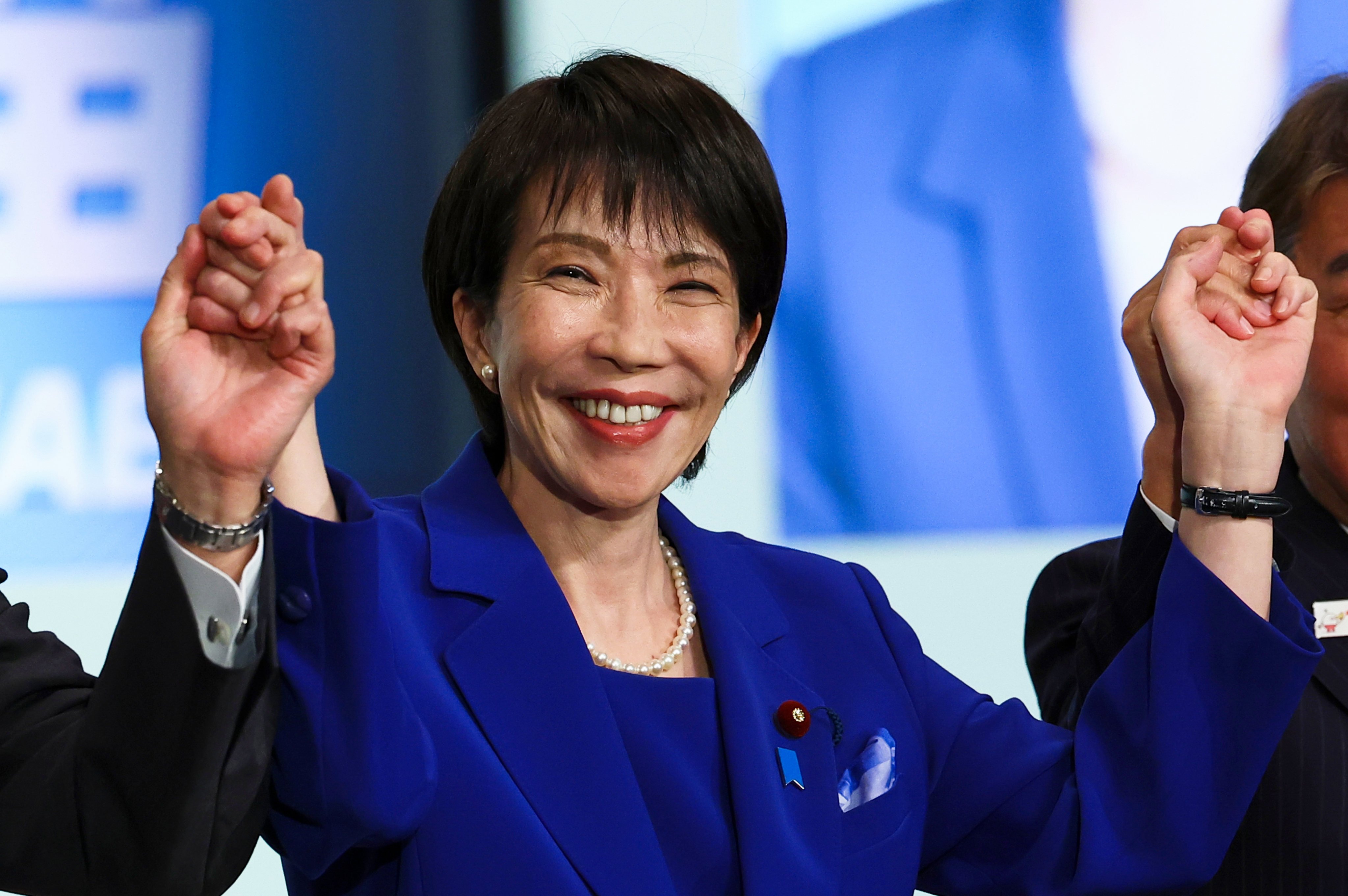
Takaichi represents the sharpest edge of this movement. She isn't just suggesting minor tweaks to maritime law; she is advocating for a fundamental reclamation of Japanese sovereignty that views the postwar constitution as an expired document forced upon a defeated nation. To understand where Japan is headed, one must look past the polite diplomacy of the Prime Minister’s office and into the hawkish machinery Takaichi commands.
The Article 9 Paradox
For nearly eighty years, Japan has lived a lie. The constitution says the country cannot have an army, yet the Japan Self-Defense Forces (JSDF) rank among the most technologically advanced and well-funded militaries on the planet. This cognitive dissonance was manageable during the Cold War when the United States provided a nuclear umbrella and the regional threats were largely static.
That era is over. The rise of China’s blue-water navy and North Korea’s relentless missile testing has made the ambiguity of the "Self-Defense" label a strategic liability. Takaichi argues that the current legal framework forces Japanese commanders to wait for the first blow before they can legally respond. In a world of hypersonic missiles, waiting for the first blow is a suicide pact.
The push for reform seeks to normalize Japan. This means moving away from the "Exclusively Defense-Oriented Policy" (Senshu Boei) and toward a doctrine that allows for pre-emptive strikes and collective self-defense without the need for Olympic-level mental gymnastics by government lawyers. Takaichi’s vision is simple: Japan must be a "normal" country with the legal right to wage war if its interests are threatened.
The Shadow of Shinzo Abe
Takaichi did not emerge from a vacuum. She is the political heiress to Shinzo Abe, the former Prime Minister whose assassination in 2022 left a power vacuum in the LDP’s right wing. Abe spent his career trying to "break out of the postwar regime." He successfully reinterpreted the constitution to allow for collective self-defense, but he never managed to actually change the text.
Takaichi is taking that baton and running faster. While Abe was a pragmatist who knew when to dial back his nationalism to satisfy Washington or soothe Beijing, Takaichi is seen as an ideologue. She regularly visits the Yasukuni Shrine, a flashpoint for regional tension because it honors Japan’s war dead, including convicted war criminals. To her base, these visits are an essential act of national respect. To Japan’s neighbors, they are a signal that the "New Japan" looks an awful lot like the old one.
This isn't just about optics. The structural shift involves moving the JSDF from a secondary support role for the U.S. military to a primary regional power. We are seeing the largest buildup of Japanese military power since the 1940s, with plans to double defense spending to 2% of GDP. This involves purchasing hundreds of Tomahawk cruise missiles and converting "helicopter destroyers" into full-fledged aircraft carriers capable of launching F-35B stealth jets.
Economic Security as a Weapon
One of Takaichi’s most effective maneuvers has been the rebranding of national security to include the economy. As the former Minister for Economic Security, she helped craft a framework that treats supply chains, semiconductor manufacturing, and patent protection as front-line defense issues.
This "Economic Security Promotion Act" is the blueprint for how Japan intends to decouple from Chinese influence without collapsing its own trade-dependent economy. Takaichi understands that a military is useless if the nation’s power grid and communication networks are dependent on a rival’s hardware. By framing constitutional reform as a prerequisite for total national security—economic and physical—she has brought the business lobby (Keidanren) into a fold they previously avoided.
The strategy involves:
- Subsidizing domestic chip production to ensure the JSDF has a secure supply of advanced electronics.
- Clamping down on technology transfers to prevent Japanese intellectual property from fueling the People's Liberation Army.
- Diversifying energy sources to reduce vulnerability to maritime blockades in the South China Sea.
The Resistance Within
Despite the momentum, Takaichi faces a significant hurdle: the Japanese public. For decades, pacifism has been more than a legal requirement; it has been a core component of the Japanese identity. Polls consistently show that while the public is increasingly wary of China, they remain deeply divided on changing the actual text of Article 9.
The Komeito party, the LDP’s junior coalition partner, acts as a persistent brake on these ambitions. Rooted in Soka Gakkai international Buddhism, Komeito’s platform is built on pacifism. Without their support, the LDP struggles to reach the two-thirds majority in both houses of the Diet required to trigger a constitutional referendum.
Furthermore, there is the "Tax Trap." To fund the massive increase in defense spending, the government must either cut social services—a risky move in the world's fastest-aging society—or raise taxes. Takaichi has been vocal about using government bonds rather than immediate tax hikes, a position that puts her at odds with the more fiscally conservative elements of the Ministry of Finance.
The American Equation
Washington’s role in this shift is complicated. For years, the U.S. encouraged Japan to take a larger share of the "security burden" in the Pacific. However, the U.S. also values the stability that the current arrangement provides. A Japan that is fully "normalized" and capable of independent military action is a Japan that might not always align its interests with the Pentagon.
Takaichi is a staunch pro-U.S. voice, but she is also a nationalist. Her priority is Japan’s survival, not American hegemony. If she succeeds in reforming the constitution, the U.S.-Japan Alliance will shift from a "shield and spear" relationship—where Japan is the shield and the U.S. is the spear—to a partnership of two spears. This requires a level of coordination and trust that hasn't been tested in the modern era.
Breaking the Taboo
The most significant change Takaichi has brought to the table is the destruction of the "peace taboo." For decades, even discussing the acquisition of "counterstrike capabilities" was enough to end a political career. Today, it is a mainstream policy debate.
She has successfully framed the debate not as "War vs. Peace," but as "Reality vs. Nostalgia." By pointing to the invasion of Ukraine and the rising tensions over Taiwan, she argues that the "peace" Japan has enjoyed was a product of a specific geopolitical moment that has now passed. You cannot defend a 21st-century nation with a 1947 legal code.
This rhetoric resonates with a younger generation of Japanese voters who do not carry the same "war guilt" as their grandparents. To them, the restriction on the military feels like an anachronism—a set of training wheels that the country should have taken off decades ago.
The Taiwan Pivot
Nowhere is Takaichi’s influence more visible than in Japan’s hardening stance on Taiwan. The phrase "A Taiwan emergency is a Japanese emergency" has become a mantra for the LDP hawks. Japan’s westernmost inhabited island, Yonaguni, is a mere 110 kilometers from Taiwan.
If Beijing were to seize Taiwan, Japan’s vital shipping lanes—the arteries that bring in its oil and food—would be under Chinese control. Takaichi has been one of the most vocal proponents of high-level engagement with Taipei, defying Beijing’s "One China" warnings. This is a high-stakes gamble. By tying Japan’s security so closely to Taiwan, she is essentially committing the JSDF to a conflict that the constitution, as currently written, would likely forbid them from entering.
The Path Forward
The drive for constitutional reform is no longer a fringe obsession of the far-right. It is the central pillar of Japan’s survival strategy in an increasingly hostile neighborhood. Sanae Takaichi is the face of this transition, representing a version of Japan that is done apologizing for its existence and ready to assert its power.
Changing the constitution requires a national referendum. This is the ultimate test. Even if Takaichi and her allies win the legislative battle, they must still convince a skeptical, aging population that the risks of rearmament are lower than the risks of remaining a "peace state" in an era of looming conflict.
The JSDF is already practicing for this future. Joint exercises with the U.S., Australia, and India have moved beyond simple drills and into complex battle simulations. The hardware is ready. The money is allocated. Only the law remains in the way.
The era of the "Yoshida Doctrine," which prioritized economic growth while outsourcing security to the U.S., is dead. Japan is now entering an era of "Proactive Contribution to Peace," a euphemism for a nation that is arming itself to the teeth to ensure that its version of peace remains the dominant one in the Pacific.
The rewrite of Article 9 will not be the beginning of Japanese militarism; it will be the formal recognition of a reality that has been building for years. Japan is already a major military power. Takaichi simply wants the world—and the Japanese law—to stop pretending otherwise.