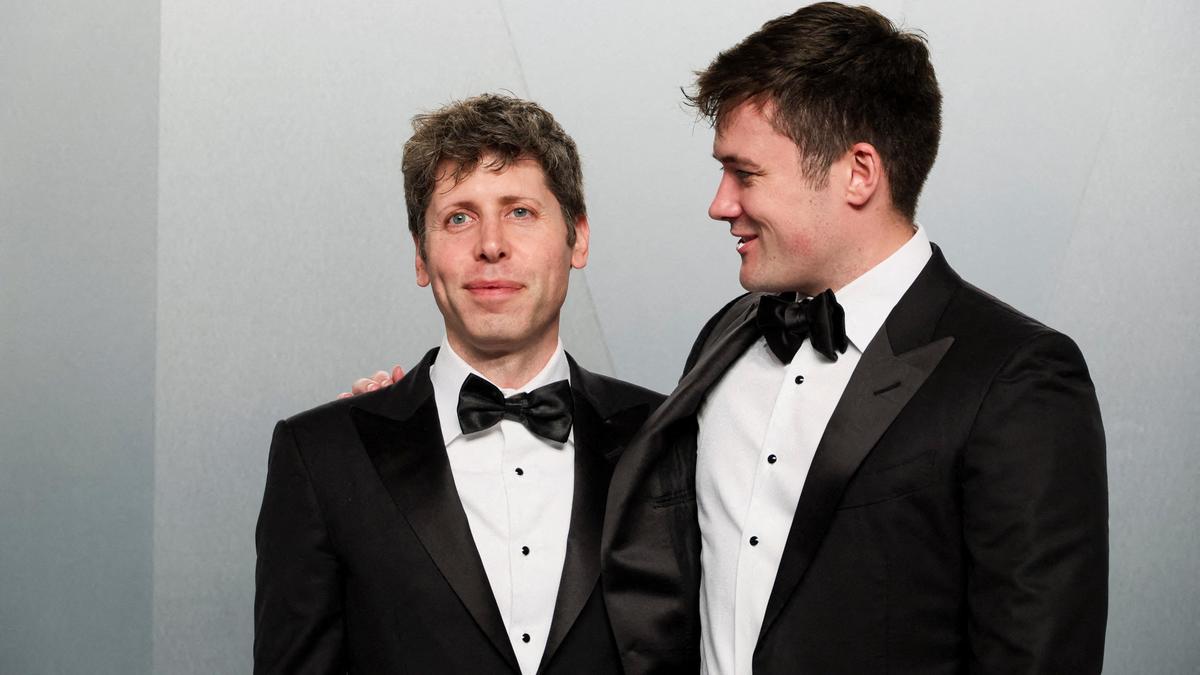
The intrusion at the residence of OpenAI CEO Sam Altman was not a random act of suburban trespassing. It was a collision between the escalating hysteria surrounding artificial intelligence and a mental health infrastructure that is currently failing. When Kanwaljit Singh was arrested for attempting to breach the perimeter of Altman’s home, the immediate narrative focused on the safety of tech elites. However, the reality of the situation involves a much more disturbing trend where the figureheads of powerful industries become lightning rods for individuals experiencing profound psychological breaks.
Singh’s attorney has publicly stated that his client was in the throes of a severe mental health crisis during the incident. This detail complicates the standard "security breach" narrative. It shifts the focus from simple criminal intent to a systemic failure where high-stakes technology, public obsession, and untreated illness merge into a volatile cocktail. Altman, as the face of the AI revolution, represents a future that many find terrifying or incomprehensible. For someone losing their grip on reality, such a figure doesn't just run a company; they become a central protagonist in a delusional internal world.
The Public Persona as a Target
Silicon Valley has spent decades moving away from the "quiet billionaire" model. In the past, hardware magnates and software engineers stayed behind gated communities and avoided the limelight. That era is over. Today, CEOs like Sam Altman are treated as digital prophets. They participate in world tours, testify before Congress, and dominate social media feeds. This level of visibility carries a hidden tax.
When a person suffers from a psychotic break, their delusions often latch onto the most prominent cultural symbols available. In the 1980s, that might have been a film star. In the 2020s, it is the man holding the keys to the most disruptive technology in human history. The attack on Altman’s property is a physical manifestation of this psychological pressure. Singh wasn't just looking for a house; he was looking for the source of his perceived distress.
The Geography of Vulnerability
The Bay Area has become a paradox of extreme wealth and visible human suffering. San Francisco and its surrounding enclaves, like the one where Altman resides, are the epicenters of the global tech economy. Yet, these same streets are where the crisis of mental health is most apparent.
Security experts argue that the proximity between the world’s most powerful innovators and a population lacking basic psychiatric care creates an unsustainable friction. Singh’s presence at Altman’s door is a symptom of a city that has prioritized the "move fast and break things" ethos in software while letting its social safety nets rot.
Defensive Architecture and the New Paranoia
In the wake of this incident, the executive protection industry is seeing a massive surge in demand. This isn't just about hiring more bodyguards. It is about a complete overhaul of how tech leaders exist in the physical world.
We are seeing the rise of defensive architecture. This includes:
- Acoustic monitoring systems that can identify the sound of a shattering window or a specific voice from hundreds of yards away.
- Digital twin security, where a residence is mapped in a virtual environment to run simulations of potential breaches.
- Predictive threat assessment, using data scraping to find individuals who are fixating on a specific executive before they ever leave their house.
But there is a catch. The more these leaders retreat behind walls and algorithms, the more they fuel the "shadowy elite" conspiracy theories that drive people like Singh to their doorsteps. It is a feedback loop. Security measures intended to protect them end up alienating them further from the public, which in turn breeds more resentment and fascination from the fringe elements of society.
The Lawyer’s Gambit
The defense’s strategy of citing a "mental health crisis" is legally sound but socially revealing. It highlights a recurring theme in modern criminal law where the traditional punishment model fails to address the root cause. If Singh is simply incarcerated, the underlying issue remains. Once released, the fixation on a figure like Altman often persists, sometimes even intensifying due to the perceived "persecution" of the legal system.
The legal community is now debating whether high-profile targets should have the right to request mandatory psychiatric intervention for stalkers or intruders rather than just restraining orders. A piece of paper does very little to stop someone who believes they are on a mission from God or fighting a malevolent AI overlord.
The Weight of the AI Narrative
We cannot ignore the role that the technology itself plays in these incidents. OpenAI’s products are designed to be indistinguishable from human intelligence. For a stable person, this is a marvel of engineering. For someone with a tenuous grasp on reality, it is a nightmare.
The media’s portrayal of AI often leans into the apocalyptic. We hear about "extinction risks" and "the end of work." When these narratives are consumed by someone in a fragile mental state, the CEO of the company creating that technology is no longer just a businessman. He becomes a villain in a survival story.
The industry is currently grappling with its responsibility in this area. Does a company have a duty to tone down its marketing to avoid inciting the vulnerable? Most tech insiders would say no. They argue that they cannot be held responsible for how their public image is filtered through the lens of mental illness. But when the result is an intruder at the front door, the hands-off approach feels increasingly inadequate.
The Cost of Stardom
Altman’s security budget is likely in the tens of millions. This is the "new normal" for anyone operating at that level. We are seeing a stratification of safety where the only people who are truly secure are those who can afford a private paramilitary force.
This creates a vacuum for everyone else. If the focus of law enforcement and private security is solely on protecting the "high-value targets," the broader issue of community mental health remains ignored. Singh’s attorney is pointing to a crisis that exists outside the gates of Altman’s home—a crisis that most of the tech world would prefer to solve with an app rather than actual social investment.
The Mirage of Total Security
The incident at the Altman residence proves that no amount of money can buy a perfect shield. Human behavior is too erratic. You can install the best cameras and hire the most elite guards, but you cannot control the internal narrative of a stranger three states away who decides you are the cause of their problems.
The tech industry likes to solve problems with logic and code. Mental health is neither logical nor codable. It is messy, expensive, and requires a level of human empathy that doesn't always scale. Until the leaders of the digital age realize that their personal safety is intrinsically linked to the mental health of the society they are disrupting, these "crises" will continue to escalate.
The guards will get better weapons. The walls will get higher. The cameras will get smarter. But as long as the underlying psychological friction of the modern world goes unaddressed, there will always be another person like Singh who finds a way through the gate. The real threat to the innovators of Silicon Valley isn't a competitor or a regulator; it is the fractured reality of the people they have left behind in their rush toward the future.
The industry needs to stop looking at these events as security failures and start seeing them as social warnings. Every breach is a signal that the gap between the digital dream and the human reality is widening to a dangerous degree. If you build a world that people feel alienated from, do not be surprised when they try to break into yours.