Every few weeks, a patch of open ocean thousands of miles away makes headlines because two ships traded paint or blame. But what's happening at Sabina Shoal isn't just another routine maritime squabble. It's a calculated test of wills that is actively rewriting the security playbook for the entire Indo-Pacific region.
If you've been trying to figure out why this specific atoll matters so much, you're not alone. Let's break down what's actually going on beneath the surface of these diplomatic crisis reports.
The Geography of a Flashpoint
Sabina Shoal—known as Escoda Shoal in the Philippines and Xianbin Jiao in China—sits roughly 75 nautical miles off the coast of Palawan. That places it squarely inside the Philippines' 200-nautical-mile Exclusive Economic Zone (EEZ).
By international law under the United Nations Convention on the Law of the Sea (UNCLOS), Manila has sovereign rights to explore and exploit the resources in this zone. Beijing, however, claims historic rights over nearly the entire South China Sea via its sweeping nine-dash line map. That claim was famously invalidated by an international tribunal in 2016, but Beijing simply ignores the ruling.
When Philippine coast guard vessels and Chinese maritime security ships lock horns here, it's about physical control. Sabina Shoal has become the latest staging ground because it represents a choke point for supply lines to other contested features like Second Thomas Shoal. If you control Sabina, you control the supply routes.
Why the Collision Tactics are Escalating
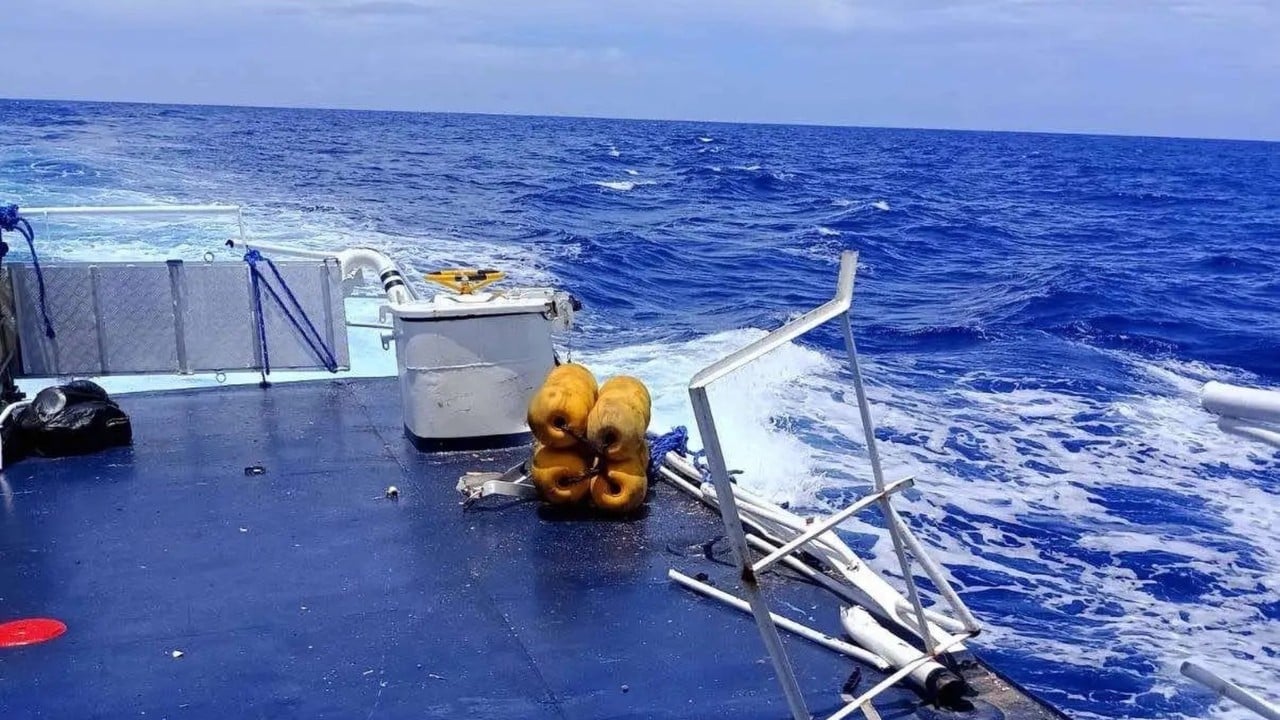
The recent vessel collisions and aggressive blocking maneuvers represent a tactical shift. We aren't just seeing long-range water cannons anymore. We're seeing deliberate close-range intercepts and hull-to-hull contact.
Why are things getting riskier?
- The Anchor Strategy: The Philippine Coast Guard parked its flagship vessel, the BRP Teresa Magbanua, at Sabina Shoal for months to prevent a perceived reclamation effort by China.
- Enforced Isolation: Beijing responded by deploying a heavy cordon of coast guard and maritime militia ships to starve out the stationed crew and block resupply runs.
- The Gray Zone Trap: Both sides use non-military or coast guard vessels to press claims, deliberately keeping actions just below the threshold of an outright military war while maximizing intimidation.
This constant cat-and-mouse game leaves very little room for error. When a massive China Coast Guard cutter maneuvers within meters of a much smaller Philippine utility boat, a slight miscalculation turns into a headline-grabbing collision.
The Bigger Strategic Picture
You might wonder why Manila doesn't just back down to avoid losing millions of dollars in equipment or risking lives. The answer is simple. Giving up Sabina Shoal would mean repeating what happened at Scarborough Shoal in 2012, when China effectively took permanent control after a tense standoff. Philippine policymakers know that yielding an inch here means losing a mile of maritime territory tomorrow.
At the same time, regional allies like the United States are watching closely. Washington frequently reminds Beijing that its Mutual Defense Treaty with Manila extends to armed attacks on Philippine public vessels and aircraft anywhere in the South China Sea. Every collision near Sabina Shoal brings the US and China one step closer to a direct, unintended military entanglement.
The standoff at Sabina Shoal proves that maritime borders aren't just lines drawn on a paper map. They're tested every single day by steel hulls, stubborn diplomacy, and high-stakes games of tactical chicken. Keep your eyes on this region, because how these standoffs resolve will dictate who holds power across Asian shipping lanes for decades.



