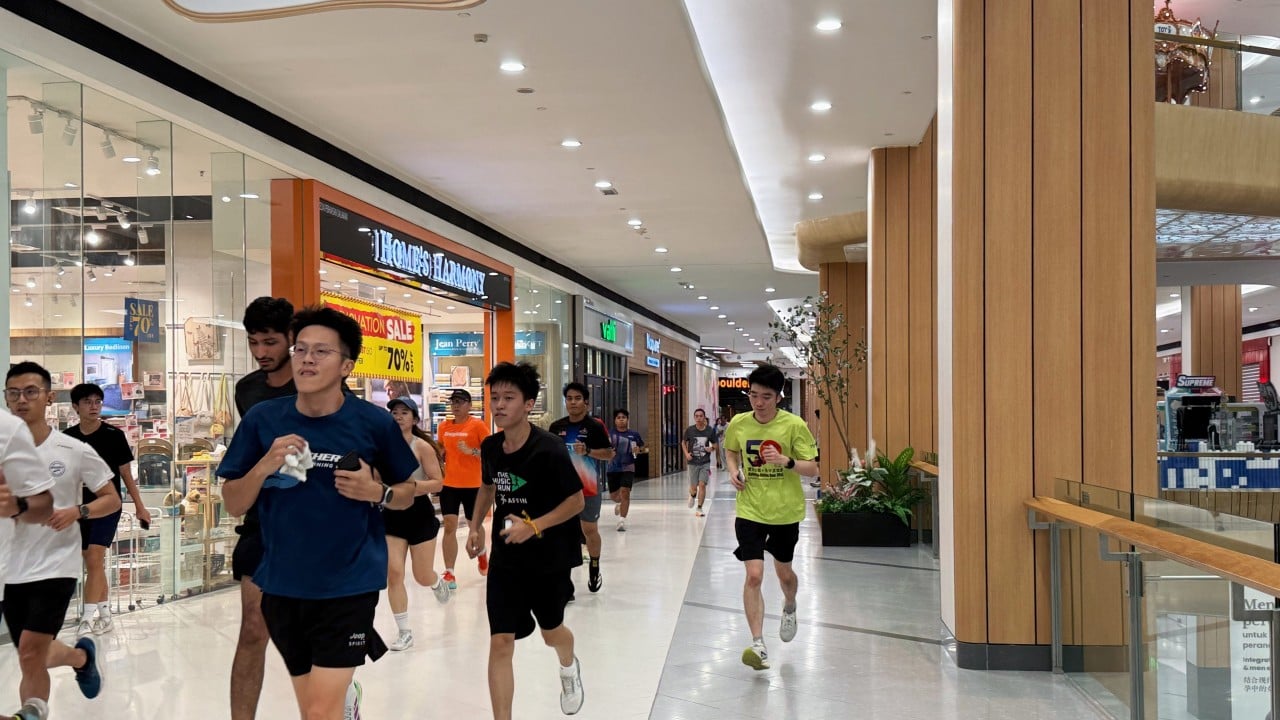
Every time transboundary haze settles over Peninsular Malaysia and the Klang Valley, running clubs pat themselves on the back. They post photos on Instagram. They tag local megamalls. They announce triumphant pivots from asphalt to air-conditioned corridors.
Applause breaks out. Headlines celebrate adaptability.
It is theater. Cheap, air-conditioned theater.
When equatorial smoke drifts across the Straits of Malacca from peatland fires, the lazy consensus is simple: outdoor air is toxic, indoor air is safe, and briskly power-walking or jogging past bubble tea kiosks and Zara storefronts is a smart compromise. Move the workout indoors. Problem solved.
Except the problem is barely scratched. Sometimes it gets worse.
I have spent years watching endurance athletes, community run leaders, and corporate wellness organizers make this exact pivot across Southeast Asia. I have seen runners cough up phlegm after "safe" indoor sessions. I have seen clubs blow budgets renting studio space or organizing mass mall meetups while ignoring what actually happens inside a commercial building during a haze episode. worse, I have seen people treat a mall lap as a free pass to maintain high-intensity training volumes when their bodies need rest or real air quality verification.
The standard advice treats air quality like a light switch. Outside equals bad. Inside equals good.
Air does not care about your storefront lease.
Defining What You Are Actually Breathing
To understand why mall laps are often a half-measure at best, you need to stop talking about "the haze" in vague terms and look at the physics of particulate matter.
When people say haze, they usually mean fine particulate matter with a diameter of 2.5 micrometers or less, known as PM2.5, alongside larger inhalable particles like PM10, plus gases such as carbon monoxide and ozone depending on combustion conditions and sunlight. For context, a human hair is roughly 50 to 70 micrometers across. PM2.5 is small enough to bypass upper airway defenses, travel deep into the alveoli of the lungs, and cross into the bloodstream.
Air quality indices—whether Malaysia's Air Pollutant Index (API) or international benchmarks like the US Environmental Protection Agency's Air Quality Index (AQI)—translate pollutant concentrations into categories like Good, Moderate, Unhealthy, or Very Unhealthy. Agencies such as the World Health Organization (WHO) and the US EPA have spent decades documenting how elevated PM2.5 triggers acute airway inflammation, reduces lung function, strains cardiovascular recovery, and worsens asthma.
During exercise, ventilation rate spikes dramatically. At rest, a human breathes roughly 6 to 8 liters of air per minute. During a brisk jog or tempo run, that volume can climb past 50 to 100 liters per minute, and mouth breathing increases as nasal filtration is bypassed. More air moved per minute multiplied by pollutant concentration equals a much higher inhaled dose in a fraction of the time.
That math is the foundation of the indoor pivot. If outdoor concentration is high, lowering concentration indoors reduces total dose.
Sounds airtight. Until you look at how a typical shopping mall operates.
The Myth of the Sealed Bubble
Shopping malls are not cleanrooms. They are cavernous, high-traffic commercial buildings with massive doors opening continuously to street air, loading bays operating in the background, food courts generating cooking aerosols and combustion byproducts, and HVAC systems designed primarily for thermal comfort and energy efficiency rather than medical-grade particulate filtration.
Many commercial HVAC systems use standard filtration ratings such as MERV 7 or MERV 8, or regional equivalents, which capture a modest fraction of fine sub-micron smoke particles unless upgraded to higher-efficiency filters like MERV 13 or HEPA-grade filtration in targeted zones. Even when a building has decent filtration, doors swing open for hundreds of shoppers an hour. Negative or poorly balanced pressure pulls outdoor air straight in. Indoor sources add their own load.
A mall does not magically scrub PM2.5 to zero just because the air feels cool and dry. Cooler, less humid air feels more pleasant than sticky tropical heat, which tricks runners into perceiving the environment as healthier. Comfort is not cleanliness.
Imagine a scenario where a running club gathers fifty members at 7:00 PM on a weekday at a massive suburban mall. Outdoor API readings are climbing into unhealthy territory. The group jogs two kilometers along polished marble walkways, weaving around strollers, delivery workers, and security guards. Nobody measures indoor PM2.5. Nobody checks if the mall's air handling units run at full capacity after retail hours or throttle back to save electricity. Everyone leaves feeling virtuous because they stayed off the main road.
Maybe indoor PM2.5 is half the outdoor reading. Maybe it is eighty percent of the outdoor reading. Without measurement, you are guessing with your lungs.
The Questions Runners Ask—And Why They Miss the Point
When haze hits, the same predictable questions flood search bars and group chats. Most of them start from a flawed assumption.
"Is it safe to run outdoors if the haze isn't that bad yet?"
"Not that bad yet" is how runners rationalize bad decisions. Air quality during peat and forest fire events fluctuates rapidly with wind shifts, humidity, and time of day. A reading that looks manageable in the morning can spike by late afternoon, and exposure is cumulative across days and weeks.
Asking whether a border-line reading is "safe" treats physiology like a binary pass/fail test. Even moderate elevations in PM2.5 measurably stress respiratory and cardiovascular systems, especially during sustained exertion. If you are healthy, you might not feel immediate symptoms on a short, easy jog. That lack of immediate pain is not proof of harmlessness. It is just delayed feedback.
"Are mall runs better than skipping workouts completely?"
Better than sprinting through thick smoke on a highway shoulder? Usually, yes. Better than resting or doing low-exposure indoor conditioning? Not automatically.
Skipping or scaling back a single workout during a heavy haze week will not ruin your fitness. Aerobic adaptations built over months do not evaporate in five days of lower-intensity movement or rest. What can derail a training block is stubbornly chasing paces or mileage targets in suboptimal air, ending up with lingering airway irritation, poor sleep, or a respiratory infection that knocks you out for three weeks.
The real error is viewing rest or non-running cross-training as failure. Consistency over a year matters far more than heroics during a bad air week.
"Do masks make outdoor running safe during haze?"
Masks are widely misunderstood. A loose cloth mask or basic surgical mask offers limited protection against fine PM2.5 aerosols, especially when gaps around the nose and cheeks let unfiltered air leak in—and leaks become major pathways when you inhale hard during exercise.
Tight-fitting respirators rated for particulates, such as N95 or KN95 styles, filter a high percentage of fine particles when properly sealed. The catch during running is breathability and thermal load. In hot, humid Malaysian weather, wearing a tight respirator while jogging increases breathing resistance, traps heat and moisture, and can quickly feel suffocating. Most runners either pull the mask down the moment exertion rises or abandon the run. A mask worn halfway or pulled down at minute ten is security theater.
Where This Contrarian Take Falls Short
Being contrarian for its own sake is lazy. There are real trade-offs to pushing back against the mall-lap routine.
First, for many recreational runners, social connection and routine are the glue that keeps them exercising at all. If a community group cancels everything and tells people to stay home alone, half the members might park themselves on the couch for a month. A low-intensity indoor walk or easy jog with teammates can preserve habit and morale when morale is fragile.
Second, not everyone has access to a quiet home gym, a private studio with verified HEPA air purifiers, or a safe residential street with low traffic. In dense urban areas, a public concourse may still beat standing next to idling diesel exhaust on a congested arterial road.
Third, if you do walk or jog indoors, keeping intensity genuinely low—conversational pace, minimal heavy panting—reduces minute ventilation compared to a hard outdoor interval session. Lower breathing volume means less air processed, even if the indoor air is imperfect.
The problem is not choosing shelter. The problem is pretending the mall is a sanctuary and running hard inside it without checking facts.
What Smart Athletes and Coaches Actually Do Instead
If you want to protect your lungs and keep your training honest when haze rolls in, drop the performative mall laps and run a tighter playbook.
- Measure indoor air instead of assuming it. If you train indoors regularly during haze seasons, invest in a reputable portable PM2.5 air quality monitor. Check actual numbers in the specific space you use rather than trusting vibes or air conditioning.
- Prioritize targeted clean air over cavernous spaces. A smaller room—such as a home gym, apartment living area, or studio—equipped with a properly sized true HEPA air purifier running continuously with doors and windows closed can drop indoor PM2.5 dramatically compared to a sprawling public atrium with open entrances.
- Slash intensity when air quality degrades. Treat haze days like altitude or heat stress days. Drop intervals, tempo runs, and race-pace efforts. Keep any movement strictly easy and aerobic, or swap running for low-ventilation strength, mobility, or core work.
- Watch the multi-day trend, not just one hourly number. A single dip in readings does not mean the air is clean for long efforts. Look at rolling averages and forecasts across the week, and pay attention to subtle warning signs like scratchy throat, dry cough, chest tightness, or elevated resting heart rate.
- Stop turning workouts into social media content during health advisories. Posting smiling group selfies from a shopping center while locals deal with smoky skies sends a tone-deaf message and normalizes half-baked risk management. Train quietly, adapt intelligently, and save the celebrations for clean air.
Shopping malls were built to move foot traffic toward cash registers, not to protect endurance athletes from fine smoke particles. Check the numbers, lower the effort, and stop confusing cool air with clean air.