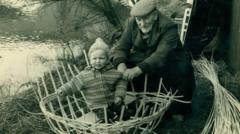
The water used to taste like iron and cold stone. My grandfather taught me how to read its surface before I knew how to read a book. He would point calloused finger at the riffles where the current broke over a sunken log, whispering of brown trout holding steady against the pressure, waiting for a careless fly. That was twelve generations ago, if you count the headstones behind the old Methodist church. Twelve generations of men and women who watched the same gray current rise with the spring snowmelt and shrink to a silver thread in the August heat.
We didn't just live beside the water. We belonged to it.
Now the stones are slick with a greasy, pale slime that smells like a battery factory left out in the rain.
The Slow Bleed
Silent catastrophes do not arrive with sirens. They do not announce themselves with cracking earth or falling skies. They creep in through the drainage pipes at three in the morning when the night shift looks the other way. They arrive as a faint, unnatural froth churning behind the concrete pylons of the county bridge.
Consider what happens when a river dies. It does not happen all at once. First, the mayflies vanish. You notice it on a Tuesday evening in June when the air above the shallows isn't humming with the usual frantic clouds of hatch. Then the crayfish crawl out onto the dry bank, desperate, walking backward away from their own home. Finally, the surface breaks for the last time. A heavy, silver belly rolls upward, flashes in the dying sun, and sinks.
For three hundred years, my family kept a ledger in the bottom drawer of the walnut sideboard. It recorded high water marks, ice-in dates, and the weight of the largest salmon pulled from the deep pool below the mill. The pages are yellowed now, smelling of old paper and dried clover. The last entry was made ten years ago. It reads simply: Nothing. Not a fin.
Following the Invisible Trail
To understand how a river that survived three centuries of industrial timber, civil war, and localized flooding could collapse in a single decade, you have to look upstream. You have to look past the boundary signs and the municipal zoning permits.
Modern pollution is rarely a dramatic pipe gushing toxic sludge into a pristine creek. That is the stuff of old movies. Today's poison is discreet. It is microscopic. It arrives via runoff from suburban lawns drenched in synthetic nitrogen, from pharmaceutical traces flushed through municipal treatment plants that were built during the Eisenhower administration, and from the persistent drift of chemical compounds that never break down. PFAS. Microplastics. Heavy metals bound so tightly to sediment that standard filtration plants treat them like water.
I spoke with a hydrologist last autumn, a tired woman with mud dried to the cuffs of her jeans who spent her weekends taking core samples from the riverbed. She didn't look at me when she spoke. She kept her eyes on the microscope slide.
"Think of the river as a living circulatory system," she told me, her voice flat with exhaustion. "Every drop of rain is plasma. The tributaries are veins. When you introduce persistent synthetic compounds, you aren't just dirtying the water. You are changing the chemistry of the blood. The system clots. It suffocates from the inside out."
We have traded the permanent for the disposable. Every convenience we manufacture leaves behind a ghost that refuses to rest.
The Weight of Inheritance
People ask why I stay. Why not pack the walnut sideboard, lock the front door, and move to a city where water comes from a stainless steel tap and smells of nothing at all?
It is a fair question. The house is drafty. The floors slope toward the riverbank as the soil slowly shifts and erodes without root systems to hold it together. The history here is heavy. It sits on your chest like a wet wool blanket on a freezing night.
Yet leaving feels like an erasure. If the family ledger closes forever, who remembers that the water once ran clear enough to see the silver flash of a trout twenty feet down? Who bears witness to the slow, agonizing transformation of a lifeblood into a drain?
History teaches us that societies are judged not by what they build, but by what they ruin and leave behind for their children to sweep up. We built an economy of speed and convenience. We traded the permanent wealth of clean water for the fleeting efficiency of chemical agriculture and unmonitored discharge.
The river does not scream. It just grows heavier, darker, and more silent with every passing season.
Standing at the Bank
Yesterday I walked down to the bank at dusk. The air was dead. No rises on the water. No swallows dipping low to catch midges. Just the dull, heavy slap of the current against concrete riprap that the state engineers installed five years ago to keep the eroding banks from swallowing the highway.
I crouched down and dipped my hand into the gray water. It was lukewarm. It left a faint, bitter film on my skin that took three washings with soap to remove.
My grandfather used to drink straight from this spot with cupped hands. He lived to be ninety-two.
I stood up and wiped my hand on my trousers, looking out across the flat, lifeless surface toward the hills where the maples were already turning early, stressed by drought and chemical burn. The sun dropped below the tree line, leaving a smear of bruised purple across the western sky. The water kept moving, indifferent to the history it carried, carrying our collective indifference down toward the sea.