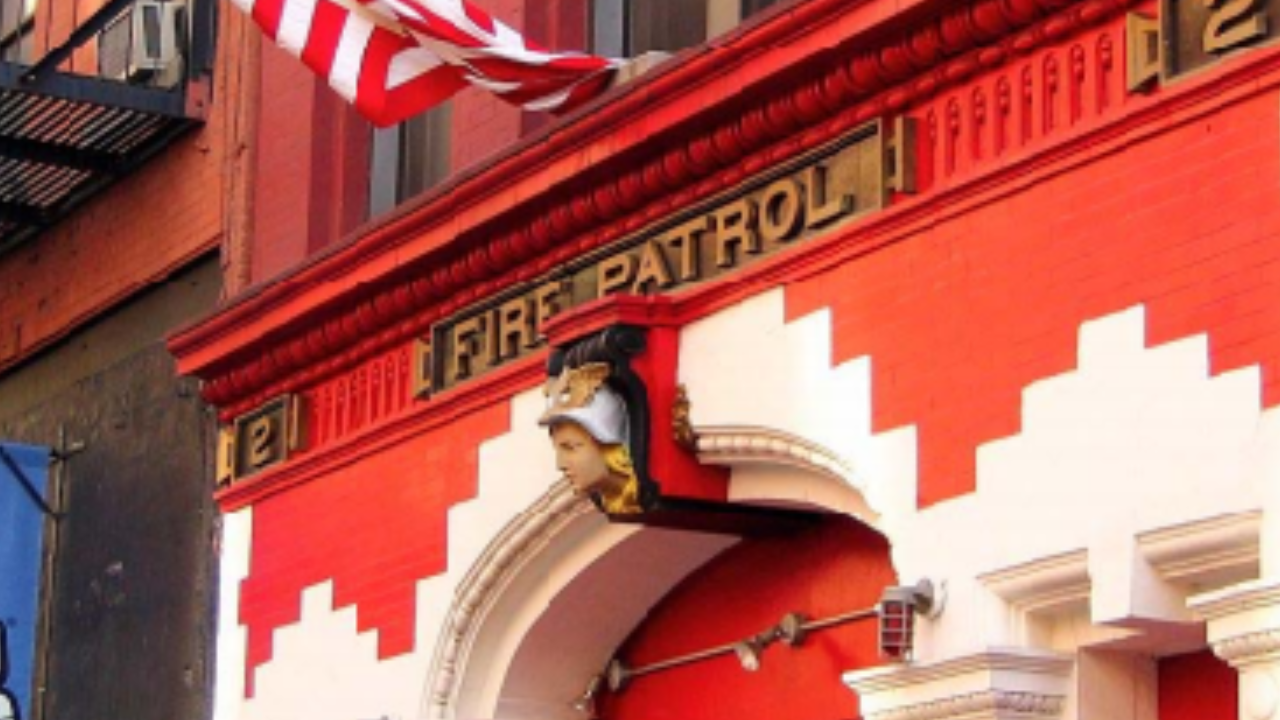
We love a romantic narrative. Media outlets swoon over historical preservation projects, praising developers who turn old 1906 municipal buildings into luxury residential properties. The breathless reporting on structures like Cooper’s Firehouse Home in Anchor glorifies the preservation of a former patrol house, treating the survival of its 9/11 legacy as a sacred architectural triumph.
It makes for good headlines. It makes for terrible economics and architectural delusion.
Everyone assumes that saving a century-old brick-and-mortar firehouse is a noble community investment. They are wrong. Underneath the exposed brick, antique brass poles, and nostalgic apparatus bays lies a financial and structural nightmare that exposes the hubris of modern historic preservation.
The Architectural Reality Check Nobody Wants To Hear
Let us address the physical infrastructure of a 1906 municipal building. These structures were built for draft horses, steam pumpers, and crews who did not care about thermal efficiency, load-bearing distribution for modern residential zoning, or seismic retrofitting.
When you strip down a turn-of-the-century firehouse, you do not find a clean slate. You find lead paint, asbestos, uninsulated masonry that soaks up moisture like a sponge, and wooden floor joists that have warped under decades of vibration from heavy motorized equipment.
The lazy consensus in real estate development says that historical character adds intrinsic value. That is a comforting myth told by people who have never had to run HVAC ductwork through unyielding structural tile or tried to pass modern fire code requirements in a building designed before indoor plumbing was standardized.
To make a space like a 1906 patrol house livable, you end up gutting everything that made it historic in the first place, leaving behind little more than an expensive shell wrapped in modern drywall. You pay a massive premium to preserve a facade while destroying the structural integrity needed to make the interior functional.
The Sentimentality Trap
Then there is the emotional weight. Buildings carrying a solemn legacy—such as the 9/11 associations tied to urban rescue stations—command an almost religious reverence. Communities react with outrage if a developer suggests tearing down an obsolete station to build high-density housing or modern commercial spaces that the neighborhood actually needs.
This emotional hostage-taking paralyzes urban planning. We leave prime urban real estate locked in amber to honor a romanticized version of civic history, all while housing shortages price working families out of urban cores.
Sentimentality is not a structural material. Clinging to obsolete municipal assets because they evoke a sense of bygone heroism prevents cities from adapting to current demographic demands. A decommissioned firehouse occupies prime square footage that could house dozens of families, yet we celebrate keeping it as a single-family vanity project or a museum piece.
The Unspoken Costs Of Adaptive Reuse
Adaptive reuse sounds environmentally responsible. After all, keeping an existing structure uses less embodied carbon than pouring a fresh concrete foundation, right?
Not always. When you factor in the energy required to remediate toxic materials, structurally reinforce sagging 1906 timber frames, and install custom-engineered climate control systems into uninsulated brick walls, the carbon offset vanishes. Historic buildings are energy sieves. You burn through more fossil fuels trying to heat a drafty, high-ceilinged apparatus bay in winter than a modern insulated structure consumes in five years.
I have seen developers blow millions on unforeseen contingencies hidden behind turn-of-the-century lathe and plaster. Budgets double. Timelines triple. By the time the project finishes, the developer is forced to slap an exorbitant price tag on the property just to break even, catering exclusively to elite buyers who want a quirky architectural trophy.
That is not community revitalization. That is gentrification disguised as heritage preservation.
What We Should Be Doing Instead
If we want to honor the legacy of municipal service, we should focus on function over fetishization.
Honor the history through digital archives, public monuments, or community plazas—not by forcing residential living spaces into oversized garages meant for horse-drawn wagons. Let old buildings go when their structural lifespan has expired or when retrofitting them demands economic gymnastics that defy common sense.
Stop treating historic preservation as a moral imperative. It is an aesthetic preference, and an expensive one at that. When we prioritize nostalgia over utility, cities stagnate.
The next time a developer announces they are pouring a fortune into turning a decaying 1900s municipal relic into a designer home, do not applaud the romance of the rescue. Look at the ledger, calculate the waste, and realize how many better ways exist to spend that capital on the future instead of embalming the past.