Big dogs bring big adventures. Sometimes they also bring massive logistical challenges thousands of feet up a steep mountainside.
Imagine hauling a 150-pound Great Dane down a rocky Canadian peak after he decides his paws simply can't take another step. That is exactly what happened near Revelstoke, British Columbia, when a massive canine named Floyd burned through all his energy on a rugged alpine trail. Mountain rescues usually involve human hikers with twisted ankles or broken gear. Swapping out a standard rescue stretcher for a giant breed dog requires an entirely different playbook.
When a Gentle Giant Refuses to Walk
Great Danes are known for their couch-potato tendencies, but owners love taking them on outdoor excursions. Floyd's owners thought he was up for the trek. They hit the trails near Revelstoke, taking in the crisp mountain air and stunning views.
Then reality hit. Halfway through the descent, Floyd laid down. He wasn't just tired; he was completely done. At 150 pounds, trying to coax or drag him down miles of steep switchbacks was out of the question. A dog of that size cannot simply be carried in a standard backpack or hoisted over a shoulder like a retriever.
His owners faced a grueling dilemma. Leave him behind? Absolutely not. Carry him themselves? Physically impossible over rough terrain. They had to call for professional help, setting off one of the most unusual animal rescue operations the local search teams had ever encountered.
The Logistics of Canine High Altitude Extraction
Search and rescue units train for complex wilderness extractions, but hauling a massive dog off a mountain is rare territory. Standard rescue baskets are built for human bodies with different weight distributions.
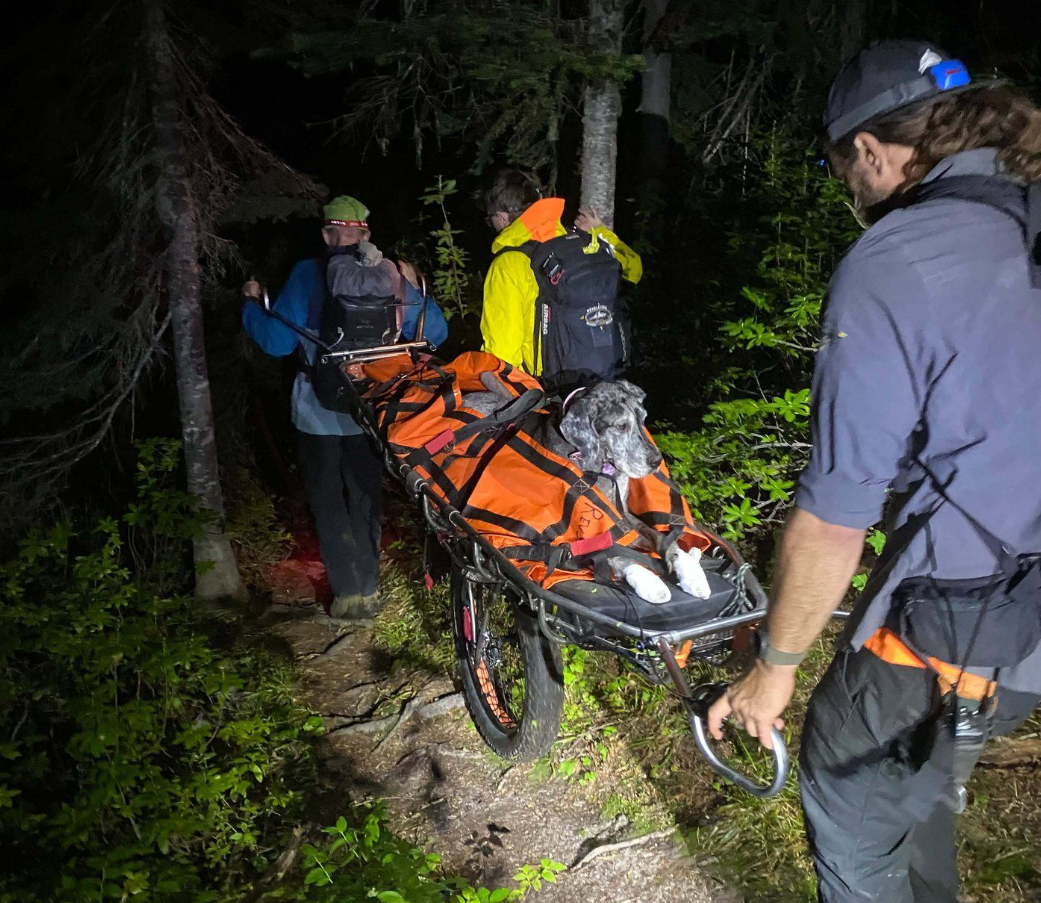
Rescuers had to improvise. They needed a specialized sled and a secure harness system to strap the giant hound down safely without triggering panic or injury. Great Danes have delicate frames despite their height, meaning improper rigging could cause joint damage or distress.
Crews hiked up to the stranded trio with heavy gear, transforming a standard rescue stretcher into a makeshift canine chariot. Securing a 150-pound dog who might get nervous or squirmy requires patience and heavy-duty straps. Floyd handled the initial setup like a champ, likely realizing that these friendly humans in high-vis gear were his ticket back to air conditioning and treats.
"We handle all sorts of backcountry emergencies, but strapping a giant hound into a stretcher is a first for many of us on the team."
💡 You might also like: Why Poland Wants a Permanent American Base and Why Washington is Walking Into a Trap
Navigating the Switchbacks with Dead Weight
Getting a stretcher down a mountain is hard work. Getting a stretcher containing a heavy, uncooperative or exhausted animal down a rocky grade is exhausting.
Every rock, root, and steep drop became an obstacle. Rescuers had to rotate shifts, hauling the weight down narrow paths where a single misstep could send the rig sliding. Floyd just laid there, treating his royal mountain taxi ride with the dignity of a king being carried through the streets of ancient Rome.
The descent took hours. Temperatures shift fast in the Revelstoke backcountry, and daylight is precious. The team relied on solid communication, sturdy footing, and sheer endurance to make it back to the trailhead before dark.
What Every Large Dog Owner Should Know Before Hitting the Trail
Hike with a big dog, and you accept certain risks. They overheat faster, burn through calories intensely, and can injure their pads on sharp shale.
Before tackling steep terrain with a large or giant breed, consider these practical realities:
- Pace yourself: Dogs don't always know their limits. They will push through pain or exhaustion to keep up with you.
- Check the paws: Rocky terrain shreds sensitive paw pads quickly. Pack booties if you anticipate rough ground.
- Know the weight limit: If your dog weighs over 80 pounds, ask yourself honestly how you would get them off the mountain if they blew out a knee or quit walking.
- Hydrate constantly: Bring twice as much water as you think you need, and a collapsible bowl for frequent stops.
Mountain adventures are incredible bonding experiences, but preparation prevents emergency extractions. Floyd made it down safe, sound, and a bit of a local legend. Next time, his humans might opt for a flatter walk around the block.