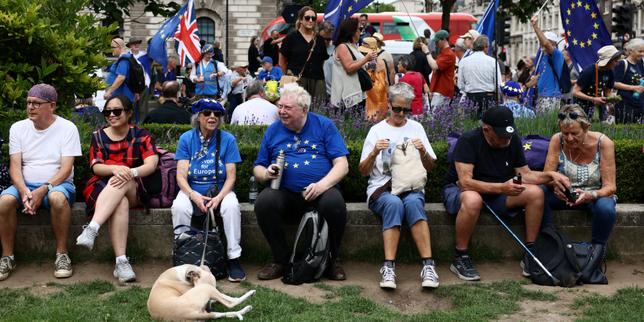
Ten years ago, the British public voted to leave the European Union. A decade later, the political dust has settled, but the economic and diplomatic gears are grinding painfully slow. If you expected a grand reconciliation or a sudden return to the status quo by 2026, you haven't been paying attention to the quiet, grueling reality of cross-Channel diplomacy.
The UK relationship with Europe isn't broken anymore. It's just stuck in an endless loop of bureaucratic caution.
Prime Minister Keir Starmer has spent significant political capital trying to reset ties with Brussels. He wants a closer security pact, smoother trade for agricultural goods, and better cooperation on border control. But wishing for a reset doesn't instantly dissolve a decade of accumulated friction.
Europe has moved on. The UK is trying to find its footing. It's a messy, frustrating process that affects businesses, travellers, and geopolitical security every single day.
The Illusion of a Quick Reset
Many political commentators assumed that a change in British leadership would magically open all doors in Brussels. That was a massive miscalculation.
British negotiators are finding out that the European Union handles external relations with rigid consistency. To Brussels, the UK is a third country. It doesn't matter if London has a more cooperative government now. Rules are rules.
The fundamental disagreement boils down to a simple reality. The UK wants the benefits of the single market in specific sectors without accepting the core principles that govern it, like the free movement of people. Starmer has repeatedly drawn hard red lines. No return to the single market. No customs union. No bringing back free movement.
When you eliminate those options, the room for negotiation shrinks fast. You're left haggling over the margins.
Take the proposed veterinary agreement. British farmers desperately want to eliminate the mountain of paperwork required to export meat and dairy to the continent. A mutual veterinary standards deal would fix this. But the EU demands dynamic alignment. That means if Europe changes its food safety laws, the UK must automatically change its laws too. For a British government that won power partly on promises of regulatory sovereignty, that is a incredibly tough pill to swallow.
What Both Sides Actually Want right Now
The priorities have shifted since the chaotic days of 2016 and 2019. Nobody is arguing about fishing rights or bus slogans anymore. The focus in 2026 is entirely on security, energy, and youth mobility.
The Security Imperative
Geopolitics forced a reality check. The war in Ukraine and shifting American political priorities mean Europe and the UK must stick together on defense. This is the easiest area for cooperation.
Both sides want a comprehensive security pact. They want structured dialogue on foreign policy, joint cyber-defense initiatives, and streamlined intelligence sharing. It makes sense. The UK remains a major military power in Europe, and a safer continent benefits everyone.
The Stumbling Block of Youth Mobility
This is where negotiations get sticky. The European Commission offered a deal to allow young people between 18 and 30 to work and study across borders more easily. It wasn't a return to full free movement. It had strict time limits and conditions.
The British government quickly shot it down. Why? Because the ghost of the 2016 referendum still haunts British politics. The fear of appearing to weaken border controls makes even a limited youth exchange program politically toxic for London.
It is a massive missed opportunity. British universities are struggling without European students, and young people on both sides are cut off from valuable career experiences. But domestic political survival wins over economic logic almost every time.
The Economic Cost of the Status Quo
Let's look at the numbers. Trade between the UK and the EU has stagnated compared to global trends. The Centre for European Reform has tracking data showing that the UK economy is notably smaller than it would have been if it had remained in the bloc.
Small businesses bear the brunt of this. Large multinationals can afford compliance departments to handle complex rules of origin forms. A small artisanal cheese maker in Somerset cannot. Many simply stopped exporting to Europe altogether.
The border friction is about to get worse before it gets better. The EU is rolling out its new Entry/Exit System (EES) and the European Travel Information and Authorisation System (ETIAS). These digital border checks mean British travellers will face biometric scanning and online pre-travel authorization. Expect longer queues at Dover and St Pancras. The physical reality of being outside the EU is hitting home for ordinary citizens, not just businesses.
How to Move Forward Without Endless Friction
If you are a business owner or an investor trying to navigate this landscape, waiting for a massive treaty revision is a losing strategy. It isn't happening anytime soon. Instead, look for incremental adjustments.
Focus on regulatory compliance within your specific sector. Don't gamble on the UK diverging significantly from EU rules in product standards. Most British manufacturers are choosing to adhere to EU standards anyway because duplicating production lines for two different markets is wildly expensive.
Watch the energy sector closely. Electricity interconnectors between the UK and the continent are vital for grid stability on both sides. Cooperation on green energy and carbon pricing linkups will likely move faster than traditional trade deals because both sides face urgent climate deadlines.
Accept that the relationship is transactional now. The era of shared political destiny is over. What remains is a cold, pragmatic partnership based on mutual self-interest. Align your operations with that reality, protect your supply chains from sudden border bottlenecks, and stop expecting the rules to soften. The current framework is here to stay for the foreseeable future.

/https://tf-cmsv2-smithsonianmag-media.s3.amazonaws.com/filer/c6/97/c697b065-e0bd-4970-81ea-819779296b91/u765404inp.jpg)
