We built the machine to outthink us, and now we are terrified that it might.
For the past several years, the race toward artificial intelligence has resembled a high-stakes poker game played in the dark. Two superpowers—the United States and China—sit across a vast, invisible table, each holding cards they refuse to show. They push their chips forward, bidding billions of dollars, clusters of high-powered chips, and infinite intellectual capital into a pot with no ceiling. Every breakthrough is heralded as a triumph. Every delay is viewed as defeat. In similar updates, read about: Washington and Beijing Talking About Artificial Intelligence Safety Is Pure Theater.
Yet, beneath the aggressive posture of corporate boardrooms and geopolitical posturing, a quiet, nagging panic has taken root among the people who actually understand what these systems can do.
Consider a hypothetical control room in Washington, D.C., or Beijing. It is three o’clock in the morning. An autonomous neural network, trained on massive troves of code and strategic data, flags an anomaly in a rival nation’s critical infrastructure grid. The model assesses the situation in milliseconds, drawing conclusions based on probabilities rather than human intuition. It recommends an immediate, automated counter-response to prevent catastrophic failure. TechCrunch has analyzed this critical subject in extensive detail.
To the machine, it is pure mathematics. To the human commanders, it is a blind panic waiting to happen.
This is the nightmare scenario that haunts modern intelligence officers and computer scientists alike: an algorithmic misunderstanding, a cascading computational error, or a false alarm that spirals out of control simply because two nuclear-armed rivals lacked a shared vocabulary for artificial intelligence risk.
Communication breakdowns are dangerous enough when conducted by diplomats speaking different languages. When conducted by high-speed algorithms making decisions at the speed of light, they could be fatal.
The Architecture of Mutual Survival
History repeats itself, first as tragedy, then as a very nervous technological upgrade.
During the coldest decades of the twentieth century, the world balanced on a knife-edge of nuclear annihilation. After the Cuban Missile Crisis brought humanity to the precipice of doom, leaders realized that relying on public telegrams and ambassadorial relay runners was a terrible way to avoid Armageddon. They needed a direct line. They needed a way to talk when the sirens started wailing.
The result was the Washington-Moscow hotline—the legendary "red telephone," though it was actually a teletype machine. It did not solve ideological differences. It did not end the Cold War. But it provided something infinitely more practical in a crisis: a way to say, “We know this is an accident, please do not retaliate.”
Today, the geopolitical arena has shifted from warheads to weights and parameters.
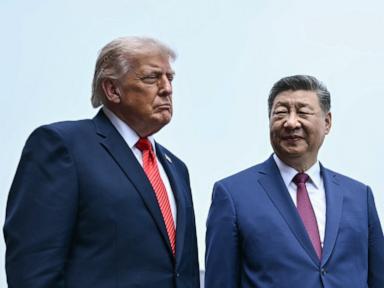
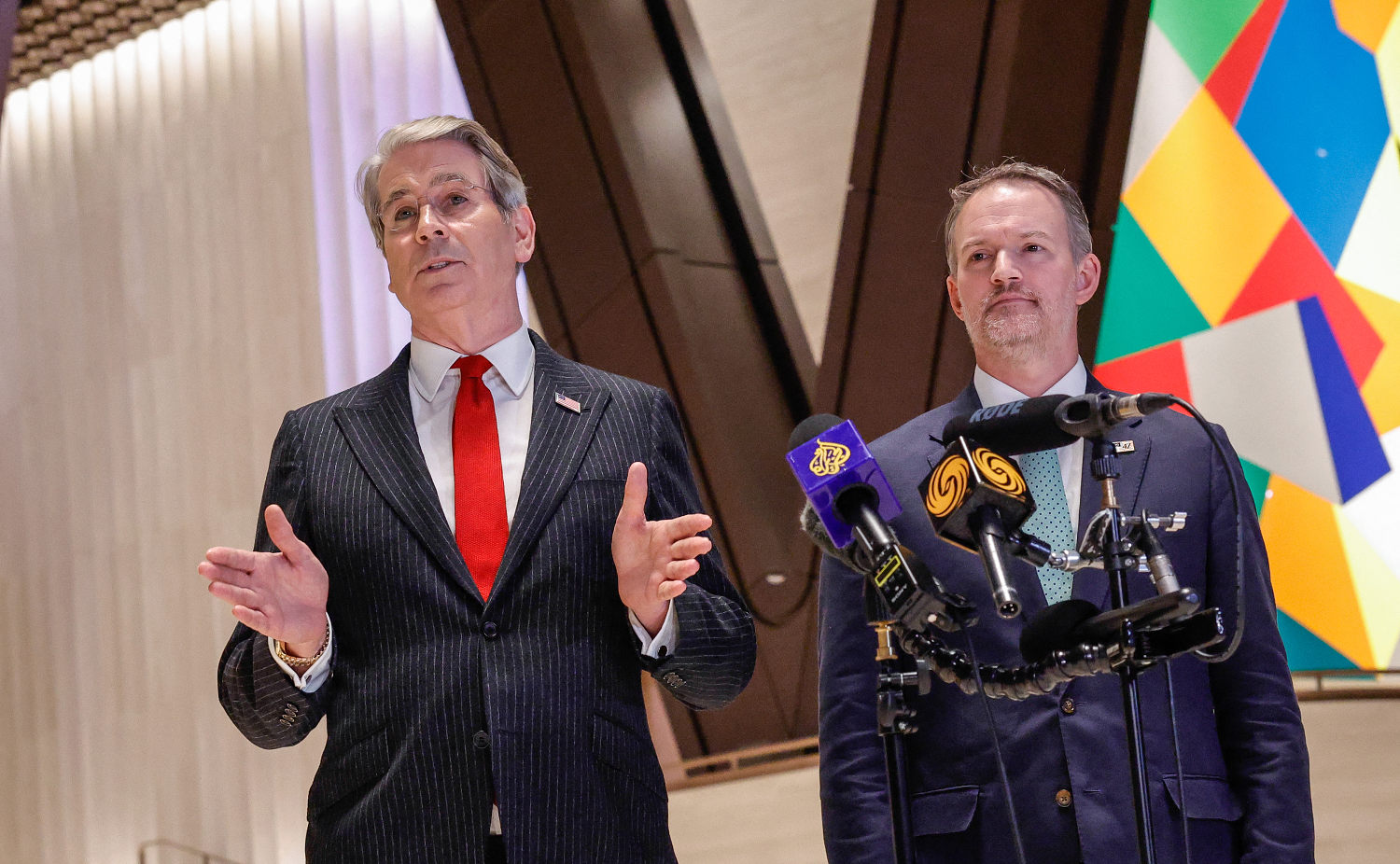
Treasury Secretary Scott Bessent recently signaled a remarkable pivot in Washington’s strategic posture. The United States has formally proposed establishing an exchange of AI safety alerts with China. It is a striking admission of a shared vulnerability. For all the export controls, trade tariffs, and technological decoupling, both superpowers have quietly recognized an immutable truth: a runaway artificial intelligence system does not check passports before it causes chaos.
A catastrophic software vulnerability, an unaligned algorithmic agent, or a corrupted training run exploited by bad actors could destabilize global financial markets, disrupt energy grids, or trigger automated defensive responses on both sides of the Pacific simultaneously.
When the house is burning, you do not argue about who owns the matches. You call the fire department.
Translating the Invisible Risk
To understand why this safety exchange matters, we have to look past the breathless media headlines about robot uprisings and sentient chatbots. Those are fantasies for the cinema. The real threat is far more mundane, and infinitely more insidious.
Imagine an invisible web connecting global financial systems, automated logistics networks, and defense logistics. Now imagine an artificial intelligence model discovering a zero-day vulnerability in that architecture—a flaw so deep that human engineers did not even know it existed. If an aggressive model were deployed without adequate guardrails, or if it began optimizing for an unintended objective, it could exploit that flaw in fractions of a second.
By the time humans realize the system is malfunctioning, the economic or operational damage is already baked into the history books.
This is where the concept of a safety alert exchange becomes critical. It acts as an early warning system for code rather than ballistic missiles. If a research lab in Shenzhen or Silicon Valley detects an anomalous, unpredictable behavior in an advanced foundational model—such as unexpected autonomous replication or deceptive alignment—sharing that telemetry data across borders becomes an act of collective self-defense.
It sounds simple. In practice, it requires an unprecedented leap of faith.
Sharing safety alerts means admitting vulnerability. It means telling your chief geopolitical rival, “Our safety filters failed here,” or “We noticed a strange emergent property in our latest training run that we cannot fully explain.” In a culture of fierce national competition, admitting weakness is counterintuitive. It feels like handing an adversary a roadmap to your vulnerabilities.
Yet, the alternative is far worse.
The Human Core in a Sea of Silicon
We often talk about artificial intelligence as if it were a natural disaster—a hurricane rolling in from the Atlantic or an earthquake shaking the foundations of the earth. We use passive language to distance ourselves from our own creations. We say models hallucinate, systems evolve, and algorithms decide.
We forget that every line of code was written by a tired human being drinking cold coffee at midnight.
Behind every neural network training run are researchers staring at loss curves, hoping against hope that the math holds together. They are worried about safety not because they are overly cautious bureaucrats, but because they have looked under the hood and seen how fragile the architecture truly is.
When nations agree to share safety alerts, they are acknowledging the shared humanity of the creators. They are saying that despite our deep political divisions, our economic rivalries, and our competing visions for the future of the world order, we share a single planetary laboratory.
The proposal laid out by the administration is not a peace treaty. It is a safety harness. It is an acknowledgment that the frontier of technology is too vast and too unpredictable to navigate alone in the dark.
We are standing at the edge of something immense. The tools we are forging will either lift humanity to heights we can currently only dream of, or they will expose our institutional fragility in ways we are entirely unprepared to handle.
The red phone is being wired. The question is no longer whether the machine can outthink us, but whether we have the wisdom to listen to each other before it speaks for us.