The desk of a procurement officer at an Indian oil refinery does not look like a battlefield. There are no maps pinned to the walls with daggers, no sirens blaring. Instead, there is the hum of an air conditioner fighting the Mumbai humidity and the soft, rhythmic clicking of a mechanical keyboard. But look closer at the spreadsheets. Look at the currency codes. Something fundamental is shifting in the way the world breathes, and it started with a problem of geography and a shortage of green paper.
India is thirsty. Its cities are expanding at a rate that defies logic, its highways are stretching into the horizon, and every single kilometer of that progress requires fuel. For decades, that fuel has arrived in massive tankers from across the Arabian Sea, specifically from the rugged coastlines of Iran. But there is a ghost in the machine of global trade. That ghost is the US Dollar.
When you buy a barrel of oil, you don't just pay for the liquid. You pay for the permission to move it. For half a century, that permission has been granted almost exclusively in dollars. If the American banking system decides to close its doors to a nation—as it has with Iran—the trade doesn't just become difficult. It becomes theoretically impossible.
The Alchemy of the Middleman
Consider a man we will call Rajesh. He sits in a high-rise in Mumbai, tasked with ensuring that millions of liters of crude oil continue to flow into the refineries that power the northern grid. He has a massive bill to pay to Tehran. He has plenty of Indian Rupees, but the Iranians can’t do much with Rupees; they need a currency that carries weight in international markets. Usually, he would click a button, convert those Rupees to Dollars, and send them through a clearinghouse.
But the screen returns an error. The "pipes" are blocked by sanctions.
For a long time, India and Iran engaged in a clunky, barter-like system. They used a "Rupee-Rial" mechanism where India stashed money in local accounts for Iran to use to buy Indian grain or medicine. It was a workaround, but it was inefficient. It was like trying to run a modern economy on a gift-card system. Eventually, the balance tipped. Iran had too many Rupees and not enough things to buy from India to justify the pile of cash.
The flow threatened to stop. And when the oil stops, the lights go out.
Enter the Yuan.
The shift happened quietly. Sources within the banking sector began whispering about a new route, one that bypassed the Western financial heartland entirely. Indian refiners, desperate to keep the tankers moving, began settling their debts using the Chinese Yuan. They did it through ICICI Bank, a titan of Indian private banking, which utilized branches in places like Hong Kong to bridge the gap.
The Weight of a Choice
This isn't just a technical adjustment in a ledger. It is a seismic shift in the tectonic plates of geopolitics. To understand why this matters, you have to understand the friction between India and China. These are two giants that share a disputed border, a history of skirmishes, and a fierce rivalry for the soul of Asia.
For an Indian entity to use Chinese currency to buy Iranian oil is an act of cold, hard pragmatism over pride. It is a confession that in the world of energy security, survival beats ideology every time.
The Yuan, often called the Renminbi or "The People’s Currency," has been knocking at the door of global dominance for years. China wants its money to be the world’s money. Every time a country like India uses the Yuan to settle a massive oil contract, the Dragon grows stronger. It proves that the world can function without the Dollar. It proves that the "financial weaponization" used by the West has a shelf life.
Imagine the tension in the boardroom at ICICI. On one hand, you have the risk of upsetting Western regulators. On the other, you have the mandate of the state: keep the refineries running at all costs. The decision to process these payments is a calculated gamble. It assumes that the United States needs India as a strategic partner against China more than it needs to punish India for helping Iran.
The Invisible Stakes
Why should a commuter in Delhi or a farmer in Punjab care about what currency a bank uses? Because the cost of "friction" is always passed down.
When trade is easy, oil is cheaper. When trade is forced through complex, multi-layered currency conversions and shadowy banking routes, the price at the pump ticks upward. If India couldn't find a way to pay Iran, it would have to buy more expensive oil from elsewhere, stretching its foreign exchange reserves to the breaking point.
But there is a deeper cost—the cost of sovereignty.
We often think of countries as totally independent, but their independence is tied to the rails their money travels on. If your money can only move through a system controlled by a third party, are you truly in control of your own destiny? By opting for the Yuan, India is diversifying its "escape routes." It is a messy, uncomfortable alliance with a rival, born of the necessity to stay autonomous from a hegemon.
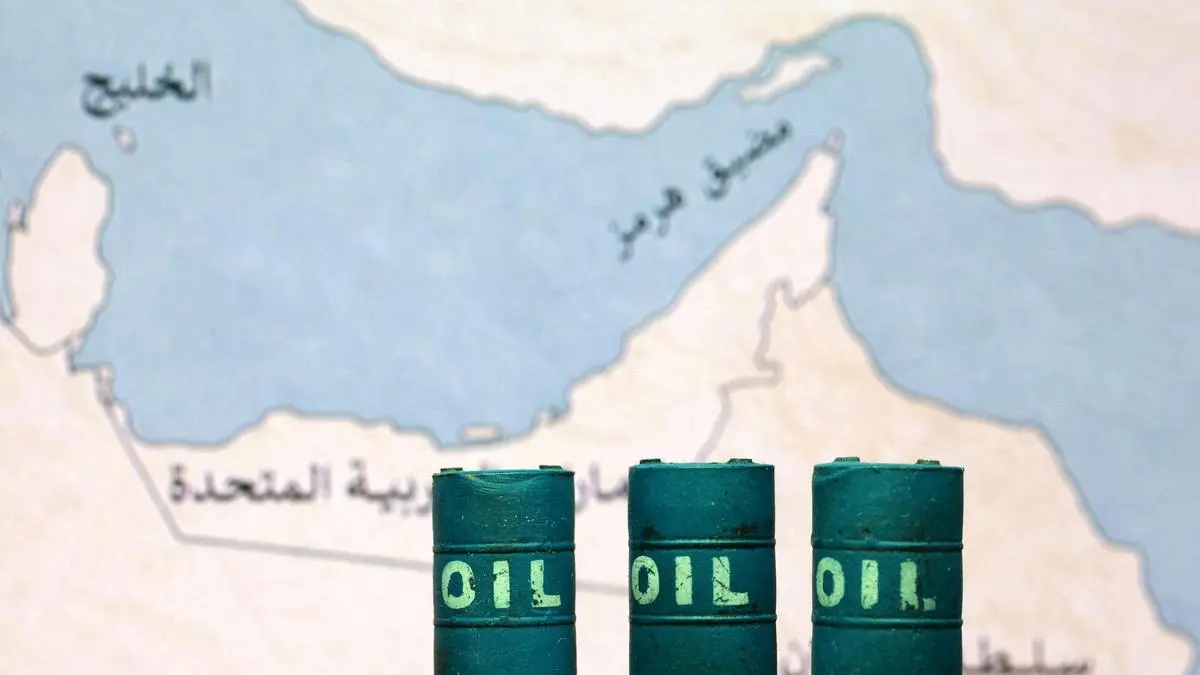
The process is rhythmic. The oil leaves Kharg Island. The tankers navigate the Strait of Hormuz. In Mumbai, the data packets move. Rupees are converted. Yuan is credited. The debt is cleared.
The Cracks in the Foundation
The dollar hasn't fallen. Not yet. It remains the undisputed king of the mountain, the "safe haven" everyone runs to when the world catches fire. But the use of Yuan by Indian refiners is a crack in the foundation. It is a signal to other nations—Brazil, South Africa, Malaysia—that there are other ways to exist.
This isn't a story about a bank transaction. It is a story about the end of an era. We are moving into a multipolar financial world where the map of power is drawn in many different inks.
In the refinery, the fire burns. The crude is cracked into petrol, diesel, and aviation fuel. The machines don't care if the oil was paid for in Dollars, Rupees, or Yuan. They only care that the fuel is there. But for the people watching the ledgers, the world feels smaller, more fractured, and infinitely more complicated.
Rajesh closes his laptop. The payment has cleared. Somewhere in the dark waters of the Indian Ocean, a ship continues its journey. The lights in the suburbs stay on for another night. The price of that light was a little bit of the old world order, traded away in a currency that, until recently, was the enemy’s greatest weapon.
The silence in the office is heavy. It is the sound of a system changing its skin. Underneath the numbers and the cold bank codes, the heartbeat of a nation's survival remains the only thing that is truly non-negotiable.
The tankers keep coming. The ledger stays balanced. The Dragon’s coin is in the palm of the Tiger.