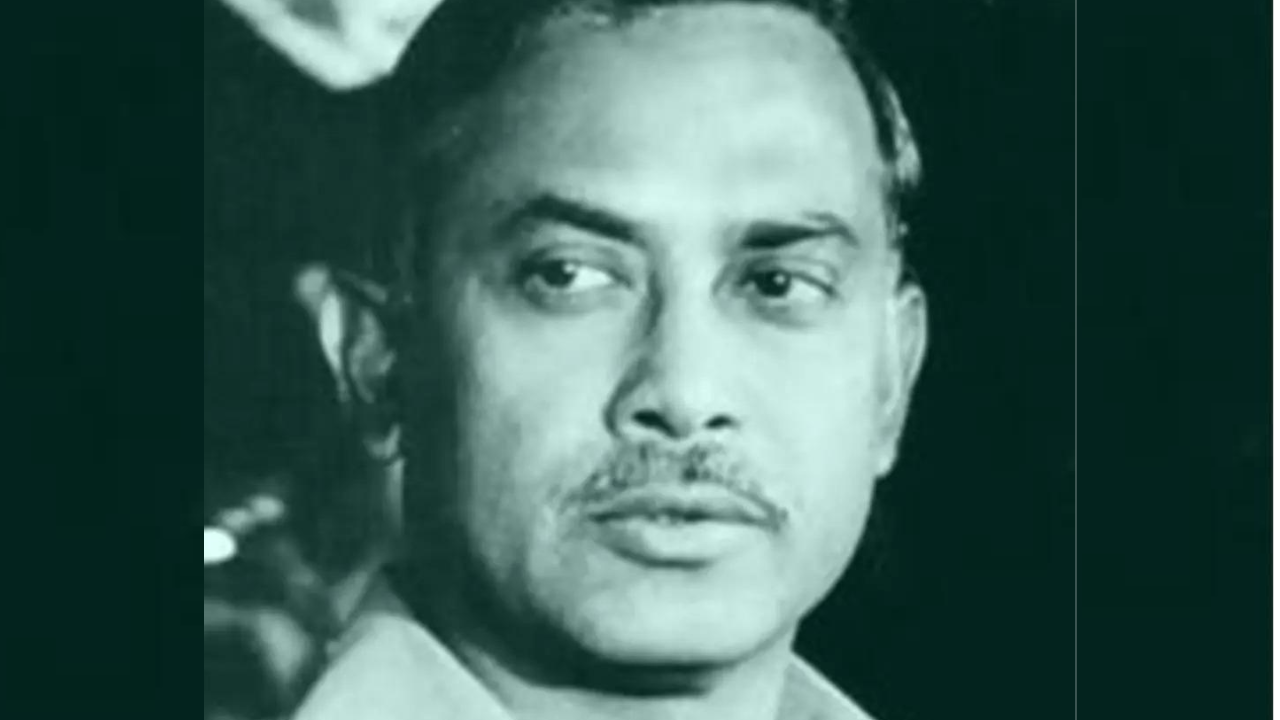
Foreign policy rarely operates on sentiment, even when cloaked in the language of shared sacrifice. The official acknowledgment by the Indian High Commission in Dhaka commemorating the 45th death anniversary of former Bangladesh President Ziaur Rahman—specifically validating his March 27, 1971 radio broadcast Proclamation of Independence—signals a calculated calibration in New Delhi's neighborhood policy. By explicitly honoring the foundational legacy of the Bangladesh Nationalist Party (BNP), currently led by Prime Minister Tarique Rahman, India is executing a structural transition from an exclusive, party-centric alliance to an institutional, state-to-state relationship.
This pivot cannot be evaluated as an isolated act of courtesy. It represents a realpolitik adjustment designed to safeguard Indian geopolitical and economic investments during a period of domestic regime transition in Bangladesh. Understanding this structural shift requires dissecting the mechanics of historical legitimacy, the strategic rationale driving New Delhi, and the vulnerabilities inherent to this diplomatic resetting.
The Triad of Diplomatic Re-alignment
State-level bilateral transitions operate under specific strategic variables. When a neighboring state undergoes a structural shift in leadership, the external partner must balance ideological consistency against geopolitical survival. New Delhi's strategy relies on three distinct operational pillars.
+-------------------------------------------------------------------+
|               THE TRIAD OF DIPLOMATIC RE-ALIGNMENT                |
+-------------------------------------------------------------------+
|  1. Historical De-monopolization                                  |
|     Validating alternative foundational narratives to bypass past |
|     political friction.                                           |
+-------------------------------------------------------------------+
|  2. Securitization of Transit Infrastructure                      |
|     Ensuring physical connectivity (chicken's neck bypass) remains|
|     insulated from partisan regime shifts.                        |
+-------------------------------------------------------------------+
|  3. Counter-Hegemonic Hedging                                     |
|     Preventing diplomatic friction from creating strategic vacuums|
|     exploitable by external competitors.                          |
+-------------------------------------------------------------------+
1. Historical De-monopolization
For over a decade, Indian diplomacy in Dhaka was tethered to the Awami League's historical narrative, which anchored the bilateral relationship exclusively on the legacy of Sheikh Mujibur Rahman. The ascension of Tarique Rahman and the BNP necessitated a rapid de-monopolization of this historical capital. By elevating Ziaur Rahman's Kalurghat radio address—wherein he declared independence on behalf of Sheikh Mujibur Rahman—New Delhi has engineered a diplomatic bridge. This allows India to validate the current administration's foundational lineage without invalidating its own historical role in the 1971 Liberation War.
2. Securitization of Transit Infrastructure
India's primary economic and logistical vulnerability in South Asia is the Siliguri Corridor, a narrow 22-kilometer strip of land connecting the mainland to the Northeastern states. Over the past decade, New Delhi built an alternative transit architecture relying on transit rights through Bangladeshi territory, access to the Chattogram and Mongla ports, and multi-modal inland waterways. The financial and strategic cost of losing these transit vectors is prohibitive. Securing these commitments requires absolute neutrality toward the internal political architecture of Dhaka.
3. Counter-Hegemonic Hedging
In regional geopolitics, diplomatic vacuums are instantly monetized by competing powers. Any prolonged hesitation by New Delhi to engage with a BNP-led government would offer an immediate entry point for Beijing to expand its infrastructure footprint via the Belt and Road Initiative (BRI). Diplomatic outreach serves as a defensive mechanism to ensure that regime change does not yield a strategic pivot toward external competitors.
The Cost Function of Diplomatic Hesitation
Delaying structural adjustment during a neighbor's leadership transition incurs distinct compounding penalties. The strategic risks of diplomatic inertia can be modeled through three interlocking variables.
- The Access Penalty: Maintaining ideological purity cuts off communication channels with newly appointed bureaucratic and military elites. This limits intelligence sharing and operational coordination along a shared 4,096-kilometer border.
- The Investment Discount: Indian public and private entities have committed billions of dollars to cross-border energy grids, including the Maitree Super Thermal Power Project and the India-Bangladesh Friendship Pipeline. Diplomatic estrangement risks contract renegotiations, regulatory delays, or outright project suspension.
- The Border Friction Premium: Partisan diplomacy amplifies anxieties regarding border management. Without high-level institutional alignment, localized border incidents can escalate into nationalistic friction, complicating the management of migration and cross-border security threats.
The relationship between engagement speed and strategic risk is clear: immediate structural recognition minimizes the transition penalty, whereas delayed recognition exponentially increases the probability of hostile policy formation by the incoming regime.
Structural Bottlenecks and Strategic Vulnerabilities
Despite the calculated precision of New Delhi's current outreach, the execution of this pivot faces deeply entrenched institutional constraints. A stable state-to-state relationship cannot be built purely on historical proclamations; it must survive domestic political pressures within both nations.
The first major constraint is the internal ideological friction within India's domestic political landscape. Decades of framing regional security through a binary lens make it difficult to pivot toward a political entity traditionally viewed with caution by security establishments. This creates a disconnect between diplomatic maneuvers executed by the Ministry of External Affairs and the domestic political rhetoric intended for internal consumption.
The second limitation involves the structural dependencies of the Bangladeshi economy. The current administration in Dhaka faces intense macroeconomic pressures, including foreign exchange reserve volatility and energy deficits. While India offers geographic proximity and integrated power transmission lines, it cannot match the raw capital-exporting capacity of Chinese state-backed banks. Consequently, New Delhi's diplomatic warmth cannot entirely substitute for infrastructure financing, meaning Dhaka will inevitably maintain a diversified portfolio of external partners.
This structural reality creates a strategic bottleneck. India must offer tangible economic reciprocity—such as comprehensive economic partnership agreements, predictable export quotas for essential commodities, and liberalized visa regimes—to ensure its diplomatic overtures yield functional, long-term alignment.
The Operational Playbook for Cross-Border Integration
To convert historical gestures into durable strategic leverage, the diplomatic framework must transition from symbolic rhetoric to deeply integrated systems. The following operational directives outline the necessary path forward for regional stability.
- Institutionalize the Border Management Protocol: Shift the management of the shared frontier away from political rhetoric. Establish institutionalized, bi-weekly operational reviews between the Border Security Force (BSF) and Border Guard Bangladesh (BGB) to minimize casualties and standardize cross-border trade flow processing.
- Decouple Infrastructure from Regime Cycles: Formalize transit, port-use, and energy-sharing agreements through long-term sovereign guarantees. These contracts must contain robust legal protections that insulate infrastructure operations from changes in the ruling coalition of either nation.
- Expand Local-Currency Trade Settlements: Mitigate foreign exchange volatility by scaling the Rupee-Taka bilateral trade mechanism. Reducing dependency on clearing dollars for cross-border commerce lowers transaction costs for small and medium enterprises along the border enclaves, creating a localized economic buffer against macroeconomic shocks.
- Prioritize Sub-Regional Energy Security: Accelerate the trilateral power transmission frameworks involving Nepal, Bhutan, and Bangladesh. By positioning India as the central transmission wheel for clean hydro-energy across the sub-region, New Delhi can integrate Dhaka into a structural dependency network that yields mutual economic benefits regardless of political transitions.