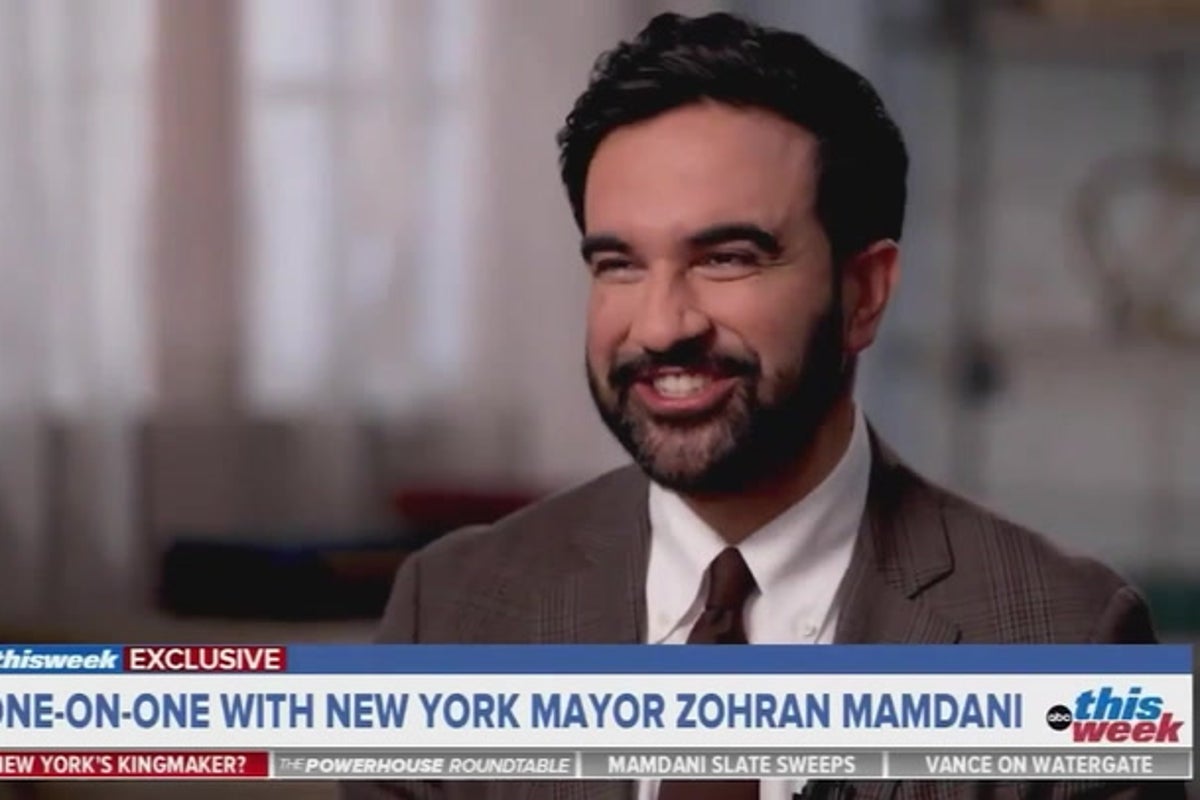
New York City Mayor Zohran Mamdani explicitly closed the door on any future White House ambitions during an ABC News appearance, rejecting the idea of amending the U.S. Constitution to remove the natural-born citizen requirement. For a rising star of the democratic socialist movement who just engineered an electoral sweep in New York’s primaries, the declaration looks like a concession to legal reality. It is not. By maintaining his lifetime disqualification under Article II, Section 1, Mamdani escapes the traditional traps of national ambition, granting him a rare brand of uncompromised domestic leverage that standard politicians cannot afford.
The legal ceiling is absolute. Born in Kampala, Uganda, to Indian parents, Mamdani immigrated to America as a child and became a naturalized citizen in 2018. Under the current structure of American governance, he cannot occupy the Oval Office. When questioned about changing the rule to accommodate his soaring national profile, his response was short and definitive. "The Constitution looks good the way it is," he stated.
To casual observers, this ends the conversation. To those who manage political power, it changes the entire equation.
The Curse of the Next Step
Most big-city mayors view City Hall as a launchpad. They constantly look over their shoulders at national donors, Iowa cornfields, and suburban swing voters in Ohio. John Lindsay tried it. Rudy Giuliani tried it. Michael Bloomberg spent hundreds of millions of dollars trying it. Every single one of them failed because the brutal compromises required to manage America’s most complex city inevitably alienate national primary voters.
Mamdani does not have to care about what a moderate voter in Scottsdale thinks of his housing policy. He is entirely insulated from the gravity of a national campaign.
This structural freedom alters how a politician governs. Without an eye on a future presidential primary, a leader can execute policy with a level of purity that others find suicidal. Mamdani campaigned on a platform featuring a thirty-dollar minimum wage, city-owned grocery stores, and rent freezes on stabilized apartments. In a conventional career track, these policies would be sanded down by corporate consultants to avoid scaring national political action committees.
Instead, Mamdani has leaned directly into his ideology. His allies just secured major victories in the recent Democratic primaries, proving that his local political operation can systematically dismantle establishment challengers.
Organizing Without an Imperial Orbit
The national progressive movement has historically collapsed under the weight of presidential campaigns. Every four years, local organizing groups stop focusing on tenant rights or municipal budgets to divert their resources into a singular national candidate. When that candidate loses or compromises, the movement fractures.
Mamdani’s permanent local status reverses this dynamic.
He serves as a fixed anchor. His organization can spend the next decade building infrastructure across New York’s five boroughs without the threat of being hollowed out by a national presidential staff. This allows for long-term planning that standard election cycles prevent.
Consider his aggressive stance on foreign policy. Mamdani has consistently used his platform to critique international actions, including calling recent military actions illegal wars of aggression. A politician with eyes on a congressional leadership spot or a cabinet position would face intense pressure to toe the party line. Mamdani can speak without filtering his rhetoric through the lens of national electability.
The Boundaries of Local Radicals
This structural freedom does not guarantee easy victories. Governing New York City requires managing a massive bureaucracy, balancing a volatile budget, and dealing with a state government in Albany that holds the actual keys to the city’s tax structure.
A radical agenda faces immediate, practical walls.
- The Fiscal Reality: High-tax strategies risk driving away the ultra-wealthy who generate a massive portion of the city's income tax revenue.
- The Albany Veto: The governor and state legislature can block municipal initiatives on housing, transit funding, and labor laws.
- The Bureaucratic Inertia: City agencies can slow-walk mayoral directives through malicious compliance and endless administrative delays.
Mamdani’s platform relies on major structural changes that he cannot execute through executive orders alone. City-owned grocery stores require massive capital investment and supply chain logistics that the municipal government is not built to handle. A thirty-dollar minimum wage would face immediate legal challenges from business coalitions.
Knowing he can never run for president means his opponents cannot dismiss his actions as mere grandstanding for a national audience. Every battle he picks is entirely about the raw exercise of power within New York.
The Future of the Progressive Blueprint
The true test of Mamdani’s tenure will not be whether he changes the Constitution, but whether his hyper-local strategy can create a functional blueprint for other cities. If his affordability programs yield measurable results, other progressive municipal leaders will copy the playbook.
National power in America is shifting away from traditional federal consensus toward highly localized ideological strongholds. By being locked out of Washington, Mamdani is forced to dig his heels deeper into the pavement of New York City. That makes him far more potent than any traditional candidate running a perpetual campaign for higher office. He is not going anywhere.