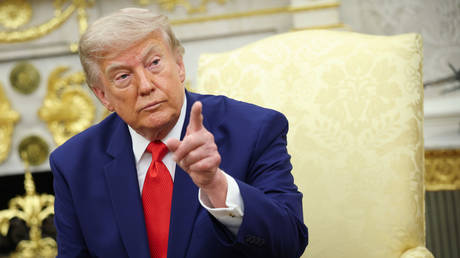
Donald Trump announced a new Section 301 trade investigation targeting the European Union after Brussels levied a nearly one billion dollar fine against Google. Accusing European regulators of robbing American companies and extracting wealth from US taxpayers, the administration vowed to dollar-for-dollar offset regulatory penalties with fresh tariffs on European goods entering the United States. The flashpoint centers on the enforcement of the European Union's Digital Markets Act, but the conflict goes much deeper than a single antitrust ruling. At its core, this fight is a collision between European regulatory jurisdiction and American commercial power, setting up a trade clash that could disrupt international supply chains.
The immediate trigger arrived when the European Commission slapped Alphabet Inc. with an 890 million euro sanction. European enforcement authorities claimed Google favored its own vertical search products over independent competitors while placing restrictive rules on third-party app developers inside the Google Play ecosystem. White House officials reacted instantly, framing the administrative penalty as an illegal tax on American innovation.
The Billion Dollar Spark
Brussels did not act in a vacuum. For years, European competition authorities have pursued enforcement actions against global technology platforms. Multibillion-dollar judgments against Apple, Meta, Amazon, and X have accumulated into tens of billions of dollars in ordered payments. European regulators maintain these cases enforce basic antitrust principles and protect open market competition for local businesses and consumers.
Washington sees a fundamentally different dynamic. American trade negotiators argue that European enforcement uniquely singles out US technology firms, creating a structural imbalance where foreign regulatory bodies generate revenue from American balance sheets. By invoking Section 301 of the Trade Act of 1974, the White House is using the exact legal mechanism designed to counter foreign practices that burden or restrict US commerce.
The numbers involved are substantial. Consider a hypothetical scenario where an international corporation faces five billion dollars in regulatory compliance adjustments alongside punitive administrative sanctions in an overseas market. If those fines are met with equivalent duties on consumer goods originating from the sanctioning trade bloc, the financial drag shifts instantly from corporate balance sheets to industrial supply lines. European vehicle manufacturers, luxury product exporters, and specialized machinery suppliers now face the prospect of retaliatory duties designed explicitly to neutralize European regulatory penalties.
The administration's stance marks a significant shift in trade defense tactics. Rather than waiting through multi-year dispute settlement proceedings at the World Trade Organization, Washington is deploying domestic trade statutes to directly counter foreign regulatory actions.
How Section 301 Works as a Strategic Weapon
Section 301 grants broad executive authority to investigate and penalize unfair foreign trade practices. Originally crafted to tackle discriminatory tariffs and state subsidies, the law is now being repurposed to police foreign regulatory and antitrust regimes.
The process moves fast. Once initiated by the United States Trade Representative, an investigation gathers evidence on whether foreign enforcement actions disproportionately target domestic enterprises. If the administration concludes the practices are unreasonable or discriminatory, it can impose target duties without needing approval from external international courts.
Brussels defends its enforcement record by pointing to neutral legal standards written into European law. European Commission officials state that any firm operating within the single market must abide by local rules, regardless of where that company is headquartered. They argue that applying antitrust measures to market-dominant firms is a legitimate exercise of domestic policy, not a trade barrier.
The legal friction is intense. European courts do not acknowledge US tariff threats as valid grounds to alter administrative rulings. At the same time, American trade negotiators maintain that foreign fines targeting American intellectual property amount to indirect expropriation. Neither side possesses a clear procedural path to reconcile these opposing legal frameworks.
+-----------------------------------------------------------------------+
|                       THE TRANSATLANTIC TRADE DASH                    |
+-----------------------------------------------------------------------+
| European Union Action                 | US Retaliatory Mechanism      |
+---------------------------------------+-------------------------------+
| Digital Markets Act Fines             | Section 301 Investigations    |
| Digital Services Taxes                | Retaliatory Product Tariffs   |
| Competition Authority Judgments       | Trade Agreement Reviews       |
+-----------------------------------------------------------------------+
Regulatory Sovereignty Against Exported Power
Europe lacks domestic technology giants capable of rivaling Silicon Valley's market reach. Because European technology firms struggle to match the scale of American platforms, Brussels has focused its policy energy on setting global regulatory conditions. This strategy allows the European Union to shape online commerce rules across the globe, forcing international firms to adjust their operations everywhere just to comply with European standards.
American policymakers argue this approach effectively exports European regulatory preferences to the rest of the world. When European authorities mandate changes to software architectures, data handling practices, or marketplace algorithms, those changes alter products used by billions of consumers worldwide.
The counter-argument from Brussels focuses on market fairness. European policymakers argue that unmonitored market concentration harms consumers, stifles small software developers, and buries local startups under unfair platform rules. From their perspective, imposing heavy fines is the only way to compel compliance from corporations whose annual revenues rival the gross domestic product of small nations.
Yet the structural dynamic remains tense. When European revenue collectors assess fines running into billions of dollars, those funds flow directly into European budgets while reducing capital available for domestic research and development in the United States.
Silicon Valley In a Tight Spot
American technology leaders find themselves in an awkward position. On one hand, executive teams welcome White House efforts to shield them from aggressive European fines and compliance orders. On the other hand, a broad trade war threatens the international market access that drives their growth.
International commerce requires predictable rules. If doing business in Europe brings both billions in regulatory fines from Brussels and cascading tariff retaliation from Washington, multinational corporate planning becomes nearly impossible.
Trade wars escalate quickly. If Washington slaps 10 percent or 25 percent duties on European goods to offset antitrust fines, the European Union can respond with targeted duties on American agriculture, industrial equipment, and consumer products. What starts as a dispute over app store fees or search result rankings can quickly spread through consumer manufacturing, agricultural supply chains, and industrial freight networks.
Supply chains are vulnerable. Take the automotive sector. European carmakers exporting vehicles to the United States already operate on tight margins. Piling retaliatory tech tariffs on top of baseline import duties could instantly render key vehicle exports unprofitable, leading to production slowdowns and factory layoffs across European industrial centers.
Conversely, American exporters rely heavily on European consumers. If the European Commission responds with targeted tariffs on US agricultural goods or heavy machinery, farmers in the Midwest and manufacturers across the Sun Belt will carry the burden of defending Silicon Valley's bottom line.
The Economic Fallout of Mutually Assured Tariff Escalation
The broader macroeconomic environment offers little room for error. Persistent inflation, shifting currency values, and fragile global trade volumes mean tariff shocks carry immediate consequences for everyday buyers.
Tariffs act as an internal tax on domestic buyers. When the United States places retaliatory duties on European goods, American importers pay those fees at the port of entry. Importers then pass those added costs down the supply chain to end consumers.
- Import costs for European industrial machinery increase, raising domestic manufacturing expenses.
- Retaliatory measures on American agricultural exports depress crop prices for domestic producers.
- Cross-border technology integration slows down as compliance costs soar on both sides of the Atlantic.
- Uncertainty delays long-term capital investments across manufacturing and tech sectors.
Negotiators face a tough landscape. Neither side can back down without appearing weak to domestic constituencies. European leaders cannot dismantle their landmark digital competition laws without surrendering regulatory independence. The White House cannot drop its retaliatory threats without abandoning its promise to defend American corporate assets from foreign overreach.
The confrontation over the Digital Markets Act is not a temporary spat. It marks the beginning of a sustained conflict where trade policy and platform regulation overlap completely, leaving global business caught in the middle.
Without a formal treaty governing how nations regulate cross-border digital services and tax software platform revenue, administrative fines will keep triggering tariff retaliation. Modern trade policy is no longer just about physical goods passing through ocean ports, but about who holds the power to tax and regulate digital platforms.