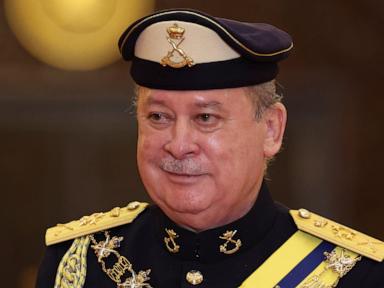
Malaysia has issued an ultimatum to TikTok, ordering the social media giant to explain its failure to curb AI-generated videos and manipulated images targeting the nation's constitutional monarch, King Sultan Ibrahim Iskandar. The Malaysian Communications and Multimedia Commission (MCMC) delivered a formal legal notice demanding immediate remedial measures to halt the spread of what it describes as "grossly offensive, false, menacing, and insulting" content. The conflict exposes a fundamental friction point: Silicon Valley's automated moderation systems are failing to comprehend the legal and cultural boundaries of Southeast Asian governance.
This is not a localized policy tiff. It is an existential regulatory showdown for TikTok in one of its most profitable regional markets.
The Friction Between Automation and Absolute Respect
Western tech firms build moderation frameworks on a singular, foundational premise: public figures must endure a higher threshold of criticism and parody. In Malaysia, that logic collapses entirely when applied to the 3R principles—Race, Religion, and Royalty.
The country operates under a unique constitutional monarchy where nine hereditary Malay rulers rotate the throne every five years. The king is not a mere symbolic figurehead or a celebrity subject to the internet's standard roast culture. The monarchy serves as the official defender of the Islamic faith and the custodian of Malay heritage. Insulting the royal institution is a federal crime under the country's Sedition Act, carrying severe prison sentences.
The specific content that triggered the MCMC legal notice originated from a sophisticated network of accounts falsely claiming a direct association with Sultan Ibrahim. These profiles distributed highly polished, AI-altered videos and synthetic media designed to look like authentic royal pronouncements.
For an algorithm running out of data centers in Virginia or Singapore, a deepfake of a monarch looks identical to a deepfake of a Hollywood actor. The system treats it as a standard political parody or a minor identity violation. To the Malaysian state, it represents an immediate threat to national harmony and constitutional stability.
The Numbers Big Tech Failed to Control
The regulatory hammer hitting TikTok follows months of quiet frustration in Kuala Lumpur. The government has spent the first half of the year tracking a massive surge in coordinated digital manipulation.
| Platform Violation Metrics (January – May) | Volume |
|---|---|
| Identified Fake Royal Accounts | 15,296 |
| Targeted Royal Family Members | 26 |
| Requested Content Take-Downs (All Violations) | 230,000+ |
| Primary Monetization Vector of Fake Content | Online Gambling / Scams |
Communications Minister Fahmi Fadzil has grown visibly weary of the tech industry’s standard response loop. Just weeks before targeting TikTok, Fahmi issued a public reprimand to Meta Platforms, stating openly that the government was on the verge of pursuing unprecedented legal action against Facebook and Instagram for the exact same failure.
The underlying ecosystem driving these fake royal accounts is rarely purely political. Syndicated crime rings use the authority of the royal crest to bypass consumer skepticism. By utilizing AI to make a monarch appear to endorse a financial scheme or a digital casino, bad actors achieve conversion rates that traditional spam networks can only dream of.
The Flaw in the Content Moderation Pipeline
When tech companies cut overhead, local language moderation teams are the first to go. TikTok has repeatedly pointed to its multi-billion dollar investments in trust and safety, yet its reliance on artificial intelligence to police regional nuances remains a glaring structural vulnerability.
Automated systems evaluate text and audio through generalized semantic models. They excel at identifying overt slurs, explicit violence, or blunt keywords. They fail entirely at identifying institutional subversion, localized sarcasm, or the subtle misuse of royal honorifics used to mock or mislead the public.
Consider a hypothetical example. An automated moderation tool scans a video caption containing standard formal Malay vocabulary. The AI registers the sentiment as neutral because the words themselves are respectful. However, the accompanying synthetic video portrays a royal figure breaking a core religious tenet. The AI approves the upload, while a native speaker would recognize the profound offense within two seconds.
Because TikTok relies on a post-reporting system—where content is removed only after it gains traction and gets flagged by users—the damage is already done by the time the video disappears from the algorithmic feed.
The Million-Ringgit Penalty Framework
Malaysia is no longer begging for compliance. The government is preparing to fully enforce its Online Safety Act, a legislative framework explicitly designed to strip big tech of its liability shields.
Under the provisions of the new framework, international platforms can no longer hide behind standard corporate stalling tactics. The penalties are designed to hit corporate bottom lines with extreme precision:
- Initial Non-Compliance: Fines reaching up to RM1 million ($213,000) for failing to act swiftly on a state-issued take-down order.
- Daily Accumulation: A recurring fine of RM100,000 ($21,300) for every single day the offensive material remains accessible within Malaysian borders.
- Aggravated Offenses: Maximum corporate penalties scaling up to RM10 million ($2.13 million) for systemic refusal to comply with national safety codes.
This statutory shift completely changes the cost-benefit analysis for social media platforms operating in Southeast Asia. For years, paying occasional local fines was viewed as a minor cost of doing business. Under the new legal architecture, a platform that takes five days to remove a viral network of fake accounts could face millions of dollars in consecutive penalties.
The Sovereignty Trap Facing Social Platforms
The core dilemma for TikTok is structural. If the platform complies entirely with Malaysia’s stringent demands, it sets a precedent that other sovereign nations will immediately exploit. If it creates a hyper-accelerated, elite moderation pipeline specifically for the Malaysian monarchy, it opens the door for every government in the region to demand their own bespoke censorship infrastructure.
Yet, non-compliance is not an option. Southeast Asia represents one of the fastest-growing digital economies on earth. TikTok cannot afford a full operational ban or a localized block in a market like Malaysia, where e-commerce integration through TikTok Shop is driving massive corporate revenue.
The platforms are trapped between Western corporate ideals of open expression and the cold reality of regional market access. The era of running a global platform with a centralized, detached policy handbook is officially dead. If TikTok wants to keep its app functional in Kuala Lumpur, it will have to surrender to local sovereignty, invest heavily in expensive human moderation networks, and accept that a monarch's digital image is entirely off-limits.