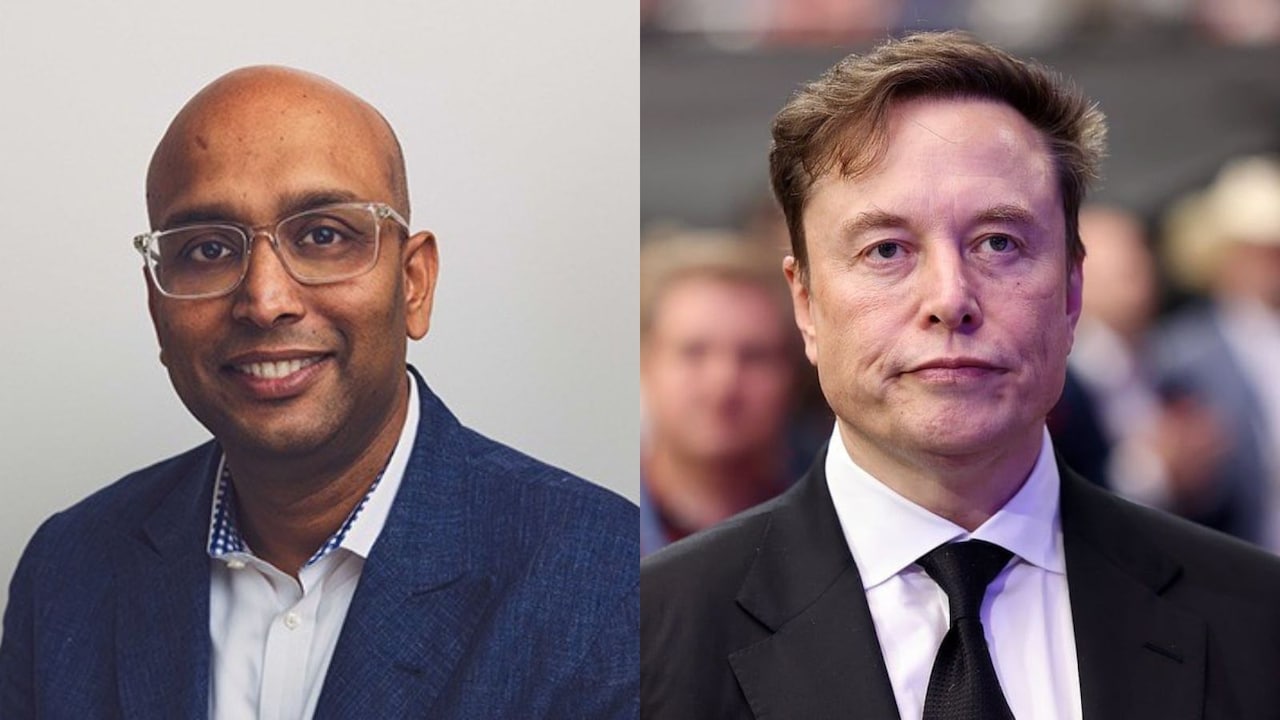
When the financial pages announced that a relatively quiet corporate executive had suddenly eclipsed nearly every household name in tech to become the world’s second-highest-paid CEO behind Elon Musk, the public reacted with predictable shock. The headlines trumpeted a mind-boggling figure: 821 million dollars, or roughly 7,744 crore rupees, awarded in a single year.
The man holding this historic compensation package is Shankh Mitra, the Chief Executive Officer of Welltower, an American real estate investment trust specializing in senior housing and healthcare infrastructure.
To the casual observer, the idea of an executive in senior care properties taking home close to a billion dollars sounds absurd, if not entirely disconnected from operational reality. Yet, looking under the hood of this monumental payout reveals a fundamental truth about modern corporate governance. This was not a standard salary check or a guaranteed cash bonus. It is a massive, highly restrictive bet on the long-term survival and appreciation of physical infrastructure.
Understanding how an instrumentation engineer from Kolkata outearned figures like Satya Nadella or Sundar Pichai requires looking past the raw dollar figure. It requires analyzing the complex mechanics of executive equity, performance-based clawbacks, and the aging population demographics driving institutional capital today.
Inside the Corporate Real Estate Machine
Most public discussions regarding executive compensation treat all income identically, mixing base salary, short-term bonuses, and stock options into a single headline number. This lack of nuance misses the structural reality of modern high-end compensation.
In Mitra’s case, roughly 99 percent of the reported 821 million dollars came entirely in the form of stock grants rather than liquid cash. The cornerstone of this specific package was a 789 million dollar equity award issued in late autumn. Because Welltower’s stock price climbed steadily through the final months of the fiscal year, the paper value of those underlying shares surpassed one billion dollars before the calendar turned.
But paper value does not equal wealth in hand.
To understand the friction built into these arrangements, one must look at the time horizons imposed by the corporate board. If a hypothetical executive received a hundred million dollars in cash, that money would immediately belong to them, free to be spent or moved into personal investments. Conversely, restricted stock units are locked behind multi-year performance gates.
Mitra cannot simply cash out this windfall to buy a fleet of private jets or private islands next week. He is legally bound to the long-term performance of the real estate portfolio.
- The Retention Gate: Roughly half of the granted shares will not vest until 2031, requiring the CEO to remain at the helm for at least five more years to see a single dime from that portion.
- The Market Cap Target: The remaining half of the equity package is tied directly to aggressive growth milestones. Welltower must increase its total market value by at least 45 percent within a five-year window.
- The Index Hurdle: The company cannot merely coast on a rising tide. The stock must actively outperform multiple major stock market indices over that same five-year duration.
If the commercial real estate market experiences a structural downturn, or if senior housing occupancy rates crater, those billions on paper can evaporate into nothingness before they ever vest.
The Shared Risk Illusion
Corporate boards routinely defend nine-figure stock packages by arguing that they perfectly align the executive's personal interests with those of ordinary shareholders. When the stock goes up, everyone wins; when it falls, the executive suffers alongside the retail investor.
While this logic holds up during an economic boom, it overlooks a structural asymmetry in wealth generation.
Consider a retail investor who puts their life savings into a stock. If that stock drops by 50 percent, that individual experiences a tangible, devastating loss of existing capital. If an executive is granted millions of shares for free, and those shares drop by half, the executive still walks away with an incredibly valuable asset that cost them nothing out of pocket to acquire. They have lost potential upside, but they have not lost their own money.
Furthermore, Welltower did not stop at rewriting the pay scale for its chief executive. The company's board awarded three other top executives packages exceeding 100 million dollars each in the same calendar year. This marked only the second time in a decade that a single corporation minted four separate nine-figure executive payouts in a twelve-month span.
This concentration of corporate wealth raises serious questions about institutional accountability. When an entire executive suite is handed hundreds of millions in performance equity, the pressure to drive short-term stock metrics can become intense, sometimes to the detriment of long-term operational health or safety standards.
Demographics and the Senior Housing Premium
To truly understand why institutional boards are willing to authorize such massive equity pools, one must examine the macroeconomics of the underlying business. Welltower does not build flashy software or consumer electronics. They own the physical brick-and-mortar facilities that house aging populations.
The demographic shift across western nations is predictable, mathematical, and unavoidable. The post-war generation is entering its twilight years. The demand for specialized senior living, assisted care, and medical medical facilities is projected to scale exponentially over the next two decades.
Institutional Wall Street capital views this real estate sector not as a speculative gamble, but as a guaranteed demographic bottleneck. Welltower’s aggressive acquisition strategy, steered by Mitra since his appointment to the top role in 2020, has focused heavily on consolidating ownership of premium healthcare properties before this demand peak hits.
The massive stock awards are essentially a golden handcuff strategy executed by an anxious board of directors. In an era where highly skilled capital allocators can easily jump ship to launch their own private equity funds or activist hedge专区, the board calculated that it was cheaper to dilute shareholders by issuing massive blocks of stock than to risk losing the architect of their real estate consolidation strategy to a competitor.
The Changing Profile of the Global Executive
The meteoric rise of executives originating from the Indian subcontinent has been a dominant narrative in global business for over a decade. However, the nature of this migration pattern has fundamentally shifted.
The first major wave of Indian-origin CEOs to dominate the global stage—think of leaders like Satya Nadella at Microsoft or Sundar Pichai at Alphabet—achieved their positions by climbing the engineering and product management ladders of traditional Silicon Valley technology firms. They were system architects who mastered corporate diplomacy and product scaling.
The new cohort of high-earning leaders is cut from a completely different cloth. They are financial engineers, value investors, and risk managers who cut their teeth in the brutal environments of institutional asset management.
Mitra’s career path reflects this evolution. He did not start in real estate operations. After completing his engineering degree in Kolkata, he moved to the United States to study applied value investing at Columbia Business School. From there, he didn't head to a tech incubator; he went straight into the meat grinder of institutional finance, working as an analyst at Fidelity Investments before managing real estate portfolios at major hedge funds like Citadel and Millennium Management.
This financial background changes how a CEO operates. A product-focused CEO worries about user retention, software updates, and technological disruption. A financial-engineer CEO worries about capital allocation, cap rates, debt refinancing schedules, and structural arbitrage.
In a world where interest rates fluctuate wildly and real estate values are highly sensitive to borrowing costs, Wall Street boards are increasingly choosing to hand the keys of the castle to individuals who understand how to manipulate balance sheets rather than those who understand how to build consumer products.
The Fragility of Paper Fortunes
The public fixation on these multi-million-dollar paydays ignores how quickly these corporate structures can fracture under regulatory or macroeconomic pressure. Real estate investment trusts are bound by law to distribute at least 90 percent of their taxable income to shareholders in the form of dividends, leaving them highly reliant on debt and continuous equity issuance to fund new property acquisitions.
This means a company like Welltower is constantly at the mercy of credit markets. If inflation spikes or the central bank keeps interest rates elevated for an extended period, the cost of servicing the debt used to buy these senior living facilities rises sharply.
When borrowing costs rise, profit margins compress. If margins compress, the stock price drops. And if the stock price drops, that historic 821 million dollar pay package begins to look less like a historic fortune and more like a collection of worthless options.
The board’s decision to tie almost the entirety of executive compensation to stock metrics creates a high-stakes paradox. It forces the executive leadership to prioritize the daily fluctuations of the public market to protect their impending payouts, even when the underlying business requires patient, long-term physical maintenance and capital expenditure.
Ultimately, these eye-watering executive payouts are the natural byproduct of a hyper-financialized global economy where asset inflation routinely outpaces labor compensation. Shankh Mitra’s massive paper fortune is a symptom of a system that rewards the strategic allocation of corporate capital far more aggressively than it rewards operational execution or traditional product innovation. Whether this massive equity bet pays off for the ordinary shareholders who fund it will not be clear until those long-term performance gates finally open in 2031.