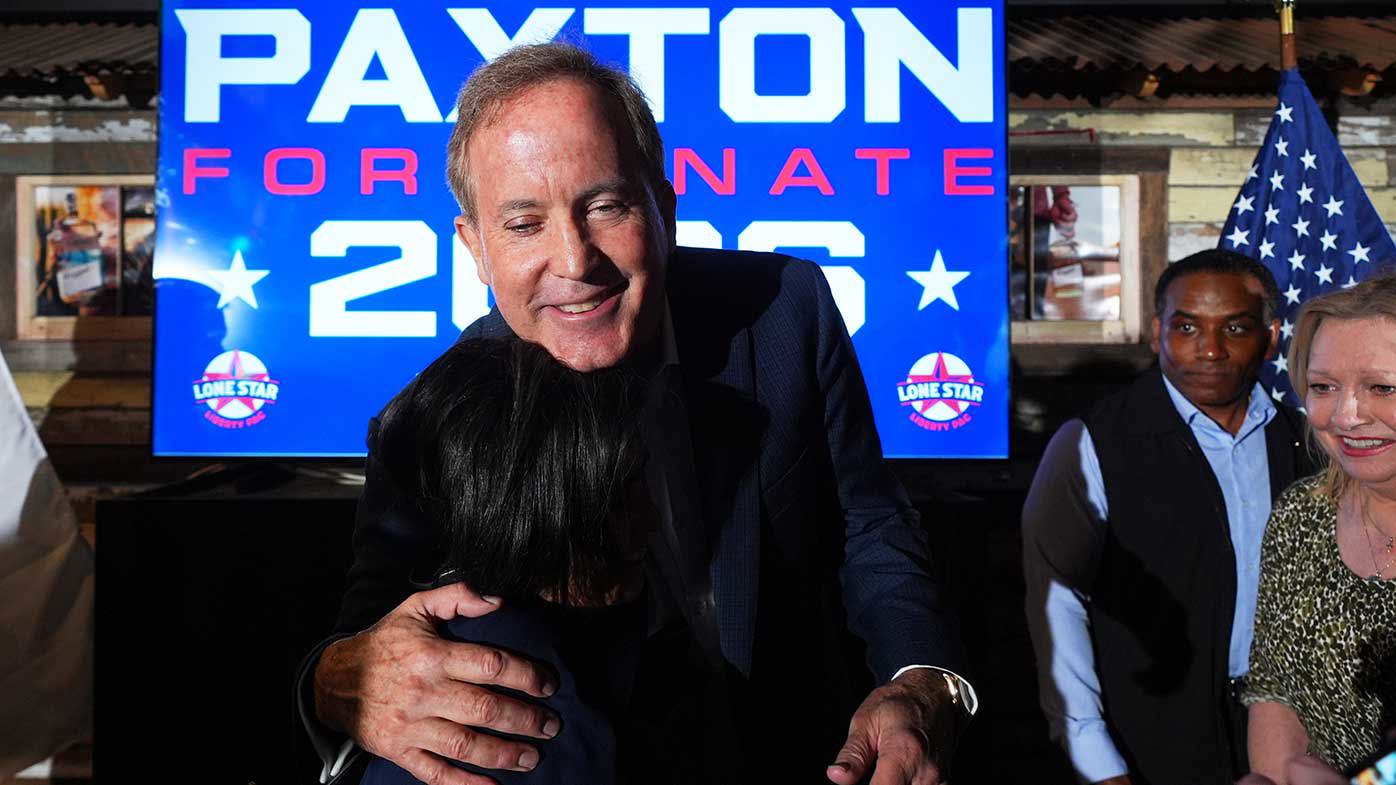
Donald Trump’s endorsement just ended the political career of four-term Senator John Cornyn, handing the Texas Republican Senate nomination to Attorney General Ken Paxton. But this hard-right triumph creates an immediate, severe vulnerability for the GOP in its most critical electoral fortress. While national headline writers frame the victory as a simple demonstration of internal party dominance, they overlook the underlying mathematical reality of the general election. Recent polling reveals Paxton trailing or locked in a dead heat with Democratic nominee James Talarico, driven by massive underperformance among traditional, suburban Republicans. By prioritizing absolute loyalty over general election viability, the party has transformed a reliably red seat into a high-stakes gamble.
The Breakdown of the Suburban Red Wall
For a generation, the formula for Republican dominance in Texas relied on a predictable coalition. Rural counties delivered massive, monolithic conservative majorities, while the sprawling suburbs surrounding Houston, Dallas, and Austin provided the raw vote volume needed to bury Democratic metropolitan strongholds. Cornyn understood this math. He won his previous terms by maintaining a clean, business-friendly profile that appealed to center-right suburbanites who care more about property tax relief and corporate relocation than ideological warfare.
Paxton represents the absolute antithesis of that strategy. His political brand is built entirely on friction, high-profile litigation, and a populist defiance of institutional norms. While this approach ignites the passions of the rural base and low-propensity voters who turn out specifically for the Trump movement, it creates severe friction in places like Collin, Denton, and Fort Bend counties.
Data from the April University of Texas/Texas Politics Project poll highlights this structural fracture. Paxton commands the loyalty of only 63 percent of self-identified Republicans in head-to-head matchups against Talarico. The remaining 37 percent are either undecided, looking for third-party alternatives, or cross-pressured enough to consider voting for a Democrat. In a state where a Republican must win the suburbs by at least five to seven percentage points to secure victory, entering the general election with a fractured base is a recipe for disaster.
The Talarico Variable
Democrats have spent a decade chasing the mirage of a changing Texas electorate, usually relying on charismatic progressives who burn through hundreds of millions of dollars only to fall short by four or five points. James Talarico represents a different, far more potent threat to the GOP status quo.
Instead of running on a standard national Democratic platform, Talarico utilizes a faith-based populism that directly targets the moral and ethical vulnerabilities of the Republican ticket. As a former public school teacher and a student at a Christian theological seminary, he speaks a cultural language that resonates in the middle of the electorate. He does not cede the ground of religious values to the right. Instead, he uses it to critique Paxton’s extensive history of legal controversies, including a 2023 impeachment battle and unresolved state and federal investigations.
Texas Senate Matchup: Base Party Retention
==================================================
Democrat James Talarico:  ██████████████████ 82% (Democratic Base)
Republican Ken Paxton:    ██████████████ 63% (Republican Base)
==================================================
Source: UT/Texas Politics Project Poll
This strategy is specifically engineered to give permission to moderate, churchgoing Republicans to break ranks. When Talarico talks about public school funding or ethical accountability, he isn't appealing to the progressive activist base in Austin; he is talking directly to the suburban mothers and white-collar professionals who backed Nikki Haley in the 2024 primaries and feel alienated by the current trajectory of the state party.
The Risk of the Low Propensity Gamble
The core argument put forward by Paxton’s strategists is that his nomination will activate a massive wave of working-class, low-propensity voters who typically only show up when Trump himself is at the top of the ticket. They argue that this surge will more than compensate for any losses among suburban moderates.
This is a dangerous miscalculation of midterm dynamics. Midterm elections are fundamentally driven by differential turnout, which inherently favors motivated, highly educated voters. Historically, when a dominant party nominates a highly polarizing figure in a midterm cycle, it serves as a massive accelerant for the opposition's fundraising and volunteer mobilization.
We have seen this script play out across the country in recent cycles. When flawed, hyper-ideological candidates secure nominations in states like Arizona, Georgia, or Pennsylvania, the result is almost always the same. The base turns out, but the middle evaporates.
Texas is not yet a blue state, and the structural advantages of the GOP remain formidable. The state has not elected a Democrat to the U.S. Senate since 1993. Trump won the state handily in 2024, proving that the top of the ticket remains firmly conservative. But down-ballot performance is decoupling from presidential numbers. If Paxton spends the next five months litigating his past scandals rather than articulating an economic vision for the future, he will hand Democrats the exact opening they need to break the longest statewide winning streak in the nation.
How Trump's endorsements are reshaping the 2026 midterms provides an analytical look at the broader national strategy behind these primary challenges and the potential general election risks they carry for the Republican party structure.