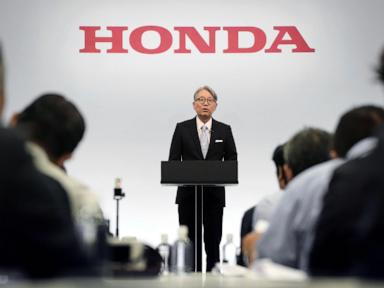
Honda Motor Co. just did something it hasn't done since it became a public company in 1957. It admitted defeat on a balance sheet. The Japanese automaker reported a net loss of ¥423.9 billion ($2.7 billion) for the fiscal year ending March 2026, a staggering reversal from the ¥1.2 trillion profit it enjoyed just twelve months prior. While the headline figures point to a "costly EV strategy," the reality is far more surgical. This wasn't a slow-motion wreck. It was a controlled demolition of a failed roadmap to prevent a total collapse later this decade.
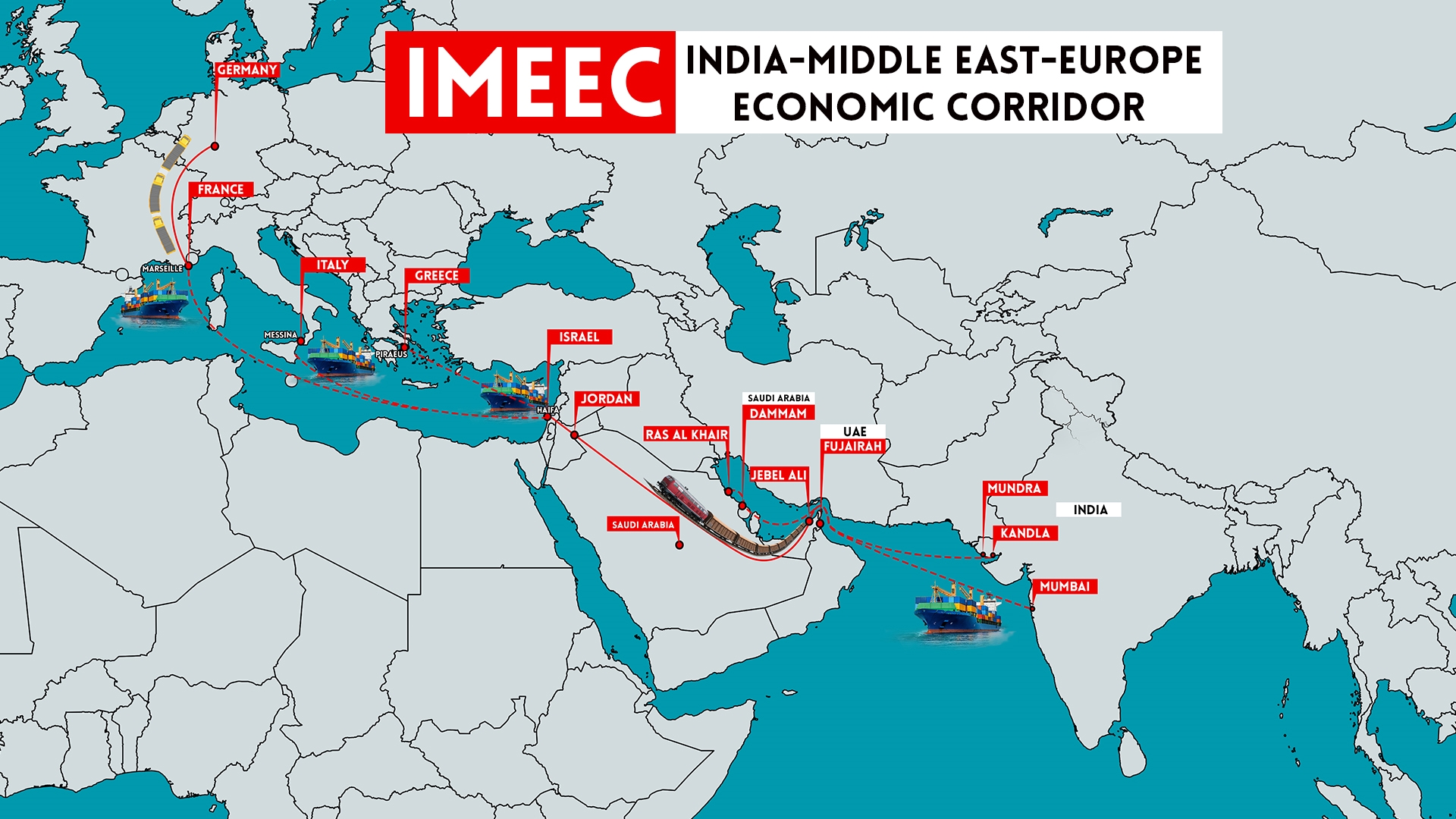
The loss is almost entirely driven by a massive ¥2.5 trillion ($16 billion) restructuring charge. By swallowing this bitter pill now, CEO Toshihiro Mibe is effectively burning the bridge behind him, cancelling three major EV models—including the much-hyped 0 Series SUV and the Acura RSX—and indefinitely suspending a C$15 billion battery ecosystem in Canada. It is a brutal admission that the industry's collective assumption about how fast the world would ditch gasoline was wrong. In similar developments, we also covered: India Shatters the Great Game Blockade to Secure the North.
The China Trap and the American Pivot
For decades, Honda relied on two pillars for its survival: high-margin SUVs in North America and a dominant footprint in China. Both pillars are currently crumbling for different reasons. In China, local titans like BYD have used vertical integration to produce EVs at prices Honda cannot match. Honda's sales in the region didn't just dip; they plummeted, leaving the company with expensive, underutilized factories designed for a world that no longer wants Japanese internal combustion engines.
In the United States, the situation is more complex. The Biden-era incentives that spurred the initial EV gold rush were largely gutted by the "Big Beautiful Bill" of September 2025. Without those tax credits, the math for a $90,000 electric flagship like the Sony-Honda Afeela simply didn't work. Honda realized that launching these vehicles into a cooling market would be "throwing good money after bad," leading to the sudden cancellation of the Afeela project and the dissolution of key parts of its joint venture with Sony. The Wall Street Journal has also covered this important issue in great detail.
A Ghost in the Machine
The core of Honda’s crisis isn't just about consumer demand. It’s about the software-defined vehicle (SDV). When Honda engineers began designing the 0 Series, they were trying to build a computer on wheels. They quickly discovered that their legacy hardware-first culture was incompatible with the agile, code-heavy requirements of modern EVs.
The impairment charges reflect the cost of abandoning proprietary software platforms that were late, buggy, and expensive. Instead of continuing to pour billions into a sinking ship, Honda is pivoting toward the Nissan-Mitsubishi alliance to share the astronomical costs of developing a common EV architecture. It is a humbling moment for a company that has historically prided itself on "the Honda way" of doing everything in-house.
The Motorcycle Cushion
While the automotive division is bleeding, Honda’s two-wheeler business remains a powerhouse. It is the only reason the company isn't in a deeper hole. Last year, Honda sold 22.1 million motorcycles, up from 20 million the year before. These are largely simple, reliable, high-margin gasoline machines sold in Southeast Asia and India.
There is a profound irony here. The very technology Honda is trying to move away from—the internal combustion engine—is currently the only thing keeping the lights on. The profits from 50cc scooters in Jakarta are effectively subsidizing the write-offs for electric sedans in Ohio. This creates a strategic schism. The board knows they must go electric to survive 2040, but their bank account is telling them that gasoline is still king in the developing world.
Why Investors Aren't Panicking
Despite the historic loss, Honda’s stock price actually rose following the announcement. The market likes a clean break. By taking the full hit in the 2025/26 fiscal year, Honda has cleared its books of "zombie" projects.
- Restructured Portfolio: The cancellation of the 0 Series and Afeela removes billions in projected operating losses.
- Hybrid Focus: Honda is shifting its North American capacity back toward hybrids, which are currently seeing record demand and carry higher margins than early-stage EVs.
- Cash Flow: The company still maintains a significant cash reserve, and the motorcycle division provides a reliable floor.
This isn't a funeral; it’s a strategic retreat. Honda is betting that by 2028, battery costs will have stabilized and the infrastructure will be more mature. By then, they hope to launch a new, more efficient platform developed alongside Nissan.
The Cost of Being Late
Honda’s predicament serves as a warning to the rest of the legacy auto industry. They waited too long to pivot, then tried to pivot too fast when the political and economic environment was at its most volatile. They over-indexed on a premium EV future while ignoring the fact that most consumers just wanted a reliable hybrid.
The $2.7 billion loss is the price of that miscalculation. It is a expensive lesson in the dangers of following the herd. While Tesla and BYD have the scale to survive a price war, "middle-weight" players like Honda do not. Their only choice was to stop the bleeding, even if it meant cutting off a limb.
The company now targets a return to profitability by 2027. Success depends on whether they can integrate their engineering DNA with the software requirements of the next decade without losing their identity. They have bought themselves time, but they have used up their margin for error.
Stop looking at the red ink and start looking at the empty factory floors. That is where the new Honda will be built, or where the old one will finally stall.