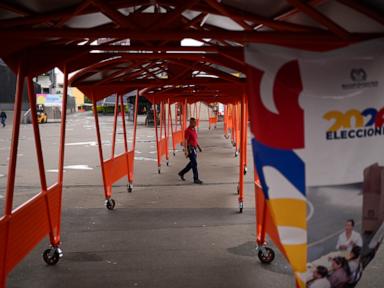
On the eve of Colombia’s pivotal presidential election, the Andean corridor has erupted into a high-stakes diplomatic warfare. The Colombian Foreign Ministry issued a blistering statement accusing Ecuadorean President Daniel Noboa of "deliberate interference" in its domestic democratic process. This sudden geopolitical firestorm was ignited not by covert cyber warfare or leaked intelligence dossiers, but by a highly public, calculated economic maneuver orchestrated across the border in Quito.
Ecuadorean President Daniel Noboa unilaterally announced the lifting of trade tariffs. He did not coordinate this policy shift with the sitting government of Colombian President Gustavo Petro. Instead, Noboa bypassed standard state-to-state diplomatic channels entirely, presenting the major trade concession as a direct agreement reached during a private conversation with one of Colombia's leading right-wing presidential candidates.
The move was timed with surgical precision to sway voters just hours before they head to the polls on Sunday, May 31. By leveraging cross-border trade policy to boost a specific political ideological ally, Ecuador has breached a fundamental rule of Latin American diplomacy.
The Colombian Foreign Ministry immediately rejected what it termed the "misleading presentation" of the tariff removal. Bogotá slammed the Ecuadorean government's attempt to frame the economic concession as a gesture of "good faith," pointing out that weaponizing trade policy in the final hours of a presidential campaign is an overt act of electoral manipulation. While Colombia stated it would technically accept the removal of the trade barriers to protect its local exporters, the diplomatic fallout remains severe.
To truly understand why Ecuador would risk an international incident of this magnitude, one must look past the immediate trade dispute and examine the deeper ideological friction transforming the Andean region.
The Weaponization of Tariffs and Extradition
The deal announced by President Noboa was designed to appeal directly to the core anxieties of the Colombian electorate. Security and economic stagnation dominate the domestic debate. For months, small businesses and agricultural exporters on both sides of the border have suffered under punitive tariffs that choked off local supply chains.
Noboa did not stop at lifting these economic trade barriers. He announced that his administration had reached an agreement with the unnamed Colombian opposition candidate regarding the swift handover and repatriation of Ecuadorean criminals currently held in Colombian prisons.
This dual-pronged announcement targeted the exact vulnerabilities of the political left in Colombia. By packaging a major economic relief measure with a hardline cross-border security initiative, Quito provided the Colombian opposition with a massive, ready-made policy victory on the literal eve of the vote. It allowed right-wing forces to argue that they possess the international credibility to solve the country's border crises, an attribute they claim the current leftist administration lacks.
This represents a sophisticated evolution in foreign electoral interference. It bypasses the deniable, shadowy realms of disinformation campaigns in favor of overt, institutional statecraft used as a political cudgel.
A Ideological Referendum on the Petro Legacy
The stakes of Sunday's election explain the desperation of the regional maneuvers. The vote is widely seen as a tense referendum on the first left-wing presidency in Colombia’s modern history. With Gustavo Petro bound by the constitution to a single four-year term, the left is fighting to maintain its grip on power through his ideological successor, Senator Iván Cepeda of the Pacto Histórico coalition.
Cepeda, a human rights champion, entered the final stretch of the race as the frontrunner. However, he faces a massive wall of opposition. Polls indicate that over 42% of the electorate vow they would never vote for him under any circumstance. This high rejection rate has created an opening for an aggressive right-wing surge.
- Iván Cepeda (Pacto Histórico): The continuity candidate representing the left. He promises to maintain Petro's environmental focus and social spending, but carries the baggage of the administration’s stalling legislative reforms.
- Abelardo de la Espriella (Defensores de la Patria): A confrontational, media-savvy trial lawyer who has experienced a meteoric rise in recent weeks. Running an ultra-conservative campaign focused on law and order, he has statistically tied with Cepeda in multiple late-May polls.
- Paloma Valencia (Centro Democrático): A prominent right-wing senator backed by the traditional party machinery of former President Álvaro Uribe, representing institutional conservatism.
By intervening so visibly, Noboa’s administration aimed to tip the scales, helping push the race into a volatile second-round runoff where the fractured right-wing base could unite to defeat Cepeda.
The Regional Crusade Against Leftist Continuity
Quito’s bold gamble is part of a broader, systemic ideological shift happening across Latin America. The regional political pendulum is swinging aggressively away from progressive populism back toward market-friendly, hardline security-focused administrations.
President Daniel Noboa, a businessman who won power on an explicit anti-crime, pro-market platform, views a potential continuation of a leftist government in Bogotá as a direct threat to Ecuador’s national security. Ecuador is currently gripped by an unprecedented domestic security crisis, with local drug cartels terrorizing major cities. Because these criminal networks operate fluidly across the porous, jungle-covered Colombian-Ecuadorean border, Quito desires a highly cooperative, ideologically aligned right-wing partner in Bogotá who favors aggressive, militarized policing over Petro's complex, negotiated approach to armed groups.
The strategy is not without profound risks for Ecuador. If Iván Cepeda manages to weather this storm and secure the presidency, Noboa will face a deeply hostile neighbor sharing a crucial 365-mile border.
State-to-state cooperation on intelligence sharing, border patrols, and binational trade could ground to a halt. In its haste to influence the immediate electoral outcome, Quito may have permanently damaged the institutional mechanisms required to fight the very transnational drug cartels threatening its stability.
A New Era of Transparent Disruption
The classic playbook of foreign electoral meddling usually relies on plausible deniability. Governments use proxies, bots, and covert funding to gently nudge voters in a preferred direction. What Ecuador has done here breaks that mold entirely, setting a dangerous precedent for inter-American relations.
By utilizing official state policies—tariffs and prisoner extraditions—as overt campaign donations for an opposition candidate, Quito has effectively normalized state-level interference. It transforms regional diplomacy into an extension of domestic political campaigns.
This overt hostility marks the end of the polite diplomatic consensus that historically governed Andean relations, even during periods of deep ideological divergence. The immediate casualties are the formal diplomatic protocols that have prevented border disputes from escalating into broader regional conflicts for nearly two decades.
The immediate electoral math will soon be settled at the ballot boxes across Colombia. The deeper structural damage inflicted upon Andean diplomacy, however, will take years to repair. Ecuador has demonstrated that trade agreements and international security treaties are no longer permanent state-level commitments. They are fluid bargaining chips to be deployed, altered, or weaponized in real-time to influence the sovereign elections of neighboring states.