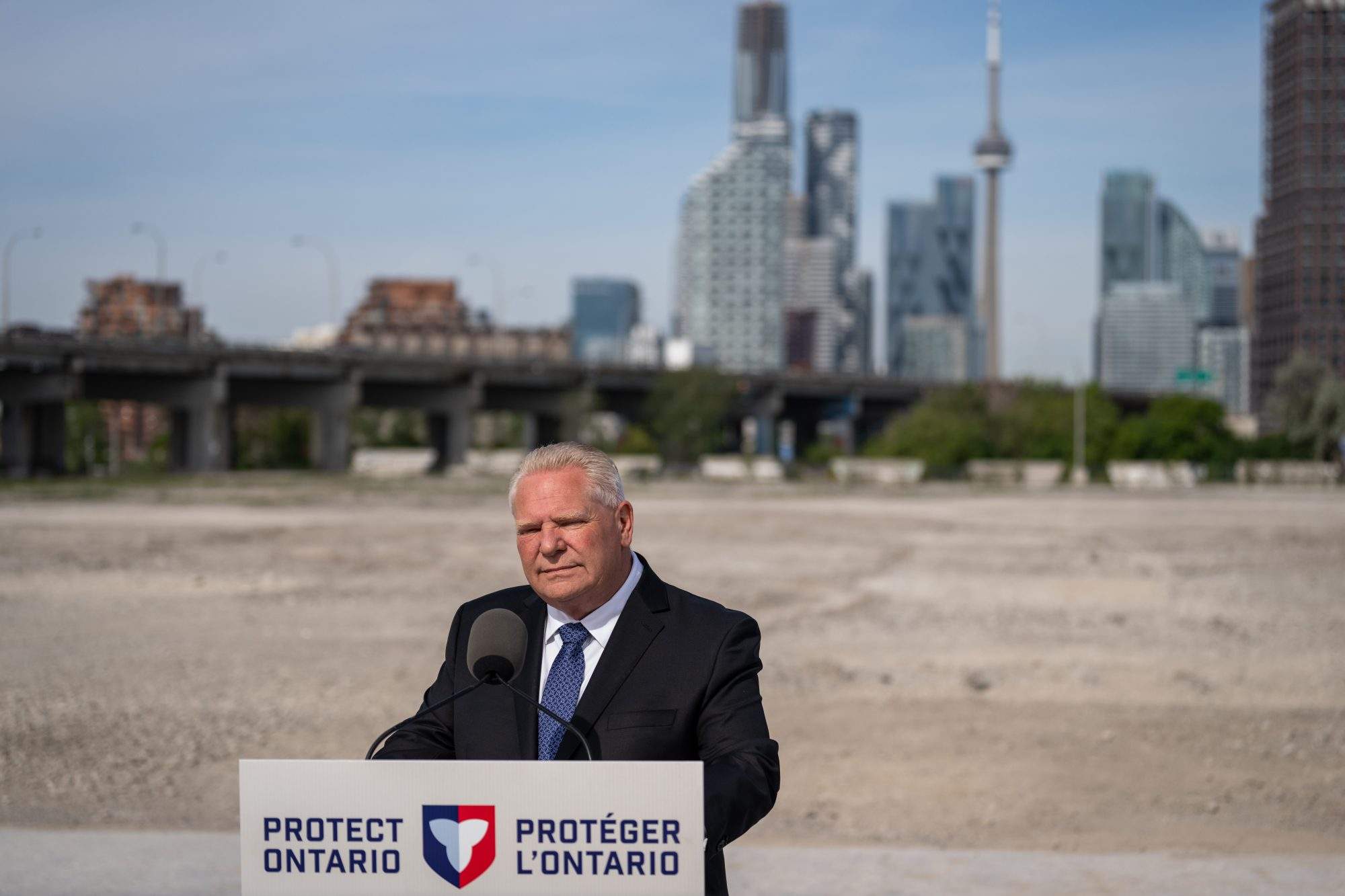
Ontario Premier Doug Ford is facing an unprecedented legal ultimatum from the Angus Reid Institute after he publicly branded its latest quarterly approval data a "fake poll." The non-profit polling organization issued a formal legal letter demanding a full retraction, marking a sharp escalation in the long-running friction between political leaders and public opinion researchers. Ford lashed out during a press conference in Thunder Bay, claiming without evidence that the pollster targeted opposition caucuses and biased neighborhoods to manufacture a historic low 21 percent approval rating.
The friction exposes a deeper panic inside Queen’s Park as the Progressive Conservative government enters its eighth year in power. While a premier dismissing bad numbers is standard political theater, accusing an established institution of deliberate fraud crosses a distinct legal and democratic line. Angus Reid President Shachi Kurl confirmed the legal notice, stating the firm intends to correct the public record rather than litigate through the press, establishing a firm boundary against the casual delegitimization of independent data.
Inside the Breakdown of Political Decorum
Politicians have dismissed unfavorable data for generations with the classic refrain that the only poll that matters is election day. Ford himself frequently relies on the folksy wisdom that "polls are for dogs." What changed this week was the specific allegation of systemic corruption.
By claiming that Angus Reid specifically sampled the NDP and Liberal caucuses, or restricted their fieldwork to a "hardcore NDP neighbourhood downtown," the premier moved from routine skepticism to an explicit accusation of malpractice.
The strategy mimics a broader global trend where populist leaders attempt to insulate themselves from negative news by attacking the credibility of the institution gathering it. When numbers are favorable, leaders point to them as proof of a mandate. When the numbers plunge, the methodology is suddenly rigged.
Angus Reid wasted little time pointing out this hypocrisy, noting that Ford remained completely silent on their methodology when the same quarterly tracker recorded his approval peak at 69 percent during the early days of the pandemic.
The Data Behind the Defiance
The numbers driving this defensive reaction reveal a significant erosion of the premier’s base. A ten-point slide since March 2026 has left Ford at the bottom of the provincial leadership rankings across Canada.
To understand how a government with a stable legislative majority drops to 21 percent personal approval, one must look at a compounding series of self-inflicted wounds over the first half of 2026.
- The introduction of controversial legislation exempting the premier and cabinet ministers from freedom of information laws.
- An expensive, protracted legal battle to shield the premier’s personal cellphone records from public scrutiny.
- The procurement of a $28.9 million Challenger 650 jet for provincial government travel amidst ongoing economic anxiety.
These actions have created a distinct disconnect between the premier's "working-for-you" brand and the reality of his administration’s policy choices. The pushback against transparency, in particular, has alienated moderate voters who previously tolerated the government's controversies in exchange for economic stability.
The Myth of the Internal Poll
In his rebuttal, Ford countered the public data by claiming his internal party polling shows the PCs at 41 percent support, positioned to win another "massive majority." This defense relies on a common obfuscation of two entirely different metrics: personal approval and voter intent.
A premier can easily possess a dismal personal popularity rating while their party remains competitive in a fractured multi-party system. In Ontario's political ecosystem, a party can secure a majority government with roughly 38 to 40 percent of the popular vote if the opposition remains split between the Liberals and the NDP.
Hypothetically, if a polling firm asks voters "Do you approve of the Premier's job performance?" the answer measures personal brand. If the firm asks "Who would you vote for tomorrow?" the answer measures structural partisan alignment. Ford is conflating the two to soothe his backbenchers and maintain an aura of invincibility. Recent independent data from Liaison Strategies actually suggests that gap is closing, placing the leaderless Ontario Liberals at 38 percent to the PCs' 35 percent, indicating that the premier's personal drag is finally beginning to pull down the party brand.
The legal threat from Angus Reid forces the government into a difficult corner. If the premier doubles down, he risks a high-profile defamation battle that will force his own internal polling methodologies and partisan operations into the public record through legal discovery. If he retracts, he admits that his bombastic claims of a "fake poll" were entirely fabricated to protect his ego.


