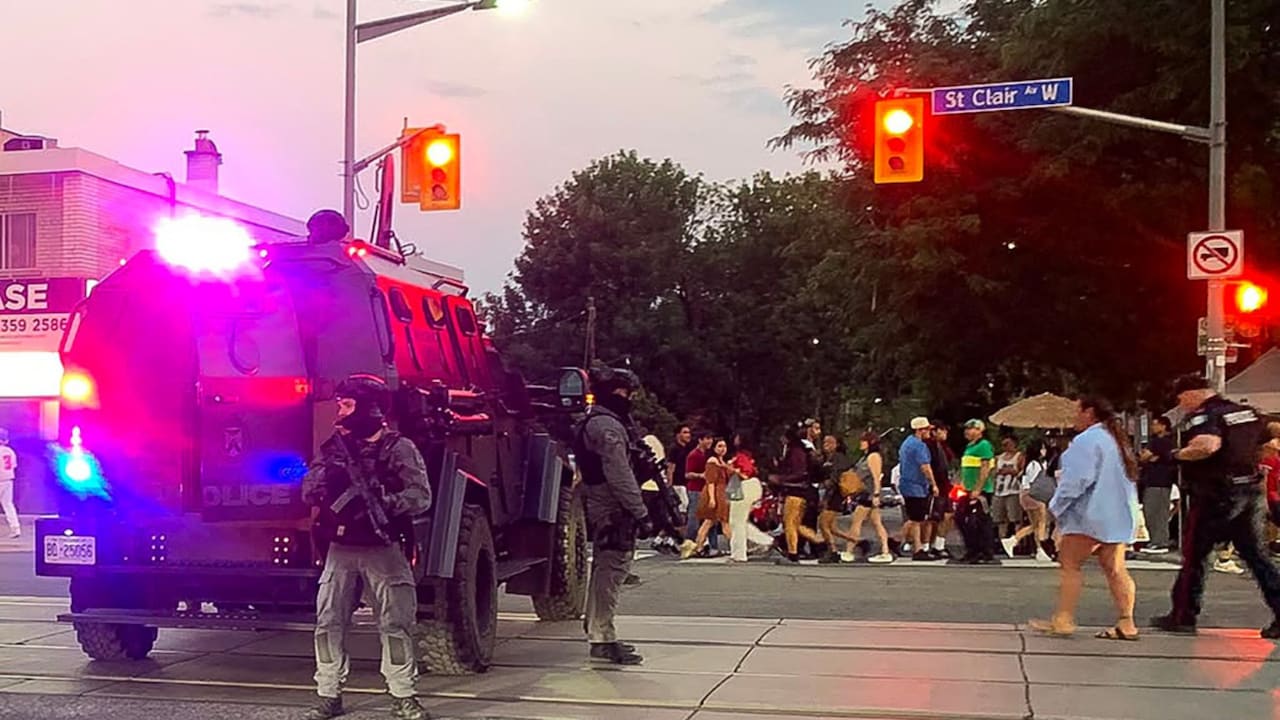
Public celebrations across Canada are facing a severe security breakdown that local authorities are struggling to contain. When violence erupts at a community street festival, the immediate media narrative invariably focuses on the hunt for the perpetrator or the immediate chaos on the ground. The deeper, structural reality is far more troubling. Municipalities routinely approve large-scale outdoor gatherings without enforcing the strict perimeter defenses required to protect dense crowds from modern threats. This operational gap leaves thousands of attendees exposed in open, soft-target environments where traditional policing methods are fundamentally inadequate.
The Illusion of Street Closure Security
Municipal event planning has long relied on a dangerously outdated playbook. Standard practice for a neighborhood festival involves blocking traffic with plastic cones, wooden sawhorses, or standard police cruisers parked at major intersections. These measures create a psychological barrier for law enforcement, but they offer zero physical protection against a determined attacker.
The physics of a crowded street block make it highly vulnerable. A single point of breach can channel panic into tight choke points, compounding injuries as hundreds attempt to flee through narrow alleyways or past temporary vendor stalls. True security requires heavy vehicle mitigation systems, concrete jersey barriers, and interlocking steel perimeters capable of absorbing high-velocity impacts.
Most municipal budgets reject these measures. They cite the high cost of renting heavy infrastructure and the logistical headache of blocking commercial corridors for days at a time. This financial calculation trades attendee safety for bureaucratic convenience. City councils frequently offload security responsibilities onto understaffed non-profit community groups, who lack the expertise or funds to procure military-grade perimeter defense.
The Operational Failure of Private Security
When municipal police forces face staffing shortages, festival organizers turn to private security firms to fill the gaps. This creates a massive point of failure. Private guards in Canada are frequently paid minimum wage, receive minimal training in crowd dynamics, and possess no legal authority to detain or disarm individuals.
They are effectively hired to observe and report. During an active threat scenario, this reliance on under-trained personnel guarantees a chaotic response. Private guards often flee alongside the crowd, leaving no coordinated command structure on the ground to guide emergency services toward victims or away from an active danger zone.
Public safety analysts argue that a complete overhaul of event licensing is mandatory. If an organization cannot afford to deploy sworn police officers or certified tactical security at every major access point, the city should deny the event permit. Relying on high-visibility vests to deter violence is a strategy built on hope rather than tactical reality.
The Bureaucratic Nightmare of Victim Recovery
The tragedy of a public attack does not end when the sirens stop. In the aftermath of mass-casualty events at Canadian public gatherings, a second crisis routinely emerges within the community. Well-meaning public donation campaigns and government emergency funds frequently stall in dense bureaucratic pipelines.
Victims and their families find themselves forced to navigate complex non-profit distribution models or state criteria just to cover basic medical expenses and funeral costs. This systemic failure divides local community groups. Accusations of financial mismanagement and lack of transparency quickly overshadow the collective mourning process, compounding the trauma of those who survived the initial violence.
True resilience requires automated, pre-structured emergency payouts handled directly by provincial agencies, bypassing third-party non-profits entirely. Until emergency response frameworks treat financial and psychological recovery with the same urgency as tactical intervention, the survivors of public violence will continue to slip through the institutional cracks.
Lapu Lapu event divides Vancouver's Filipino community
This video provides a direct case study showing how the aftermath of a Canadian festival tragedy can deeply fracture a community due to the mismanagement of emergency victim funds.