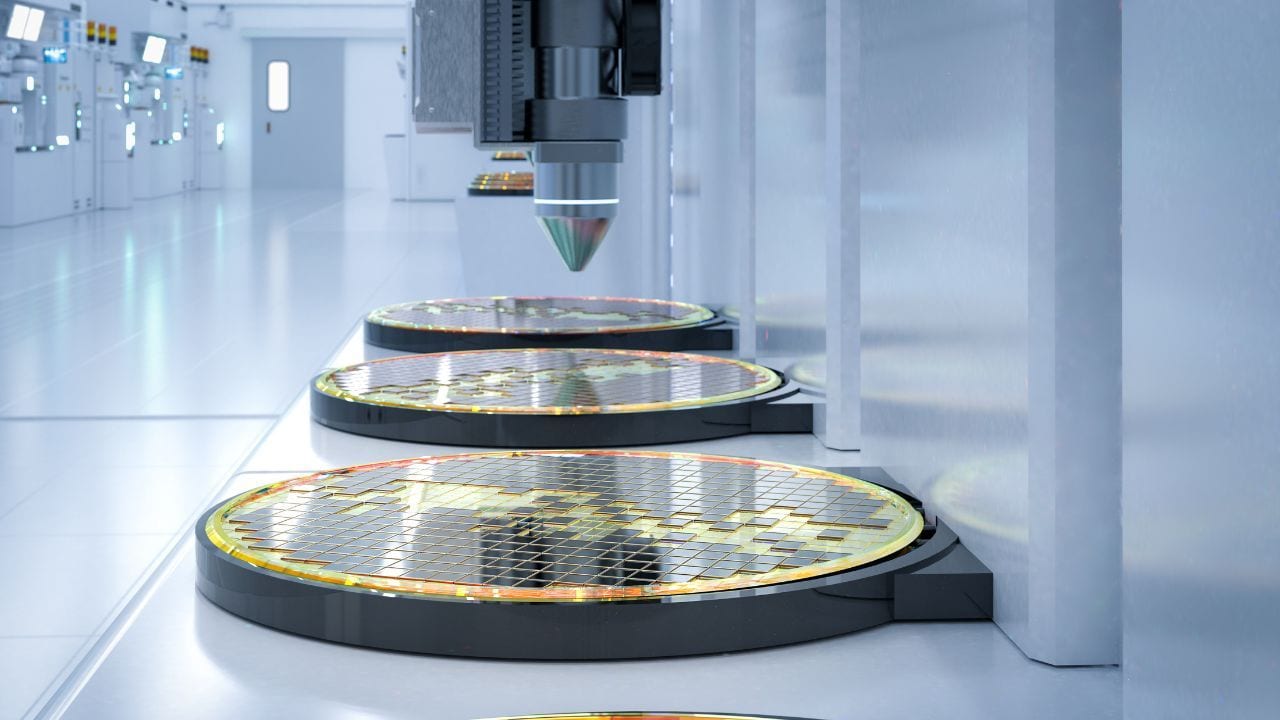
The room is always thirty-five degrees too cold. It smells of ozone, crisp plastic, and the unique, metallic scent of heavily conditioned air. If you stand in the center of a modern data center, the sound isn't a roar; it is a dense, vibrating hum that settles straight into your teeth.
For ten years, I watched these rows of black monolithic towers expand. Every month, a few more floor tiles were lifted, more thick blue cables were snaked underneath, and more silicon power was bolted into place. To the outside observer, this is where the digital world lives. We assume the magic lies entirely in the software, the flashing lights, or the sleek artificial intelligence interfaces that reply to our prompts in fractions of a second. You might also find this similar story insightful: The Brutal Math of the Flying Boat Revival.
We are wrong.
The real battle for the future of technology isn't happening in the code. It is happening in the copper wires and the power substations feeding these rooms. We have reached a point where our thirst for computing power has outpaced the physical infrastructure built to sustain it. Every time an algorithm grows more sophisticated, it demands more electricity, generates more heat, and strains the grid a little further. As highlighted in recent articles by Engadget, the effects are significant.
When most people look at the stock market today, they hunt for the next flashy software company or the trendiest user interface. They look at the surface ripples. We prefer to look at the deep water. That is why we are quietly accumulating more shares of a specific data infrastructure giant—not because it is flashy, but because the entire digital world will stall without it.
The Invisible Toll of a Single Search
Consider a hypothetical professional named Sarah. She sits in a sunlit office, typing a prompt into a generative design tool to help her architect an energy-efficient building. The software returns a stunning, three-dimensional blueprint in less than five seconds. Sarah smiles, tweaks a setting, and hits refresh.
To Sarah, that action felt weightless. It felt free.
But miles away, in a windowless concrete facility, Sarah’s second click caused a sudden spike in power consumption. A bank of high-density processors instantly drew hundreds of watts of electricity, flashing to life to run trillions of calculations. Within milliseconds, the temperature of those chips soared toward the boiling point of water.
If that heat isn't pulled away instantly, the silicon warps. The data corrupts. The system crashes.
To keep Sarah’s software running, massive cooling systems had to engage. Pumps pushed chilled liquid through microscopic channels directly across the surface of the chips. Giant fans outside sped up, pushing hot air into the sky. The physical reality of a digital thought is heat and power.
Multiply Sarah by a hundred million people. Every time we stream a video, ask an AI to write an email, or log into a cloud network, we are drawing a physical straw from the global energy pool. Experts estimate that data centers could consume more than six percent of the total electricity in the United States by the end of the decade, up from roughly two and a half percent today.
This brings us to the core of our investment thesis. The bottleneck of the next twenty years isn't ideas. It is physical space, power management, and thermal control. The companies that own the blueprints to solve this specific crisis hold the keys to the entire tech economy.
The Problem with the Standard Narrative
The financial press loves a simple story. The standard commentary usually goes something like this: buy the chipmakers who design the processors, or buy the tech conglomerates who sell the subscriptions.
That logic worked beautifully for a decade. But it overlooks a fundamental law of physics: efficiency gains in software cannot override the physical limitations of hardware.
Think of it like the automotive boom of the early twentieth century. Investors scrambled to buy shares of the flashiest car manufacturers. Some won, many went bankrupt. But the individuals who bought the oil refineries, the asphalt companies, and the bridge builders made fortunes regardless of which car brand ended up dominant. They owned the friction points.
The company we are buying more of operates precisely at these modern friction points. They don't make the chips. They make the massive, highly complex electrical distribution systems that protect those chips from power surges. They build the liquid-cooling loops that allow data centers to pack twice as many processors into the same square footage.
Without their hardware, the most advanced AI chips on the market are nothing more than expensive paperweights. They would melt themselves within seconds of being turned on.
Why We Doubled Down During the Dip
Markets are notoriously impatient. Over the last quarter, macro-economic anxieties and minor supply chain delays caused a brief, sharp pullback in the broader tech infrastructure sector. Wall Street analysts grew nervous about short-term capital expenditure numbers. The stock dropped by twelve percent over a single three-week stretch.
We didn't panic. We bought more.
When you spend time understanding the long-term structural reality of human behavior, short-term stock charts lose their power to frighten you. Human beings have never, in the history of civilization, decided to use less data tomorrow than they did today. We are an information-hungry species.
Look at the structural shifts occurring around us:
- Automotive fleets are transitioning to autonomous mapping systems that require petabytes of daily data processing.
- Medical research firms are shifting from traditional lab work to massive cloud-based molecular simulations.
- Logistics networks are relying on real-time sensor data to track global supply chains down to the meter.
Every single one of these shifts requires massive, uninterrupted electrical infrastructure. The company we are backing holds a near-monopoly on the specialized medium-voltage switchgear and modular cooling units required by the world's largest cloud providers. Their backlog of orders stretches out past the next three years.
When a business has customers locked into multi-year contracts, waiting in line to buy proprietary hardware because there is literally no alternative vendor capable of manufacturing at that scale, a short-term dip in the stock price isn't a warning sign. It is a gift.
The Subtle Danger of Waiting for Certainty
Many investors tell us they want to wait until the macroeconomic picture clears up before buying more industrial tech exposure. They want inflation numbers to settle perfectly, interest rates to drop predictably, and global supply chains to iron out every wrinkle.
They are waiting for a mirage.
By the time a market feels completely safe and certain, the opportunity has already vanished. The stock will have recovered, the valuation will have expanded, and you will be paying a premium for the exact same underlying fundamentals you could have bought at a discount today.
The reality of investing is that you must be willing to sit with discomfort. It feels uncomfortable to buy an industrial stock when the headlines are screaming about manufacturing slowdowns. It feels counterintuitive to put more capital into a business that relies heavily on copper and steel commodities when supply costs are fluctuating.
But consider what happens next: the cloud giants have already committed hundreds of billions of dollars to capital expansion over the next five years. They cannot turn back. They have built the concrete shells of these massive data complexes, and now they must fill them with infrastructure. They will pay whatever it takes to secure the electrical components necessary to go live.
The Final Metric That Matters
If you strip away the financial jargon, the earnings per share adjustments, and the complex valuation models, a great investment usually comes down to a single question: is this business structurally integrated into the path of progress?
We spent the last month reviewing the technical specifications of next-generation server architectures. The upcoming iterations of enterprise processors are expected to run hotter and draw more concentrated power per rack than anything we have seen in human history. Traditional air-cooling systems—the giant fans that have kept data centers alive for thirty years—are officially hitting their physical limits. Air simply cannot move heat fast enough anymore.
The shift toward liquid cooling is no longer a luxury choice for data center operators. It is a mandatory engineering pivot.
The company we are accumulating has spent seven years quietly acquiring smaller, specialized thermal engineering firms. They didn't do it to make headlines; they did it to build a defensive moat around the patents required for large-scale liquid immersion cooling.
We walked the floor of one of their manufacturing facilities recently. We watched engineers testing a closed-loop system designed to submerge entire server blades in a clear, non-conductive fluid that pulls heat away a thousand times more effectively than air.
It was beautiful, heavy, industrial reality supporting an abstract, digital world.
The market will eventually recognize the full scale of this transformation. The quarterly noise will fade, the supply chain bottlenecks will ease, and the sheer volume of revenue flowing to the builders of our physical internet will become impossible to ignore. Until then, we will keep buying. We will keep taking advantage of the market’s impatience, steadily building our position in the quiet giant holding up the sky.
The servers are hummimg. The world is clicking. Someone has to keep the lights on.