The subway car smells of damp wool and cold metal, that familiar Toronto dampness that settles into your bones right around mid-autumn. It is late afternoon, and the crowd is a crush of heavy coats, blank stares, and glowing phone screens. Nobody is looking at each other. We have perfected the art of urban blindness, the mutual agreement to share oxygen while inhabiting entirely separate universes.
Then someone coughs. Or shifts. Or adjusts a collar. You might also find this similar story insightful: The Light Switch Revolution: How Optogenetics Rewrote the Rules of the Brain.
For a fraction of a second, the invisible architecture of public anxiety shifts.
It is easy to forget how fragile our collective truce with health really is. We spent years rewiring our brains to monitor the air, to calculate the invisible vectors of transmission, to wonder if a scratch in the throat was just dust or the beginning of an upheaval. We learned a vocabulary of contagion that we never asked for. And when the peak of the storm seemed to pass, we exhaled. We packed away the vigilance. We wanted our normal back so badly that we convinced ourselves normal was a permanent state, rather than a temporary grace. As highlighted in latest articles by National Institutes of Health, the results are notable.
Yet biology does not care about our fatigue.
Consider what is happening right now across the city. According to Toronto Public Health, mpox cases are quietly ticking upward once again. Not in a cinematic wave that empties the streets, but in a slow, persistent creep that health officials are tracking with mounting urgency. The numbers themselves are cold—a tally of positive tests, an uptick in clinical visits—but numbers are just smoke. The fire is happening in living rooms, in quiet conversations between partners, in the sudden confusion of someone staring at an unexpected lesion in the bathroom mirror and wondering, How?
Let us be honest about what mpox is, stripped of the clinical jargon that sanitizes it. It is a virus that spreads through close, personal, often skin-to-skin contact. It causes painful rashes, fever, swollen lymph nodes, and a profound exhaustion that lingers long after the physical wounds begin to scab over. In 2022, it burst into public consciousness with a sudden ferocity, disproportionately rattling communities that were already intimately familiar with stigma and medical neglect. People restructured their social lives. They stood in long lines outside clinics, trading whispers and digital QR codes, desperate for a shield.
And then, as the curve flattened, the lines disappeared.
That is the dangerous rhythm of human behavior. We react to crises with white-knuckled intensity, and we abandon precautions the moment the immediate threat drops below the threshold of our daily panic. We treat prevention like an emergency measure rather than a baseline maintenance of community health.
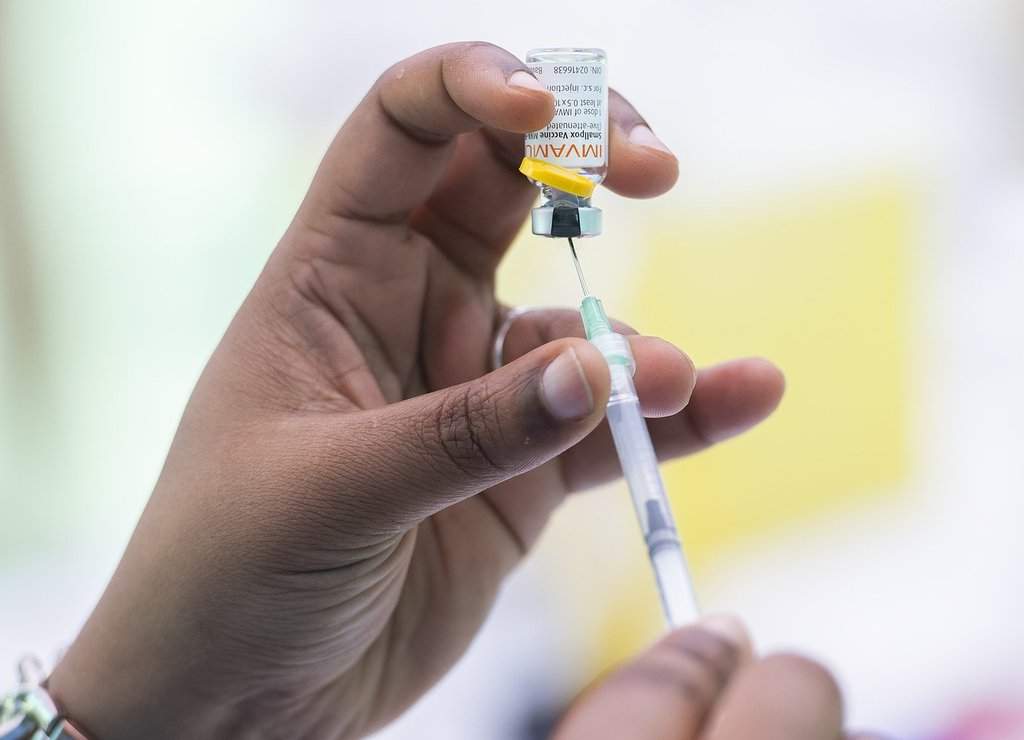
When Toronto Public Health issues a fresh warning, urging eligible individuals to seek out the two-dose Imvamune vaccine, it is easy to scroll past the headline. It feels like background noise. Another advisory. Another bureaucratic voice telling us to do something inconvenient.
Pause.
Imagine sitting across from a nurse in a brightly lit clinic room, listening to them explain that you missed your window for the second dose, or that you never got the first because you assumed the threat had evaporated. Imagine the quiet sinking feeling of realizing that protection was entirely within your control, sitting in a vial in a refrigerator down the street, and you simply didn't bother.
The vaccine is not a magic talisman, but it is a formidable armor. Public health data shows that two doses provide robust protection against severe illness and significantly reduce the likelihood of transmission. Yet, uptake has plateaued. Why? Because complacency is a remarkably comfortable anesthetic. It whispers that bad things only happen to other people, in other zip codes, in other summers.
This is where the human element breaks down. We view public health through an individualistic lens. We think of our bodies as private castles, immune to the municipal grid. But a city is a living, breathing organism. Every subway ride, every crowded dance floor, every shared breath in a cramped apartment ties us to one another in ways we cannot see. When transmission rises in a city like Toronto, it is not an abstract statistic; it is a failure of our collective immune system to look out for its most vulnerable corners.
The stigma, too, remains a ghost in the room. Even now, years after the initial global outbreak, whispers follow the virus. People hesitate to get tested because of the whispers. They delay treatment because of the judgment. They suffer in silence behind closed blinds, terrified of being categorized, blamed, or othered.
We have to dismantle that silence.
If you talk to epidemiologists who spend their days tracking viral lineages, they will tell you that viruses do not negotiate. They wait. They exploit gaps in our collective immunity. They thrive in the spaces where we are too tired, too cynical, or too proud to protect ourselves.
The current rise in cases is a warning flare. It is an opportunity to course-correct before a murmur becomes a roar.
Think about the people you love. Think about the strangers on the subway. Think about the bartenders, the baristas, the artists, the organizers, the queer communities who built this city's vibrant soul and who bear the brunt of these resurgences. Protecting them is not an act of charity; it is an act of preservation. It is saying that we refuse to let apathy dictate who gets sick and who stays well.
The clinic doors are open. The vaccine is waiting. The rest is up to us.
The train slows down, brakes hissing against the rails, jolting the passengers out of their reverie. Doors slide open, and a wall of cool autumn air rushes in, carrying the scent of damp pavement and exhaust. People begin to shuffle toward the exit, heads ducked, moving forward into the evening, each carrying their own invisible world into the dark.