Silence is dying in Central Texas.
You can hear its slow funeral every morning along Highway 290, just east of Austin, where the rumble of concrete mixers and the whine of circular saws have replaced the morning meadowlark. For the last twenty years, watching the Blackland Prairie disappear has felt like watching a slow-motion flood. You stand on a porch, coffee cooling in your hand, and watch another fence line fall. Another oak mott gets bulldozed. Another pasture turns into a master-planned grid of identical roofs and retention ponds.
In a state famous for its sheer, staggering scale, Texans are confronting a bizarre and claustrophobic truth. We are running out of room to breathe.
That is why a quiet real estate transaction near Elgin, Texas, deserves far more than a buried municipal press release. Texas officials recently finalized the purchase of 952 acres of the historic Southwest Stallion Station Ranch, securing the sprawling property to become a future public state park.
On paper, it sounds like routine bureaucracy. Nine hundred and fifty-two acres. A budget line item. A future trail map.
In reality, it is a rare, desperate victory in a battle over what Texas will actually feel like fifty years from now.
The Vanishing Horizon
To understand why this single ranch matters, you have to understand the quiet heartbreak of private land ownership in the fastest-growing corridor in the United States.
Roughly 95 percent of Texas is privately owned. Let that number sink in for a second. Unlike western states where federal agencies hold vast stretches of mountains and desert in public trust, almost every river bend, limestone bluff, and shaded creek in Texas belongs to someone else. For generations, that worked fine. Rural families held onto their acreage, passing down the stewardship of the land alongside cattle brands and family recipes.
Then came the boom.
Consider a hypothetical third-generation rancher—let’s call him Arthur—whose family has worked a thousand acres of Bastrop County soil since the 1940s. Arthur loves the land with a bone-deep loyalty that doesn't need speeches. He knows where the white-tailed deer bed down in August and which low-water crossing floods first during a spring cloudburst.
Yet Arthur is aging. His children have careers in Dallas or Houston. Meanwhile, property taxes climb relentlessly as suburbs creep closer to his gate, and developers leave offers in his mailbox with enough zeros to pay off every family debt for three generations. Selling to a housing developer isn't an act of greed for people like Arthur. Often, it is the only financial exit ramp left.
Once that ranch is carved into quarter-acre lots, it never goes back. Concrete is permanent.
I have driven these backroads near Elgin for years, watching the "For Sale" signs multiply like weeds after rain. You start to feel a low-grade grief every time you pass a gate you recognize. You wonder if this Tuesday is the last time you will see those live oaks standing against the sunset before the earthmovers arrive. It makes you cynical. You start to believe the entire Austin-to-Houston corridor is destined to become one continuous, unbroken strip mall.
What Was Actually Saved
That cynicism is precisely why the Southwest Stallion Station Ranch deal feels like catching a breath after being held underwater.
For decades, this property wasn't just empty scrubland. Located near Elgin in Bastrop County—right on the jagged edge of the Austin metro area's relentless outward push—Southwest Stallion Station operated as a renowned thoroughbred breeding and training facility. It was a working landscape defined by rolling pastures, mature stands of post oaks, and deep roots in Texas equestrian culture.
When Texas Parks and Wildlife Department officials stepped in to acquire these 952 acres, they weren't buying pristine wilderness untouched by human hands. They were rescuing a classic piece of working Texas heritage right before the suburban tide could swallow it whole.
Think of this acquisition like buying an antique grandfather clock right before the estate auctioneer brings down the hammer for scrap. The clock already has history, character, and fine craftsmanship built into its bones. You don't have to manufacture its soul from scratch; you just have to keep it from being smashed into pieces.
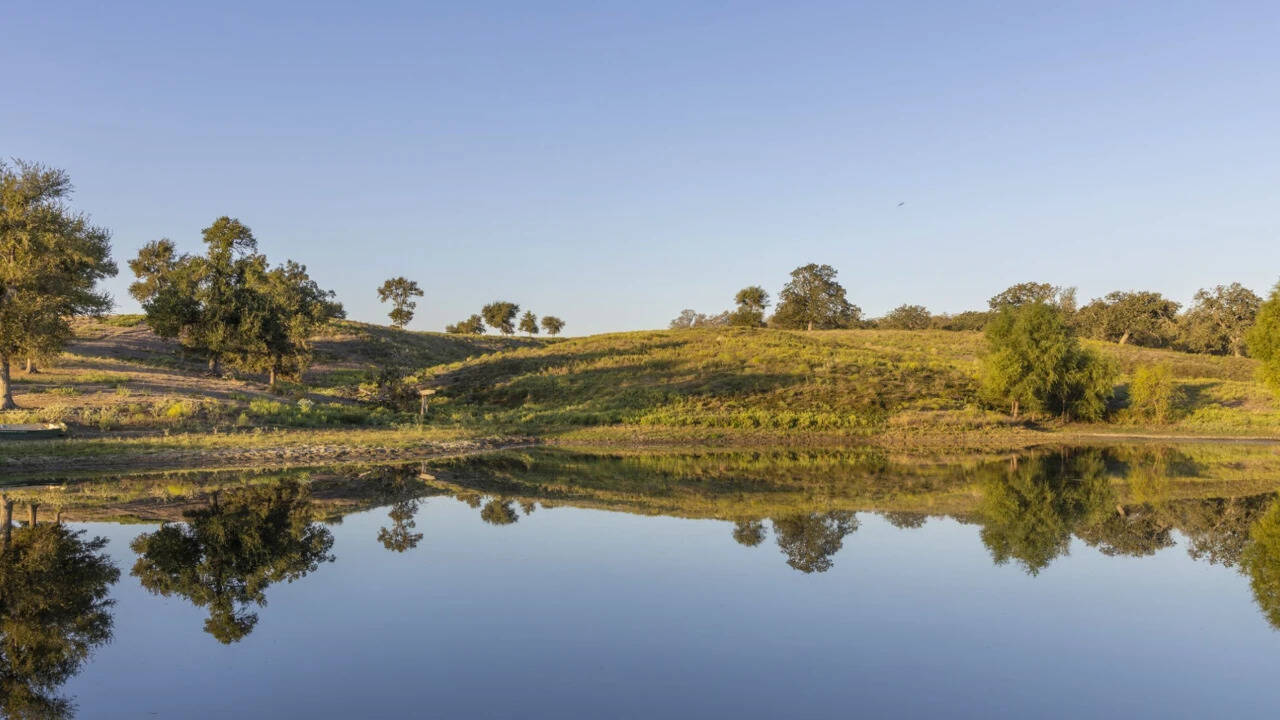
The geography itself is a goldmine for anyone who craves the outdoors. Sitting in the transition zone between the Blackland Prairie and the Post Oak Savannah, the ranch offers sweeping meadows alongside thick, shaded woodlands. It is nearly a thousand acres of uninterrupted habitat where bobcats, painted buntings, foxes, and native pollinators can actually exist without dodging delivery vans.
The Invisible Crisis of Overcrowded Parks
You might be wondering why one new park near Elgin moves the needle when Texas already has dozens of state parks.
Try booking a campsite within two hours of Austin on a pleasant weekend in April or October. Go ahead. Open the reservation portal and look at the wall of red "Unavailable" boxes stretching out for five months.
Demand for public land in Central Texas has completely outpaced supply. The population of the Austin-Round Rock metropolitan area has exploded, adding hundreds of thousands of new residents who all want the exact same thing on a Saturday morning: a quiet trail, a patch of shade, and a place where their kids can throw rocks into a creek without getting yelled at for trespassing.
Existing gems like Bastrop State Park, McKinney Falls, and Pedernales Falls are loved nearly to death. They routinely hit capacity by nine in the morning. Rangers have to turn cars away at the gates, sending disappointed families back onto the highway with coolers full of sandwiches and nowhere to go.
When public parks overflow, two dangerous things happen:
- The land degrades. Trails widen into muddy trenches as hikers step off-path to pass crowds, crushing fragile root systems and accelerating soil erosion.
- People disconnect. When getting into nature requires strategic military planning six months in advance, regular folks simply give up. They stay indoors. They stare at screens. And people do not fight to protect what they never get to touch.
Adding 952 acres right in the backyard of millions of Central Texans acts as a massive pressure-release valve. It gives people in Elgin, Manor, Bastrop, and East Austin a sprawling sanctuary within a thirty-minute drive—a place where access to the outdoors isn't a luxury reserved for people who own a deer lease or a weekend ranch.
The Long Road From Ranch to Park
Before anyone grabs their hiking boots and heads toward Elgin this weekend, we need to be honest about how this works. Buying the dirt is only the opening chapter.
Right now, the former Southwest Stallion Station Ranch is not open to the public. Transforming a private equestrian operation into a safe, navigable state park takes years of unglamorous, painstaking work.
State biologists have to walk every acre to inventory native grasses, map wildlife corridors, and identify sensitive ecological zones that need protection from heavy foot traffic. Engineers have to figure out how to get cars in and out safely without turning local farm-to-market roads into parking lots. Planners have to design trail networks, build restrooms, install water lines, and decide where campsites will go without ruining the very quietness people are coming to find.
This waiting period can be frustrating. Taxpayers funded the purchase—bolstered by the historic $1 billion Centennial Parks Conservation Fund that Texas voters overwhelmingly approved in 2023—and people naturally want to see what their money bought.
Yet rushing the process is how you ruin a park before it even opens. If you throw open the gates tomorrow without proper trails, parking, or waste management, ten thousand well-meaning visitors will trample the meadows into dust in a single month. Patience isn't bureaucratic stalling here; it is stewardship.
Why Voters Actually Paid for This
There is a deeper story humming beneath the surface of this land deal, and it cuts right through the usual political noise.
Texas is a state fiercely protective of property rights and notoriously skeptical of government spending. Yet when Texans were asked at the ballot box whether to dedicate a billion dollars to buying new parkland, they said yes by a landslide. Across party lines, across urban and rural divides, people looked around at the cranes dominating their skylines and realized what was slipping through their fingers.
Money can build a stadium in two years. Money can build a highway interchange in four.
Money cannot build a 150-year-old post oak tree. Once an ancient woodland is scraped flat for an industrial warehouse, no amount of capital can bring it back within our lifetimes.
By securing these 952 acres near Elgin, state officials proved that the Centennial Parks fund isn't just sitting in an account gathering dust while land prices double. They moved decisively in one of the most competitive, expensive real estate markets in the country and pulled a massive piece of Texas off the chopping block forever.
Stepping Through the Gate
Close your eyes for a moment and picture what happens ten years from now on a crisp November morning at this new park.
Imagine a young family from East Austin—parents working two jobs, living in a cramped apartment with no backyard—pulling their beat-up sedan through the park entrance just after sunrise.
The mist is still clinging low to the pastures where thoroughbreds once trained. The air smells like damp earth, crushed cedar, and fallen oak leaves instead of exhaust fumes. Their eight-year-old son steps out of the car, hears the sharp, sudden whistle of a bobwhite quail echoing across the meadow, and freezes in his tracks, eyes wide.
No developer can ever pave over that moment. No zoning board can ever reclassify it.
Because someone had the foresight to buy 952 acres of ranchland before the concrete arrived, that patch of sky, grass, and silence belongs to him now. And it will belong to his children, too.


