Picture a climate-controlled basement forty feet beneath the streets of Midtown Manhattan. The air smells faintly of cedar, silica gel, and recycled oxygen. It is kept at a rigid seventy degrees Fahrenheit, with relative humidity locked at fifty percent, never fluctuating by more than a fraction of a degree.
Inside this subterranean concrete bunker sit thousands of masterworks. Paintings that could alter the course of a young artist’s life. Sculptures that define entire decades of human rebellion. Photographs that capture the raw, unvarnished grief of vanished worlds.
They sit in the dark. For years. Sometimes for decades.
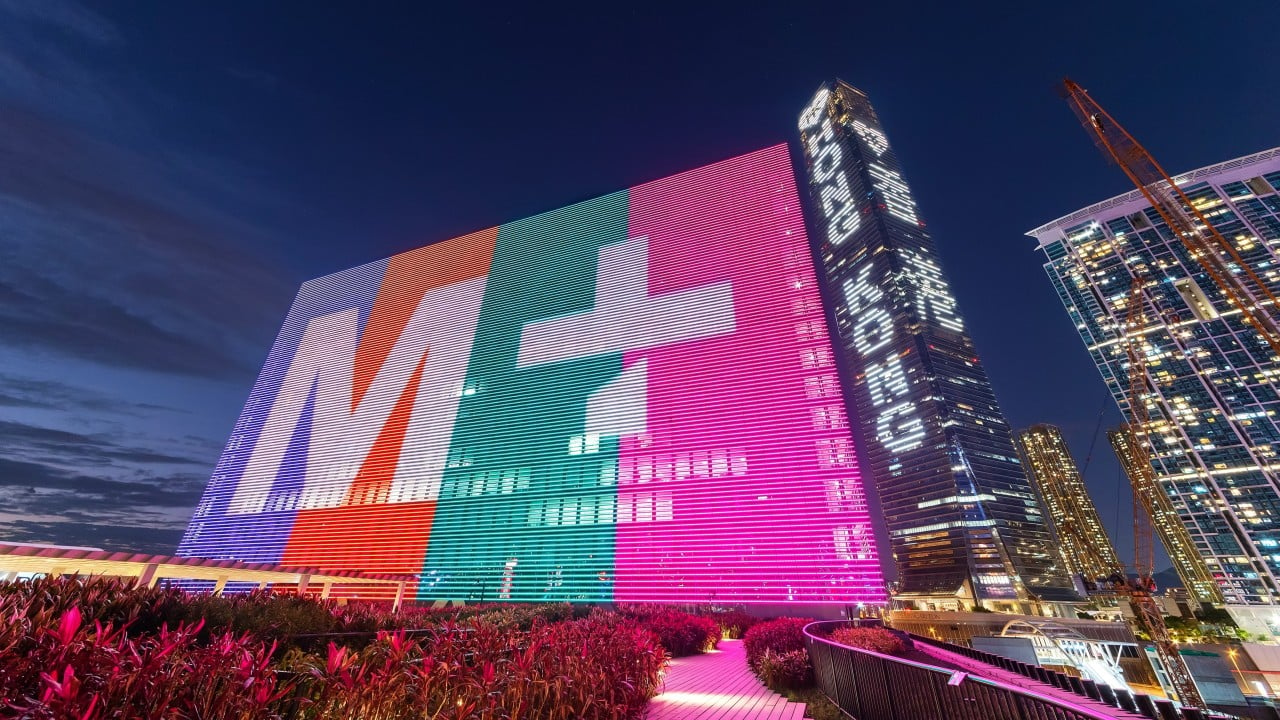
Meanwhile, six thousand miles away in Paris, another subterranean vault hums with the exact same climate-controlled silence. And eight thousand miles away on the edge of Victoria Harbour in Hong Kong, a massive, light-filled concrete monolith gazes out over the water, its curators wrestling with a paradox that has haunted the art world for a century.
We tend to think of great museums as permanent stages. You buy a ticket, walk through the turnstiles, and expect to see the canon of human creativity hanging neatly on white drywall. That is an illusion. Even the wealthiest, most sprawling institutions on earth can only display roughly three to five percent of their permanent collections at any given moment. The remaining ninety-five percent is trapped in purgatory, wrapped in archival glassine and slotted into steel racks, waiting for a spotlight that rarely comes.
For generations, moving a single piece of that hidden ninety-five percent across an ocean required a logistical miracle and a small fortune. Until recently.
When Hong Kong’s M+, the Museum of Modern Art in New York, and the Centre Pompidou in Paris quietly finalized a sweeping new alliance to overhaul how they share, loan, and co-curate art, the headlines treated it like dry administrative housekeeping. A press release affair. Three institutions signing paperwork to streamline international museum loans.
Look closer, though, and you see something far more radical. You see three titans of global culture admitting that the old way of hoarding, insuring, and shipping art is broken—and quietly rewriting the rules of who gets to experience human genius.
The Invisible Fortress Around a Painting
To understand why this alliance matters, you first have to understand the sheer, suffocating weight of moving a masterpiece from New York to Hong Kong.
Let us step into a hypothetical scenario to trace the journey of a single canvas—say, a mid-century abstract painting valued at forty million dollars.
Before that painting ever leaves its wall at MoMA, a small army of lawyers, registrars, and conservators goes to work. The paperwork alone takes months. Every microscopic crack in the oil paint must be mapped under ultraviolet light and documented in a condition report thick enough to serve as a doorstop.
Then comes the crate. You do not just put a forty-million-dollar painting in a wooden box. Engineers build a custom, museum-grade double-walled travel frame lined with high-density ethafoam, calibrated specifically to absorb the exact vibrational frequency of a Boeing 777 cargo hold. The crate costs upwards of fifteen thousand dollars and weighs six hundred pounds.
Next is the courier. Under traditional museum protocols, an artwork of that caliber cannot fly unattended. A senior conservator from New York must physically accompany the crate to the airport tarmac, watch it get loaded onto the plane, fly business class to Hong Kong, ride in the back of an armored climate-controlled truck to the museum loading dock, and sleep in a nearby hotel until the crate is acclimated, unsealed, and hung.
And then there is the insurance.
In the wake of global supply chain disruptions, geopolitical friction, and soaring art valuations, fine art insurance premiums have skyrocketed. Add in the astronomical spike in international air freight costs over the last five years, and a single blockbuster exhibition can easily rack up seven figures in shipping and insurance fees before a single visitor walks through the door.
The result? A quiet, creeping cultural isolationism.
Museums began shrinking their ambitions. Curators stopped asking, What story does the public need to see? and started asking, What can we actually afford to crate and insure? Smaller institutions were priced out entirely. Even giants like MoMA, Centre Pompidou, and M+ found themselves locked in an unsustainable arms race of bespoke, one-off loan negotiations that drained budgets and burned out staff.
A Meeting of Three Worlds
I remember standing inside the cavernous atrium of M+ in Hong Kong shortly after it opened its doors in late 2021. The sheer scale of the building—designed by Herzog & de Meuron—is dizzying. Soaring raw concrete beams frame vast galleries dedicated to twentieth- and twenty-first-century visual culture from across Asia and beyond.
Yet as I walked those halls, speaking with curators and visitors alike, a palpable tension hung in the air. Hong Kong had built a world-class vessel, an architectural marvel positioned at the crossroads of East and West. But building the walls is only the beginning. A museum’s true soul lives in the friction between what it owns and what it borrows—the unexpected conversations sparked when a radical ink painting from 1960s Tokyo hangs across the room from a gritty Parisian sculpture or a kinetic installation from New York.
Traditionally, Western institutions dictated the terms of those conversations. For decades, cultural exchange flowed largely in one direction: New York and Paris held the historical canon, and everyone else paid exorbitant fees to borrow a slice of it for ninety days at a time.
That era is over.
By linking arms as equals, M+, MoMA, and the Centre Pompidou are dismantling that colonial-era power dynamic. Think of it less like a traditional museum loan—which resembles a high-stakes pawnshop transaction—and more like a shared, living nervous system spanning three continents.
Consider what happens when three institutions stop treating every exhibition as an isolated, transactional headache and instead build a long-term framework for shared stewardship.
First, they can bundle shipments. Instead of flying one fragile sculpture from Paris to New York and another from New York to Hong Kong on separate, half-empty cargo pallets, curators can coordinate multi-year exhibition calendars. Artworks travel in consolidated, shared diplomatic-style shipments, slashing carbon footprints and cutting freight costs in half.
Second, they are rethinking the archaic courier system. During the global lockdowns of 2020 and 2021, museums were forced into a terrifying experiment: installing priceless art via Zoom. Conservators in New York watched through high-definition cameras on iPads as trusted colleagues in Tokyo or London uncrated and hung their treasures. To everyone’s astonishment, the sky did not fall. The art arrived safely. Trust, it turned out, was far cheaper and more efficient than airfare. This new alliance institutionalizes that hard-won trust, allowing conservators at M+, MoMA, and Pompidou to act as each other’s eyes and hands on the ground.
Third—and most thrillingly—they are sharing intellectual capital. Curators from all three museums are now working together years in advance to co-develop exhibitions, share archival research, and pool conservation expertise.
The Human Stakes Behind the Dry Press Release
Why should anyone outside the rarefied bubble of art historians and museum trustees care about how institutions structure their loan agreements?
Because art is not a luxury commodity meant to be locked in a Swiss freeport or traded like a derivative. At its core, art is the only time machine human beings have ever successfully built.
Let us imagine a nineteen-year-old architecture student living in Kowloon, taking the MTR down to West Kowloon Cultural District on a rainy Tuesday afternoon. She has never been to Paris. She cannot afford a plane ticket to New York. Her entire understanding of modernist design comes from compressed JPEGs on a six-inch phone screen.
When you look at an artwork on a screen, you miss the physical violence of the brushstroke. You miss the scale that makes your stomach drop when you stand beneath a twelve-foot canvas. You miss the scent of raw cedar, the texture of hand-poured concrete, the tiny, human imperfections left behind by an artist’s trembling hand fifty years ago.
Because of this alliance, that student does not have to settle for pixels. She walks into a gallery in Hong Kong and stands inches away from a seminal work shipped directly from the Centre Pompidou’s vaults—a piece that might otherwise have sat unseen in storage because the logistical hurdles were too steep to clear.
Now reverse the lens. Imagine a retired schoolteacher in Queens, New York, or a young filmmaker in the suburbs of Paris. For decades, Western art history was taught as a neat, linear progression running strictly from Europe to North America. Everything else was relegated to the margins, labeled "regional" or "non-Western."
Through this tri-continental partnership, the vast, groundbreaking holdings of M+—works by Asian diasporic artists, experimental collective movements from post-war Japan and Korea, radical architectural visions from across the Global South—flow directly into the galleries of Manhattan and Paris. Not as an exotic footnote, but as central pillars of the modern human story.
The Quiet Friction Nobody Talks About
Of course, reimagining a century-old system is messy, uncertain work. Anyone who tells you that merging the bureaucratic cultures of a French state-run institution, an American private non-profit, and a major Asian cultural flagship is effortless has never sat in a cross-cultural boardroom.
There are real risks here.
In France, the Centre Pompidou’s collection is legally considered inalienable national patrimony, protected by strict state laws that govern every movement of an object. In New York, MoMA operates under a fierce, donor-driven private model where individual trustees often hold deep emotional and financial ties to specific works. In Hong Kong, M+ navigates a complex, rapidly evolving geopolitical reality where artistic freedom and international perception are constantly scrutinized.
And there is a deeper, more philosophical vulnerability that curators quietly wrestle with late at night: the fear of homogenization.
If the same three powerhouse museums start co-curating the same blockbuster shows and rotating the same canonical works between New York, Paris, and Hong Kong, do we risk turning global art into a standardized franchise? Will visiting a museum in Kowloon start feeling suspiciously like visiting one on West 53rd Street?
It is a valid fear. A museum’s magic lies in its local eccentricities—the weird, stubborn regional obsessions that make a gallery in Paris smell, feel, and think differently than one in Hong Kong.
Yet the architects of this alliance seem acutely aware of that trap. Rather than flattening their differences, the agreement is explicitly designed to cross-pollinate their blind spots. MoMA brings an unmatched depth in twentieth-century Western modernism. Pompidou brings a radical, multidisciplinary philosophy that treats design, film, and sound as equal to painting. M+ brings an urgent, forward-looking lens on visual culture across Asia—an area where both New York and Paris have historically suffered from glaring, embarrassing gaps in their collections.
What Happens When Walls Become Doors
We are living through an era defined by hardening borders. Trade wars, visa restrictions, rising nationalism, and fractured supply chains have made the world feel smaller, sharper, and far more suspicious than it did a generation ago.
Against that backdrop, there is something quietly defiant about three of the world’s preeminent cultural institutions deciding to lower their drawbridges.
Think about the physical reality of a museum vault again. Thick steel doors. Biometric locks. Air scrubbers humming in the dark. For centuries, the prestige of a great museum was measured by what it possessed—how much treasure it could capture, catalog, and lock behind its own walls. Ownership was everything. Scarcity was power.
This new pact flips that logic on its head. It argues that in the twenty-first century, a museum’s relevance is no longer measured by what it hoards in the dark, but by how generously and intelligently it puts those objects into circulation.
Next year, when a crate is unsealed in a loading bay overlooking Victoria Harbour, or carried down a freight elevator in Midtown Manhattan, or wheeled across a courtyard in Paris, nobody buying a ticket at the front desk will see the months of legal restructuring, the shared insurance underwriting, or the harmonized conservation protocols that made the moment possible.
They will simply turn a corner into a quiet, brightly lit room. They will stop dead in their tracks before a painting they never expected to see in their own city. And for a few breathless seconds, six thousand miles of ocean will vanish completely.