Silence.
That is the first thing you notice when a multi-billion-dollar supply chain breaks down—not an explosion, not a shouting match on a trading floor, just the eerie, hollow quiet of an assembly bay where forty-ton airframes sit waiting for a five-dollar titanium fastener that is stuck on a cargo ship off the coast of Long Beach.
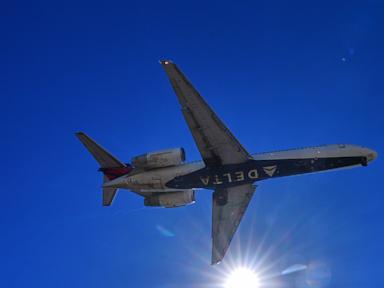
I remember standing near the edge of a tarmac outside Seattle a few winters ago, watching the freezing drizzle streak across the unpainted aluminum skin of a commercial jet that should have been cruising at thirty-eight thousand feet over the Atlantic. Inside the terminal nearby, travelers were checking flight boards with that familiar, low-grade anxiety that has come to define modern air travel. Outside, on the wet concrete, the reality of global aviation looked less like a sleek miracle of engineering and more like a giant holding its breath.
For the past several years, investing in aerospace has felt like watching that grounded plane through rain-streaked glass. You know the machine is built to fly. You know millions of people desperately need it to move. Yet every time the engines begin to spool up, another warning light flashes on the dashboard.
Which brings us to the noise on television, the flashing red and green tickers, and a specific, high-stakes debate playing out in the portfolios of everyday investors.
When Jim Cramer steps up to the Lightning Round or dissects an industrial heavyweight on Mad Money, he isn't merely reading earnings per share off a teleprompter. He is channeling the collective nervousness of millions of retail investors who have watched once-untouchable aerospace stocks get battered by inflation, supply bottlenecks, defense budget squabbles, and manufacturing missteps. Recently, Cramer weighed in on two beaten-down titans of the sky—drawing a sharp line between a bruised giant worth betting on and a troubled rival best left on the runway.
To understand which stock deserves your hard-earned savings, and why the market so often misreads the sky, we have to step away from the Wall Street shouting match and look at what actually keeps a plane in the air.
The Anatomy of a Bruised Giant
Consider a hypothetical investor named Arthur. Arthur is fifty-eight, an electrical engineer in Ohio who has spent thirty years watching how physical things get built and how easily complex systems fail when someone cuts a corner to save a nickel. Every Sunday evening, Arthur sits at his kitchen table with a mug of decaf coffee and a spreadsheet of his retirement holdings.
For years, Arthur treated aerospace stocks like the bedrock of his portfolio. In his mind, the logic was unassailable. There are only a handful of companies on earth capable of building commercial airliners, jet engines, or guided missile defense systems. You cannot disrupt a jet turbine from a garage in Palo Alto. The barriers to entry are measured in decades of metallurgy, trillions of dollars of accumulated intellectual property, and regulatory scrutiny so intense it borders on the theological.
Then came the great unraveling.
First, global air travel collapsed overnight, starving airlines of cash and forcing manufacturers to slash production rates and lay off veteran machinists—the very people whose muscle memory kept tolerances down to a thousandth of an inch. When demand roared back faster than anyone predicted, those veteran hands were gone, replaced by rookies trying to navigate a shattered network of thousands of tier-two and tier-three suppliers.
Arthur watched two of his favorite aerospace names—let’s look at the classic archetype Cramer frequently dissects: the embattled prime airframe manufacturer versus the dominant engine and aftermarket powerhouse, such as Boeing against GE Aerospace, or a struggling defense prime like Lockheed Martin or Northrop Grumman weighed against a commercial aftermarket juggernaut like RTX or TransDigm. Specifically, when Cramer looks at two beaten-down aerospace plays—say, Boeing and GE Aerospace (or RTX after its Pratt & Whitney engine recall crisis)—the divergence in his verdict reveals the single most important truth in modern industrial investing.
Let’s look at the two distinct beasts standing on the tarmac today.
On one side stands the Airframe Titan—represented most vividly by Boeing, a company whose name was once synonymous with American engineering supremacy, now trading like a distressed turnaround story. On the other side stands the Propulsion and Aftermarket King—companies like GE Aerospace or RTX, which suffered brutal sell-offs when metallurgical defects or supply snags rattled Wall Street, yet control the razor blades in the aerospace razor-and-blade model.
Arthur stared at both charts on his laptop screen. Both stocks had taken a beating. Both looked cheap compared to their historical highs. Wall Street’s loudest contrarians were whispering that buying the worst-performing dog in the Dow is always the fastest path to riches.
Arthur felt the familiar pull of the bargain hunter. Why not buy the battered airframe maker at a steep discount? Surely, a duopoly player is too big to fail.
That intuition—reasonable, logical, and deeply human—is precisely what gets investors killed in aerospace.
Why Wall Street Confuses a Scrape with a Fracture
To understand where Cramer draws the line between the stock to buy and the stock to avoid, you have to understand how an airline actually loses money.
Imagine an aircraft as a living organism. The fuselage—the aluminum and composite tube where you stow your carry-on bag and complain about the legroom—is the skeleton. Once an airline buys that skeleton, the manufacturer gets paid, and the transaction is largely finished. If the manufacturer botches the assembly line, suffers whistleblower scandals, faces Federal Aviation Administration production caps, and burns through billions of dollars in negative free cash flow just to fix past mistakes, the shareholder absorbs every ounce of that agony.
Now consider the engines hanging beneath the wings.
A modern commercial turbofan engine is a controlled hurricane spinning at ten thousand revolutions per minute in temperatures hot enough to melt standard steel. Every single flight cycle—every takeoff, every thrust reversal on landing—chews away at the lifespan of fan blades, compressor disks, and turbine seals.
Here is the secret that separates average investors from obsessive aerospace analysts: engine makers do not make their real money selling the engine. Often, they sell the original equipment at break-even or even at a slight loss just to get their hardware bolted onto the wing.
They make their fortune over the next twenty-five years.
Every time a plane flies from Chicago to London, a digital meter is effectively ticking inside that engine. Regulators mandate strict, non-negotiable maintenance intervals. Airlines cannot skip an overhaul because interest rates are high, nor can they shop around at an auto-parts store for generic turbine blades. They must come back to the original manufacturer for certified parts, diagnostic software, and shop visits—and they pay staggering margins for the privilege.
In the financial world, this is called aftermarket recurring revenue. In plain English, it is an annuity backed by the laws of physics.
Think about what happened when RTX disclosed a microscopic powder-metal contamination issue in its Pratt & Whitney geared turbofan engines, or when GE Aerospace faced broader supply chain slowdowns and market pullbacks. The headlines were terrifying. Investors panicked, dumping billions in market value in a matter of days because they saw warranty charges, grounded planes, and messy inspection schedules.
Cramer’s central thesis on beaten-down aerospace stocks hinges on distinguishing between a temporary operational wound and a structural, cultural rot.
When a dominant engine and aftermarket business gets knocked down by a quantifiable, fixable engineering snag or a broad market pullback, the underlying money machine remains intact. Airlines are still flying older jets longer because new planes are delayed. And what do older jets require? More maintenance. More spare parts. More high-margin shop visits. Ironically, the very delays plaguing new aircraft deliveries act like rocket fuel for the companies that service the existing global fleet.
The Trap of the "Too Big to Fail" Turnaround
Now shift your gaze back to the other side of the tarmac—to the beaten-down airframe manufacturer or the fixed-price defense contractor trapped in a legacy nightmare.
Why does Cramer consistently warn retail investors away from catching a falling knife when the problem sits inside the assembly culture itself?
Because in aerospace, time is measured in geological epochs, not fiscal quarters.
When a software company writes buggy code, thirty engineers can stay up all weekend drinking espresso, push a patch on Monday morning, and restore customer trust by Tuesday. When an aerospace prime has to redesign a door plug, renegotiate union contracts after a crippling strike, untangle tens of billions of dollars in debt, and rebuild trust with global aviation regulators, the fix takes years.
Let’s look at the numbers without the Wall Street jargon. Suppose you are looking at a battered manufacturer carrying over fifty billion dollars in debt, bleeding billions in cash over four quarters, and operating under a strict regulatory ceiling that prevents it from ramping up production of its best-selling narrowbody jet. Even if every single order on its massive backlog is real, the company cannot collect the cash until it delivers the plane. And it cannot deliver the plane until every single sub-tier supplier—from the foundry casting landing gear in Ohio to the avionics shop in Arizona—hits its schedule without a single defect.
One missing seat track or one faulty sensor halts the entire line.
Meanwhile, across the fence, the beaten-down propulsion and aerospace systems leader is sitting on a surging backlog of commercial and defense orders, expanding operating margins, generating billions in free cash flow, and buying back its own depressed shares while Wall Street hyperventilates over short-term headlines.
If you buy the broken turnaround, you are betting on management miracles, regulatory leniency, and flawless execution in an industry notorious for Murphy’s Law. If you buy the beaten-down aftermarket and engine compounder, you are betting on one simple, undeniable human truth: people are not going to stop flying, and nations are not going to stop defending their airspace.
The Invisible Stakes in the Hangar
It is easy to treat ticker symbols like chips on a felt table, forgetting that behind every basis point of operating margin sits a physical reality of grease, rivet guns, and human judgment.
During my visits to maintenance, repair, and overhaul hangars—the vast, echoing cathedrals of steel where commercial jets are stripped down to their ribs every few years—the sheer scale of the enterprise hits you in the chest. You smell jet fuel, hydraulic fluid, and ozone. You see mechanics working on scissor lifts forty feet off the floor, inspecting turbine blades under ultraviolet light for hairline fractures invisible to the naked eye.
There is no room for bluffing in a hangar. Gravity does not read press releases, and wind shear does not care about a CEO’s five-year transformation plan.
This physical unforgivingness is precisely why balance sheet strength and aftermarket dominance are the ultimate armor for an investor. When a company owns proprietary engine technology or mission-critical defense electronics—radar systems, missile interceptors, cockpit avionics—it possesses pricing power that borders on a monopoly. When inflation drives up the cost of titanium, rare-earth magnets, and skilled labor, the aftermarket leader passes those costs along in its service contracts.
Contrast that with a defense contractor stuck in legacy fixed-price development contracts. Over the past decade, several major aerospace and defense primes bid aggressively to win Pentagon contracts under fixed-price terms—meaning if the cost of building a new aerial refueling tanker, a trainer jet, or a stealth drone explodes due to inflation and supply shortages, the contractor eats the loss dollar for dollar.
That is how you end up with prestigious, household-name aerospace stocks whose share prices languish for years while the broader market hits record highs. Investors look at geopolitical tensions around the globe, assume every defense and aerospace stock must be minting money, and walk straight into a margin-compression buzzsaw.
Cramer’s philosophy—and the hard-won wisdom of seasoned industrial investors—cuts right through that illusion: never confuse a full order book with a profitable business. An order book full of low-margin, delayed, or fixed-price headaches is an anchor, not a sail.
How to Read the Sky Before You Invest
If you are sitting at your own kitchen table tonight, staring at two beaten-down aerospace stocks and wondering whether to pull the trigger, strip away the noise of cable television and ask three brutally simple questions.
First: Where does the cash come from after the initial sale?
If the company’s survival depends on pushing brand-new, complex machines out the factory door on time just to pay down a mountain of debt, step back. You are signing up for years of headline risk, labor disputes, and regulatory delays. If, however, the company owns the installed base—the engines, the flight controls, the braking systems, the aftermarket parts that must be replaced every few thousand flight hours—then every dip in the stock price is an invitation to buy a tollbooth on global commerce.
Second: Is the current crisis an engineering blip or a cultural disease?
Every great aerospace company eventually hits turbulence. A supplier ships a bad batch of alloy; a software update requires recertification; a quarterly earnings report misses estimates because of a temporary parts bottleneck. Those are scrapes. They heal, and when they do, the stock usually snaps back violently. Cultural disease—chronic quality lapses, adversarial labor relations, years of prioritizing share buybacks over engineering rigor—takes a decade to cure. Do not volunteer your retirement fund to finance someone else’s corporate rehab.
Third: What happens if global growth slows down tomorrow?
In a mild economic downturn, airlines might delay ordering new jets, which crushes the airframe builders. Yet those same airlines still have to fly their existing fleets, and because they postponed buying new planes, those older jets work harder and require even more maintenance. The aftermarket engine and systems leaders get paid either way.
The Verdict on the Tarmac
Let’s return to Arthur, our engineer in Ohio, staring at his spreadsheet on a Sunday night.
For months, Arthur had been tempted by the steeper percentage drop in the troubled airframe giant. The human brain loves symmetry; when a stock falls from $250 to $150, we instinctively imagine it bouncing right back to $250. We mistake a low price for a good value.
Instead, Arthur looked past the stock chart and thought like an engineer. He looked at the company with the cleaner balance sheet, the rising free cash flow, the proprietary engine technology, and the decades-long stream of mandatory aftermarket maintenance revenue—the exact kind of high-conviction aerospace compounder Cramer champions when the market throws the baby out with the bathwater. He left the debt-laden turnaround story to the speculators and put his capital behind the company that owns the beating heart beneath the wing.
Investing in aerospace will never be smooth. The machines are too complex, the geopolitics too volatile, and the supply chains too vast for straight-line returns. There will always be quarters where a delayed shipment or a headline from Washington sends traders rushing for the exits.
Picture that grounded jet on the wet Seattle tarmac one more time. Up close, in the gray drizzle, all you see are the missing parts, the orange traffic cones, and the mechanics huddled under work lights trying to solve today’s problem. You cannot see the millions of passengers already booking next summer’s flights, or the aging global fleet logging tens of thousands of hours every single day, quietly wearing down turbine blades that only one company on earth is licensed to replace.
In the sky, as on Wall Street, gravity eventually wins—and the only companies that stay aloft are the ones built to carry the weight.