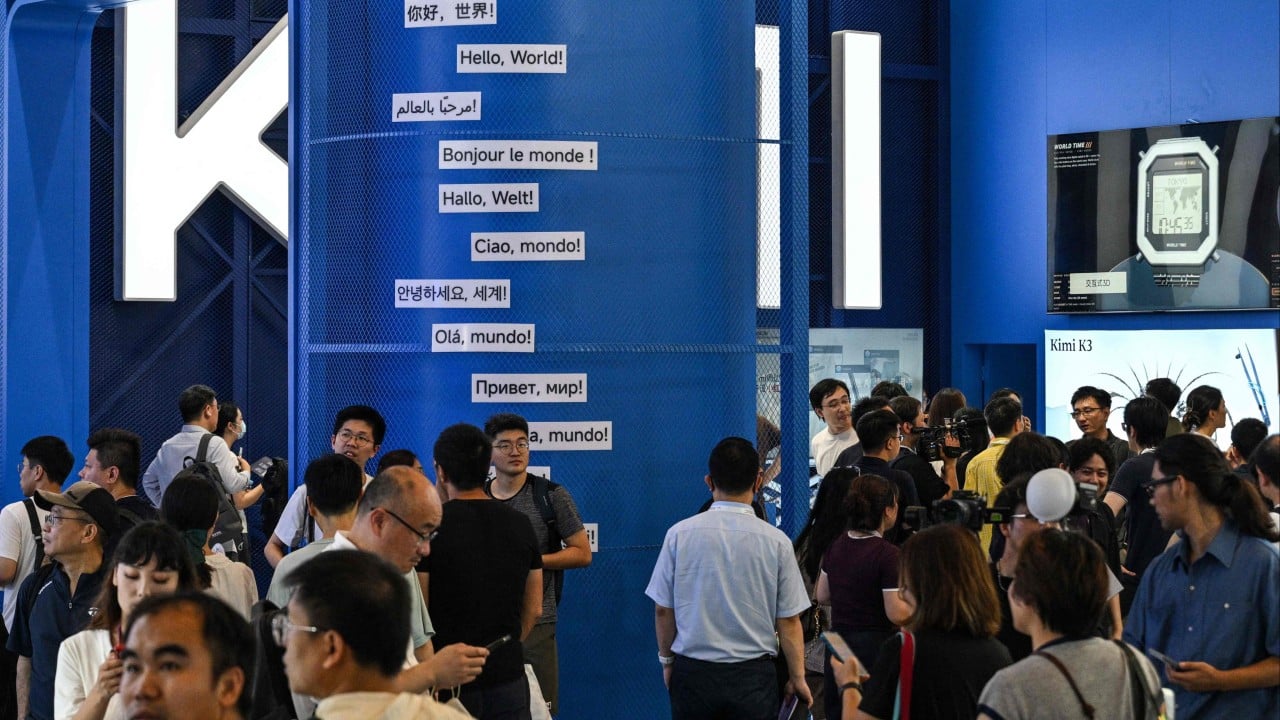
Picture a humid Tuesday afternoon in Batam, an Indonesian island sitting just twelve miles south of Singapore across the Strait of Malacca. Inside a nondescript industrial warehouse—concrete walls, corrugated steel roof, the kind of building you drive past a thousand times without glancing twice—rows of black server racks hum at a pitch just high enough to rattle your teeth. Thousands of gallons of chilled water rush through insulated pipes to keep silicon processors from melting under the weight of trillions of mathematical calculations per second.
To the untrained eye, it looks like any other data center cropping up across Southeast Asia.
To intelligence analysts sitting in air-conditioned offices seven thousand miles away in Washington, D.C., that warehouse looked like an illicit pipeline straight to Beijing.
Months before public headlines erupted over Nvidia’s artificial intelligence chips finding their way into restricted hands, American officials quietly leaned on the Indonesian government with an urgent, extraordinary request. Raid a local unit tied to Megaspeed, a Singapore-based cloud computing company. Seize the hardware. Stop the flow before the world’s most advanced artificial intelligence processors vanished into the dark.
The competitor’s dry news report gave you the bare bones of that diplomatic collision in a single breathless headline. It treated a geopolitical thriller like a routine regulatory filing.
They missed the real story entirely.
Because what happened between Washington, Jakarta, and a network of shell companies spanning Singapore and Malaysia isn't really a story about export compliance or corporate paperwork. It is a story about what happens when the most valuable physical objects on Earth become small enough to fit inside a shipping crate, yet powerful enough to alter the balance of military and economic power for the next century.
The Weight of a Silicon Wafer
To understand why American diplomats were willing to burn political capital in Southeast Asia over a single company’s Indonesian subsidiary, you have to understand what an advanced Nvidia processor actually represents right now.
Imagine—and let’s be clear, this is an analogy to make a technical reality visceral—that in 1943, the enriched uranium needed for the Manhattan Project could be bought off the shelf by any shell corporation with a credit line, packed into standard shipping containers, and routed through neutral ports while customs inspectors checked manifests for "office equipment."
That is roughly where the global semiconductor market stands today.
Modern AI accelerators, like Nvidia’s H100 and H200 graphics processing units, are not ordinary computer parts. They are the engines required to train frontier artificial intelligence models—systems capable of designing novel bioweapons, automating cyberattacks against power grids, processing satellite reconnaissance in real time, and running autonomous drone swarms. Recognizing this, the United States Department of Commerce erected sweeping export controls starting in October 2022 and tightened them dramatically in October 2023. The goal was straightforward: deny China access to the raw computing muscle needed to outpace American military and technological dominance.
Washington drew a clear line on the map. Direct shipments of high-end Nvidia chips to mainland China and Hong Kong were choked off.
Water, however, always finds a crack in the dam.
Enter the Middlemen
When direct routes close, trade does not stop; it mutates. Within months of the export bans, a thriving gray market materialized across the borders of Southeast Asia and the Middle East.
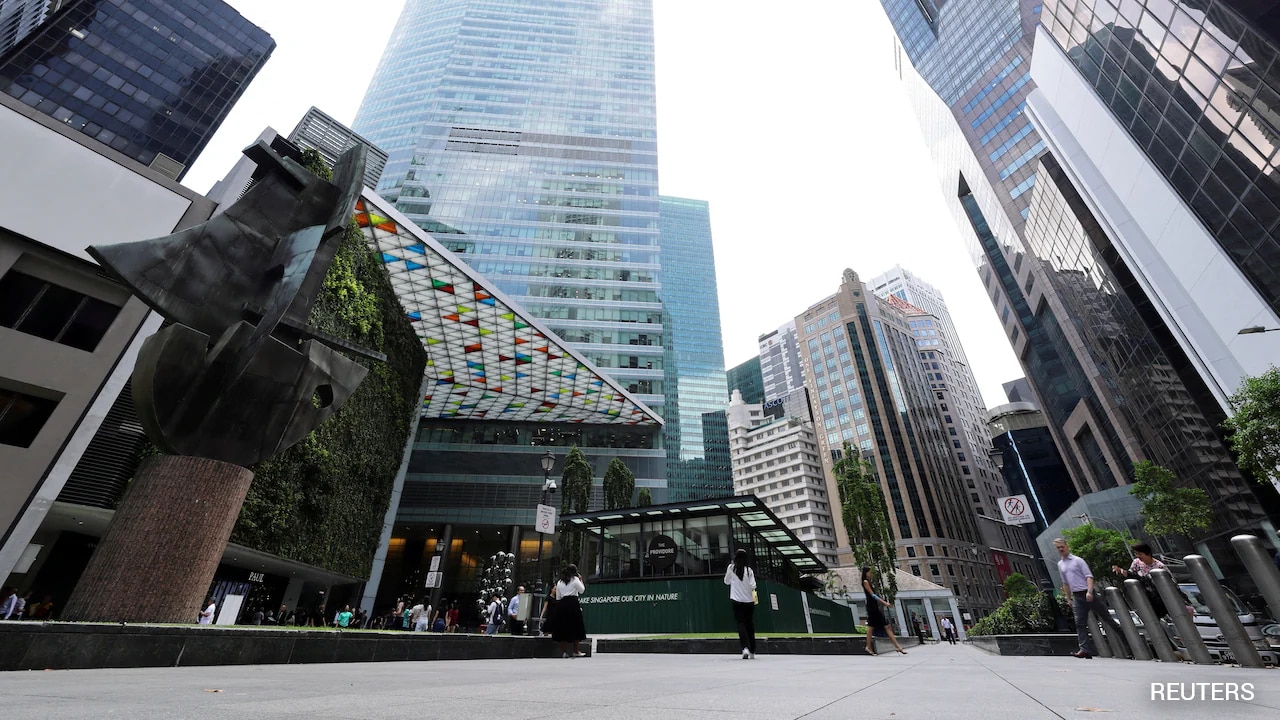
Consider a hypothetical logistics broker—let’s call him Marcus—operating out of a sleek glass tower in Singapore’s Marina Bay financial district. Marcus doesn't manufacture anything. He doesn't train AI models. His entire business rests on arbitrage and opacity. A buyer in Shenzhen needs five hundred high-end server nodes. That buyer cannot wire money to California, nor can they receive freight at a Chinese port without triggering immediate federal alarms.
So Marcus sets up a subsidiary in Kuala Lumpur or registers a data center entity across the water on Batam Island in Indonesia. On paper, the servers are destined for a legitimate regional cloud provider serving Southeast Asian startups, e-commerce platforms, or local banks. The invoices look clean. The end-user certificates carry the right stamps.
Once those servers arrive at the regional warehouse, two things can happen. Either the physical chips are quietly unbolted, repacked into unmarked boxes, and smuggled northward across porous borders, or—even simpler—the chips never move at all. The warehouse plugs them into high-speed fiber-optic cables, and engineers sitting in Beijing or Shanghai rent the computing power remotely through encrypted tunnels, training their models on American silicon without a single customs officer ever catching a glimpse of contraband.
Which brings us back to Megaspeed.
The Anatomy of a Shadow Pipeline
Megaspeed International wasn't a household name to everyday tech consumers, yet inside the tight-knit world of enterprise hardware distribution, its footprint grew with startling speed. Spin-offs, parent entities, and affiliate links connected the Singapore-based operator to deeper mainland Chinese tech ecosystems—specifically drawing scrutiny for ties linking back to gaming and cloud infrastructure networks with roots in China.
When massive orders of advanced Nvidia hardware began flowing toward Megaspeed’s regional operations, red flags went up across Washington’s national security apparatus.
Think about the sheer scale of the logistics involved. You do not casually misplace a hundred million dollars' worth of enterprise AI servers. Each server rack weighs over a thousand pounds, requires specialized high-voltage electrical infrastructure, and consumes enough power to light up a small neighborhood. Moving that kind of hardware leaves a trail—bills of lading, insurance underwriting, power utility applications, cooling equipment purchases.
American intelligence and export-enforcement teams at the Bureau of Industry and Security tracked those breadcrumbs straight toward Indonesia.
Specifically, their eyes locked onto a Megaspeed-affiliated operation in Batam. Batam sits in a strategic sweet spot: designated as a free trade zone, close enough to Singapore that ferries cross back and forth every thirty minutes, yet governed under Indonesian jurisdiction where regulatory scrutiny over advanced semiconductor diversions was far less seasoned than in Washington or Brussels.
Months before the broader public controversy over Nvidia’s supply chain oversight exploded onto front pages, U.S. officials approached their counterparts in Jakarta. Their message was blunt. Act now. Conduct a physical raid on the Megaspeed unit. Inspect the serial numbers, verify the end-use configurations, and freeze the hardware before it could be moved, dismantled, or routed into unauthorized hands.
Why Jakarta Hesitated
If you have never sat inside a bilateral diplomatic negotiation involving a middle-power nation caught between Washington and Beijing, it is easy to wonder why Indonesia didn't simply kick down the warehouse doors the next morning.
Look at the map from Jakarta’s chair instead of Washington’s.
Indonesia is Southeast Asia’s largest economy, a sprawling archipelago of over 270 million people aggressively trying to climb out of the middle-income trap. To do that, Jakarta needs foreign capital, industrial infrastructure, and digital investment—and it needs them desperately. Over the past decade, China has become Indonesia’s largest trading partner and one of its heaviest investors, pouring billions into nickel smelters, high-speed rail lines, and digital telecom networks.
At the same time, Indonesia relies on the United States for security cooperation, advanced technology access, and geopolitical balance in the South China Sea. For decades, Jakarta’s foreign policy doctrine has been known as bebas aktif—"free and active"—a careful refusal to align formally with either superpower bloc.
Now imagine being an Indonesian trade or law enforcement official handed an American dossier demanding a raid on a foreign-backed data center in your own free trade zone.
First, there is the legal question. Under Indonesian domestic law, possessing Nvidia chips is not a crime. Export controls issued by the U.S. Department of Commerce are American regulations, not Indonesian statutes. Unless a company violated local customs declarations, tax laws, or licensing rules, raiding a private facility at the behest of a foreign government sets a terrifying precedent for investor confidence.
Word travels fast among global capital allocators. If Jakarta starts seizing servers because Washington whispers in its ear, what happens to the next wave of cloud infrastructure investment earmarked for Batam or Jakarta?
Second, there is the sheer intimidation of Beijing’s economic shadow. Cross Chinese commercial interests too overtly, and consequences rarely arrive as formal diplomatic protests; they arrive as delayed shipments, stalled infrastructure loans, or sudden regulatory headaches for Indonesian exports.
So Jakarta stalled. Diplomats asked for more evidence. Legal ministries reviewed jurisdictional boundaries. Months ticked by while fans spun inside concrete warehouses and petabytes of data flowed silently beneath the ocean floor.
The Illusion of Control
I remember talking years ago with a veteran customs investigator who spent two decades tracking dual-use aerospace components through port cities in Asia and Eastern Europe. He told me something I have never forgotten: "An export ban doesn't stop a market. It just raises the broker's commission."
Watching the Megaspeed saga unfold feels like watching that exact law of human nature play out at terabyte speeds.
For years, Silicon Valley operated on an article of faith that software and hardware were forces of pure globalization—frictionless, borderless, unstoppable. Companies like Nvidia built monumental fortunes by designing chips in California, fabricating them in Taiwan through TSMC, packaging them across Asia, and selling them to anyone with the capital to build a cluster.
Suddenly, those same companies found themselves drafted onto the front lines of a cold war they never asked to fight.
When reporters later uncovered how vast quantities of restricted chips were still reaching Chinese AI laboratories—prompting sharp questions for Nvidia, Supermicro, and their regional distributors—the public reacted with shock. How could billions of dollars of tightly controlled hardware slip past the most sophisticated intelligence agencies on Earth?
The answer is uncomfortable because it reveals how fragile modern supply-chain enforcement actually is.
Nvidia does not sell every chip directly to the final person plugging it into a wall socket. It sells chips to original equipment manufacturers, system integrators, and cloud service providers. Those partners build complete server racks and sell them to regional distributors, who lease capacity to enterprise clients, who sublease compute cycles to third-party developers.
By the time a chip lands in a facility like Megaspeed’s Indonesian unit, it may have passed through four corporate entities across three legal jurisdictions.
Asking a chipmaker in Santa Clara to guarantee who is running code on a server rack in Batam is a bit like asking a steel mill in Pittsburgh to guarantee who drives every car stamped from its sheet metal five years later. Manufacturers can audit paperwork. They can demand contractual promises. They can suspend suspicious accounts once caught.
What they cannot do is kick down a warehouse door in a foreign country. Only sovereign governments can do that—and sovereign governments have agendas of their own.
The Invisible Stakes
Why should any of this matter to someone who doesn't work in semiconductor logistics, foreign policy, or cloud engineering?
Because the outcome of these quiet backroom struggles determines who writes the operating system for the twenty-first century.
Right now, the race to build frontier artificial intelligence is fundamentally a race for compute—raw, concentrated, industrial-scale processing power. Every breakthrough in protein folding, autonomous robotics, financial modeling, and algorithmic persuasion depends on how many thousands of these chips can be wired together in a single cluster without burning out.
If export controls hold, the United States and its allies maintain a structural multi-year lead in the foundational models that will govern global commerce and defense. If those controls leak like a sieve through free trade zones in Batam, Johor, or Dubai, then Washington’s entire technological containment strategy becomes expensive theater—slowing down legitimate American allies with compliance red tape while determined adversaries acquire the exact same hardware through shell companies at a twenty-percent markup.
Even more sobering is what this reveals about the geography of power.
For thirty years, the internet felt placeless. We called it "the cloud" precisely because we wanted to forget it existed anywhere physical at all. We imagined data floating effortlessly in the ether, liberated from geography, borders, and dirt.
The Megaspeed episode strips away that comforting illusion.
The cloud is not in the sky. It is made of heavy metal bolted to concrete floors in humid port cities. It drinks millions of gallons of river water. It draws megawatts from coal and gas turbines. And because it exists in real places governed by real politicians with competing loyalties, the future of artificial intelligence will not be decided solely by genius coders in San Francisco or Shenzhen.
It will be decided in customs sheds, port authorities, and quiet diplomatic backchannels where one nation asks another to open a locked warehouse door—and waits to see who answers.
A Blinking Light in the Dark
Late at night along the waterfront in Batam, you can stand by the seawall and look north across the black water of the Singapore Strait. On a clear evening, the skyline of Singapore glows like a wall of diamonds on the horizon—a monument to frictionless global trade, finance, and order.
Behind you, hidden behind chain-link fences and palm trees in the island’s industrial parks, diesel backup generators stand ready beside windowless server halls. Inside those halls, tens of thousands of tiny green and amber indicator lights blink in unison, millions of times a minute, indifferent to passports, treaties, or export licenses.
They only know electricity and math. And whoever controls the rooms where they live controls everything that comes next.