Cold. That is the first thing you notice when you climb into open sky strapped to a motorized wing, thousands of feet above a winter marsh where the wind bites through three layers of thermal gear and turns your knuckles white against the throttle.
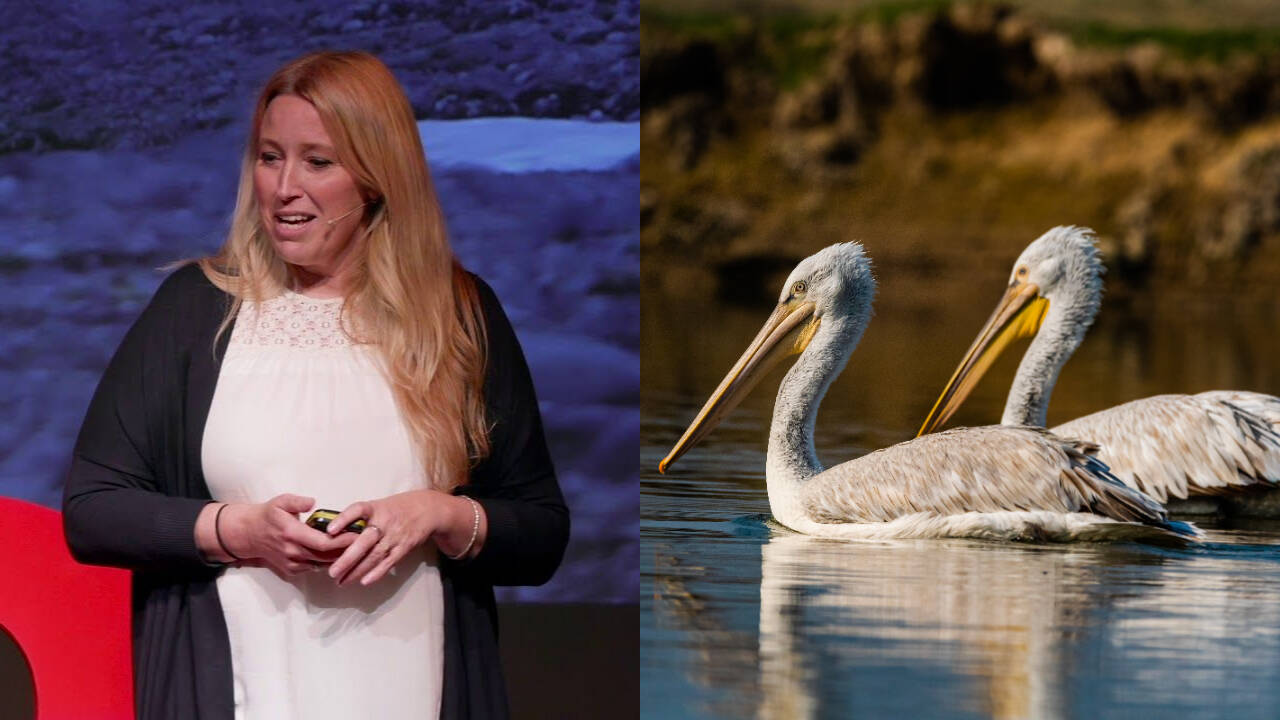
Sacha Dench knows that cold. Years ago, the biologist and adventurer—known around the world as the "Human Swan"—flew a paramotor along the grueling migration route of Bewick's swans from Arctic Russia to the wetlands of Britain. She did it because those birds were vanishing, and she wanted people to feel the sheer, fragile miracle of a migration measured in thousands of miles and quiet endurance.
Now, in 2026, she has been awarded a prestigious RSPB medal recognizing her advocacy and campaign work toward a ban on lead ammunition.
A medal sounds tidy. A medal fits neatly into a press release. You can polish it, photograph it on a velvet cushion, and move on to the next story.
Yet a shiny piece of metal cannot tell you what happens inside a bird's body when a tiny, spent pellet of lead is swallowed by mistake in the silt of a shallow pond. Nor can it capture the strange, heavy tension that settles over rural communities, conservationists, shooters, and policymakers whenever a tradition collides with a slow-motion poison.
I have stood on cold, mist-hung banks watching wildfowl rise in a rush of feathers that sounded like tearing canvas, feeling that sudden surge of awe that makes you forget your own stiff joints. I have also sat across from people who love the outdoors as fiercely as any conservationist yet feel cornered when centuries-old habits are called into question. It is easy to turn complex stories into villains and heroes. It is much harder—and far more honest—to look closely at what is actually happening beneath the surface.
Why a Tiny Pellet Carries Such Heavy Weight
To understand why Sacha Dench's recognition over lead ammunition matters right now, we have to look past the headlines and down into the mud.
Lead is dense, soft, and cheap to cast into shot. For generations, that made it practical for hunting and target shooting. The trouble is that lead does not simply disappear once it leaves a barrel and falls into soil or wetland sediment. When waterfowl feed in shallow waters, dabbling for seeds, roots, and grit to help grind food in their gizzards, spent shot can look just like the small stones a bird needs for digestion.
Once swallowed, stomach acids grind the metal down. Lead enters the bloodstream, disrupting nervous system function, impairing muscle control, weakening immunity, and poisoning organs. A bird suffering from lead poisoning does not always drop dramatically in plain sight. Often, it grows lethargic. Its wings lose power. It lags behind the flock, struggles to escape predators, or succumbs to cold and starvation long before anyone connects its fate to a piece of metal no bigger than a pinhead.
Think of it like slow rust inside an engine you cannot open. Everything might look intact from the outside—the paint bright, the frame straight—right up until the moment the parts seize.
And waterfowl are not the only creatures exposed. Raptors, scavengers, and other wildlife can ingest lead when feeding on injured or dead animals carrying shot or fragments. Even humans face risks when eating game harvested with lead ammunition, particularly vulnerable groups such as children and pregnant women, which is why regulators across Europe and elsewhere have spent years wrestling with restrictions and phase-outs.
Let's pause and set up a clear hypothetical scenario to see how easily this trap snaps shut. Imagine a young Bewick's swan—let's call him Maren, though no real swan carries a name like that—touching down on an autumn stopover after crossing freezing coastal waters. Exhausted and hungry, Maren sifts through soft pond mud for grit and plant tubers. Hidden among natural pebbles are a handful of spent lead pellets from seasons past. Maren swallows two. Within weeks, lead levels climb in the bird's tissues. The flight muscles weaken just when autumn winds turn fierce. Instead of completing the journey south, Maren falters in a reedbed, invisible to passing traffic and easy to miss in a vast landscape of water and grass.
That hypothetical example is grounded in real toxicology and decades of wildlife monitoring. What makes it haunting is how ordinary the chain of events is. No malice is required. Just gravity, habit, and a metal that refuses to break down.
From Flying with Swans to Fighting a Quiet Battle
When people picture Sacha Dench, many still see the image that captured imaginations during her epic flight: a human figure suspended beneath a bright canopy, gliding alongside wild swans across borders, weather, and uncertainty. That adventure was never just a stunt. Stunts chase applause; Sacha was chasing connection. When you watch an animal fight headwinds across open sea, an abstract statistic—such as a sharp decline in Bewick's swan numbers over recent decades—suddenly acquires a heartbeat.
Why did her path lead so directly to the fight over lead ammunition? Because saving a migratory species is never just about cheering from the sidelines. You can fly beside swans in the sky, yet if their feeding grounds hold silent toxins, you have only told half the story.
Advocating for a lead ammunition ban places someone right in the middle of a fierce public debate. On one side stand conservation organizations like the RSPB, scientists, and public health voices arguing that phasing out lead shot—and eventually broader lead uses—is an overdue, evidence-backed step to protect wildlife and reduce toxic contamination. On the other side are segments of the shooting community, gun makers, and rural livelihoods worried about cost, availability, ballistics, and what feels like top-down regulation aimed at their way of life.
Let's be candid here: this is where the subject gets messy, and pretending otherwise only hardens positions. If you have spent your life walking hedgerows at dawn with a shotgun passed down in the family, hearing your gear framed as a source of poison can sting. Alternative non-lead options—such as steel, bismuth, or tungsten—have improved significantly over the years, yet differences in price, barrel compatibility in older guns, and performance at certain distances remain real practical hurdles that shooters talk about every day.
Acknowledging those friction points does not erase the harm caused by lead. Rather, it explains why progress has felt so slow and contentious. Policy moves at the speed of trust, compromise, and hard adaptation. When campaigners like Sacha Dench push for a ban, they are asking people to change something familiar for a benefit that is often invisible until it is missing: healthier flocks, cleaner wetlands, and fewer poisoned birds quietly disappearing into the reeds.
What an RSPB Medal Really Signals in 2026
Honors from major conservation bodies rarely arrive out of nowhere. The Royal Society for the Protection of Birds has spent more than a century tracking population trends, protecting reserves, and pressing governments on environmental threats. Awarding a 2026 medal to Sacha Dench for her work on banning lead ammunition signals something bigger than a single milestone.
It shows conservation stepping out of purely observational mode and leaning hard into systemic change. Counting birds in winter is vital work—you cannot protect what you refuse to measure—but counting declines alone will not stop lead from sitting in wetland silt. Shifting away from lead requires clear rules, enforcement, accessible alternatives, and cultural shifts that make non-lead ammunition the norm rather than the exception.
Consider what happens next when a high-profile advocate receives that kind of recognition:
- Attention widens beyond seasoned environmentalists to people who first discovered Sacha through adventure and exploration.
- Pressure builds on lawmakers and regulators to close loopholes and move from debate to decisive action.
- Conversation deepens around how rural traditions and modern ecological realities can coexist without sacrificing wild populations.
Still, I catch myself wondering—and plenty of skeptics ask the same question—whether a medal and a ban on paper are enough on their own. Regulations can look crisp on a government page while enforcement lags in the field. Old lead already deposited in soil and sediment over decades does not vanish the day a law passes. Real recovery takes patience, money, monitoring, and honest dialogue with the communities most affected.
That uncertainty is part of the truth too. Anyone who claims a single policy fix will solve every threat facing migratory birds is selling simplicity where complexity lives. Swans still face habitat loss, changing climate patterns, disturbance, and long journeys across shifting coastlines. Banning lead ammunition removes a preventable, well-documented poison from that list—and removing a preventable poison is no small victory.
The Real Stakes Above the Waterline
Stepping back, the story of Sacha Dench's 2026 RSPB medal is really a story about attention.
Modern life trains us to look for dramatic crises—sudden collapses, loud explosions, immediate emergencies. Lead poisoning is the opposite of dramatic. It is quiet. It happens out of sight in shallow water and dark soil. It wears down strength a little at a time.
To treat this as a simple metaphor: a community is like a vast wetland system. Every choice we drop into it—every rule, every habit, every act of care or neglect—settles somewhere and shapes what can survive there next season. We do not always see the ripple right away. Sometimes we only notice years later which species are still rising off the water at dawn, and which ones are missing from the sky.
Sacha Dench earned her reputation by flying close enough to wild birds to feel the rush of air off their wings and the weight of their journey. Her recognition for campaigning to ban lead ammunition brings that same urgency down to earth, right where the mud meets the water.
Think of the winter sky at dusk over a quiet marsh—pale amber fading to slate, the hush of cold water lapping against reeds, and a line of white wings cutting steadily through the gloom toward a safer place to rest.