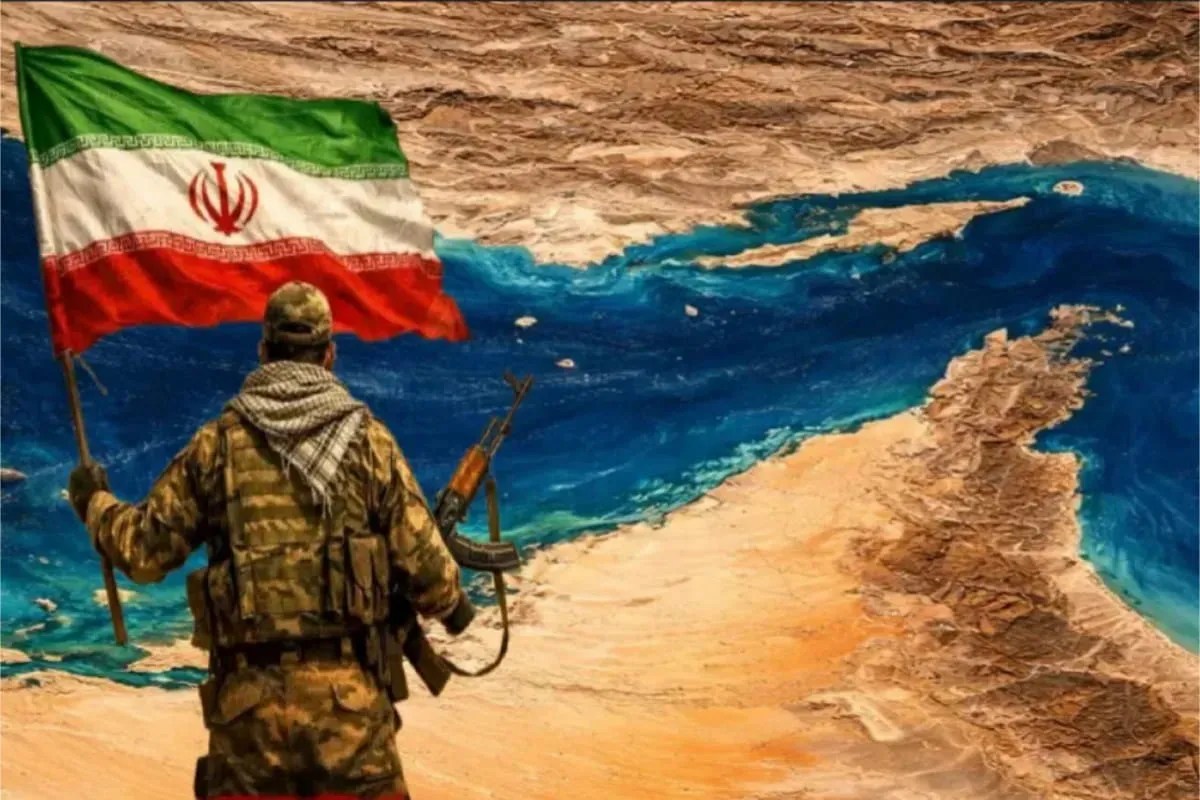
At three in the morning, the Persian Gulf does not look like a powder keg. It looks like ink.
Picture a hypothetical tanker captain—let’s call him Captain Miller—standing on the bridge of a Very Large Crude Carrier slicing through the Strait of Hormuz. The air smells faintly of salt, diesel, and wet iron. On his radar screen, green blips pulse in the dark: commercial vessels, fishing dhows, and, just beyond the horizon, the unmistakable, jagged silhouettes of naval destroyers running dark. Miller has made this transit forty times. He knows the currents. He knows the radio frequencies. Yet tonight, his coffee goes cold in his hand because the silence on the marine VHF channels feels different. It feels heavy.
For decades, the tension between Washington and Tehran has operated like a high-stakes poker game played behind closed doors. The public sees the occasional headline—a seized ship, a fiery speech, a round of sanctions—and quickly scrolls past, numbed by years of crying wolf. When analysts publish dry checklists of "signs" that the United States and Iran are edging toward conflict, those indicators read like sterile stock market tickers. Troop deployments. Uranium enrichment percentages. Proxy skirmishes.
Strip away the diplomatic jargon, though, and those abstract indicators become something terrifyingly real. They are the physical gears of two massive machines grinding closer together, each lock-step movement shrinking the margin for human error until a single misread radar blip could ignite the largest military confrontation the Middle East has seen in a generation.
The Ghosts of Shadow Wars
To understand why this moment feels so combustible, you have to look at how the rules of engagement have quietly rotted away.
For nearly forty years, the United States and Iran fought a shadow war. It was a brutal, clandestine ballet conducted through intermediaries, cyberattacks, and deniable operations. Both sides understood the invisible red lines. You could push, you could bleed your opponent’s resources, you could rattle sabers—but you did not strike directly, and you always left an off-ramp for de-escalation.
I remember covering the aftermath of the 2019 attacks on Saudi oil facilities in Abqaiq. Standing near the perimeter, looking at the twisted, blackened steel of precision-struck stabilization towers, the sheer vulnerability of global infrastructure hit me in the gut. Back then, the world held its breath, expecting an immediate, overwhelming American retaliation. It didn't come. Both capitals blinked, choosing restraint over the abyss.
That restraint is evaporating.
Consider the first undeniable shift on the chessboard: the collapse of proxy insulation. For years, Tehran relied on its "Axis of Resistance"—Hezbollah in Lebanon, the Houthis in Yemen, and various militias across Iraq and Syria—to absorb the blowback while keeping Iranian soil untouched. Washington played along, striking the proxies rather than the patron. Recently, however, that buffer has worn paper-thin. Direct exchanges of fire, the assassination of high-ranking commanders, and retaliatory missile barrages have shattered the old taboo. When two heavyweights stop swinging at each other's shadows and start landing blows directly on the chin, the fight enters a completely different, far more lethal phase.
The Calculus of the Centrifuge
Move from the open water to the subterranean concrete bunkers buried beneath the mountains of central Iran, and you encounter the second, quieter sign of impending collision.
Nuclear physics does not care about political timelines. For years, the international community watched Iran’s nuclear program through the lens of diplomacy—inspections, enrichment caps, and agonizingly slow negotiations in Vienna. Think of those diplomatic frameworks like a pressure valve on a boiling kettle. As long as the valve worked, the heat inside could be managed.
Today, that valve is broken.
Verified intelligence assessments and international watchdog reports paint a stark, mathematical reality. Iran has accumulated stockpiles of uranium enriched to 60 percent—a short, technical whisper away from the 90 percent threshold required for a weapons-grade core. Even more concerning is the "breakout time"—the window needed to produce enough fissile material for a single bomb. What used to be measured in months is now measured in days or weeks.
Let’s be brutally honest about what this means. It is confusing, and frankly, terrifying to realize that the world’s most dangerous proliferation crisis has become background noise to domestic politics. Neither Washington nor Jerusalem has ever wavered on a core strategic doctrine: Iran cannot be allowed to acquire a nuclear weapon. As Tehran edges closer to the threshold of nuclear latency—possessing all the components to build a bomb on short notice without actually assembling it—the window for diplomacy slams shut, leaving military planners with only bad options and worse ones.
Iron in the Water
When diplomacy stalls, steel starts moving.
If you want to know what the Pentagon actually believes—not what press secretaries say at podiums, but what four-star generals truly fear—watch the deployment orders. The third unmistakable tremor in this crisis is the sheer concentration of American firepower flooding back into the region.
Aircraft carrier strike groups do not deploy to the Eastern Mediterranean and the Persian Gulf for routine photo opportunities. A single carrier brings with it roughly seventy aircraft, guided-missile destroyers, cruisers, and thousands of sailors. Add to that the quiet arrival of nuclear-powered submarines, strategic bombers rotating through regional bases, and advanced air defense batteries like THAAD and Patriot systems rushed to protect allied airspace.
Imagine two men standing in a narrow, dimly lit hallway, both holding loaded weapons, both convinced the other is about to draw. Every time one shifts his weight or adjusts his grip, the other tenses his trigger finger. That is the exact operational posture of US Central Command and the Islamic Revolutionary Guard Corps right now. The massive influx of hardware is intended as deterrence—a visual warning meant to convince Tehran that the cost of escalation would be catastrophic. Yet deterrence is a fragile psychological trick. It only works if the other side believes you won't strike unless provoked, and if they themselves don't feel cornered enough to strike first.
The Choke Point of the Global Economy
Now step back onto the bridge of Captain Miller’s oil tanker in the Strait of Hormuz. Why should someone sitting in a quiet suburb in Ohio, a café in London, or an apartment in Tokyo care about naval maneuvers half a world away?
Because the global economy breathes through a straw, and Iran’s fingers are wrapped around it.
The fourth sign of a looming showdown lies in the weaponization of global trade. Roughly one-fifth of the world’s total petroleum consumption—around 20 million barrels a day—passes through the Strait of Hormuz, a waterway just twenty-one miles wide at its narrowest point. We have already seen a preview of what maritime disruption looks like in the Red Sea, where Houthi missile and drone attacks forced the world's largest shipping companies to abandon the Suez Canal, adding weeks of travel time and billions of dollars in freight costs to everyday goods.
Now, multiply that disruption by ten.
In the event of a full-scale military confrontation, Iran does not need a navy capable of defeating the United States in open combat. It doesn't need to win a traditional war. It only needs to make the Strait of Hormuz uninsurable. Using swarms of fast-attack boats, sea mines, coastal anti-ship cruise missiles, and cheap, mass-produced drones, Tehran could effectively choke off the world’s primary energy artery within hours.
Consider what happens next: crude oil prices wouldn't just tick upward; they would violently spike, potentially crossing $150 or $200 a barrel overnight. Supply chains, still fragile from years of global shocks, would seize up. Inflation would roar back to life, hitting every gas pump, grocery aisle, and heating bill across the planet. The invisible stakes of a Gulf war are wired directly into the bank accounts of ordinary people who couldn't even find Hormuz on a map.
The Trap of Domestic Cornering
The final, and perhaps most volatile, catalyst has nothing to do with missiles or ships. It lives inside the minds of the leaders making the decisions.
History teaches us that wars rarely start because both sides carefully weigh the spreadsheets and decide conflict is profitable. Wars start when leaders feel trapped by their own domestic pressures and see aggression as the only way to project strength.
Inside Iran, the regime faces a generational crisis of legitimacy. Years of crippling economic sanctions, hyperinflation, and brutal crackdowns on civil protests have left the population exhausted and angry. Hardliners within the leadership view any concession to the West not as compromise, but as fatal weakness that could unravel their grip on power. Meanwhile, in Washington, an increasingly polarized political climate leaves zero room for an administration to appear soft on Iranian aggression, especially when American troops in the region are placed in harm's way.
This creates a terrifying feedback loop. Neither side can afford to back down first without paying a steep political price at home. Every drone intercepted, every base targeted, every sanction imposed demands a visible, calibrated response to satisfy domestic audiences.
We have seen this movie before. In the summer of 1914, Europe’s great powers stumbled into a catastrophic world war not because anyone wanted four years of trench slaughter, but because rigid mobilization schedules and national pride locked every leader onto a track with no brakes.
The Illusion of Control
It is tempting to look at all this and assume that rational actors will always prevail at the eleventh hour. We want to believe that the generals and diplomats in Washington and Tehran are master chess players who know exactly how far they can push the pieces before the board flips over.
That belief is an illusion.
In the heat of a crisis, radar operators get tired. Encrypted messages get delayed. A local commander operating under heightened alert misinterprets a commercial flight path or an erratic patrol boat. In a region saturated with hair-trigger weapons systems, the distance between a controlled crisis and an uncontrollable war is measured in seconds.
Back on the bridge of that tanker in the Persian Gulf, the dawn finally begins to bleed across the horizon, turning the black water into bruised purple and grey. Captain Miller watches a gray naval destroyer cut across his bow two miles ahead, its wake churning white foam into the calm sea. He exhales, takes a sip of his cold coffee, and keeps his hands steady on the helm, hoping the men watching the screens inside that steel hull have nerves as steady as his.