Paper weighs almost nothing. A single sheet of heavy cotton bond, folded twice and tucked inside a diplomatic pouch, tips the scale at roughly five grams—less than a nickel, lighter than a teaspoon of sugar, barely enough mass to register on a kitchen balance.
Yet when that sheet of paper travels from Washington to Tehran, carrying the signature of an American Vice President and addressed to a man who has spent forty years inside the machinery of the Islamic Republic, its weight alters the gravitational pull of an entire ocean.
Wait. Look at the water first.
Consider a hypothetical container ship—call her the Maren Star—idling twelve nautical miles off the coast of Fujairah in the Gulf of Oman. It is three in the morning. The air tastes of salt and diesel exhaust. On the bridge, a twenty-nine-year-old second mate from Manila stares at a radar screen glowing amber in the dark, watching three fast-attack craft cut white wakes through black water less than two miles off his starboard bow. He does not know the name JD Vance. He has never read a profile of Mohsen Rezaei. He only knows that his ship is carrying forty thousand tons of liquefied natural gas bound for Yokohama, and that his company’s marine insurance premium doubled on Tuesday afternoon because someone in Washington told the Persian Gulf to "prepare."
That is the invisible architecture of modern statecraft. While cable news panels dissect the syntax of diplomatic backchannels and social media feeds blur with partisan noise, the actual consequences settle onto the shoulders of people who will never sit in a situation room. They settle on the dockworkers in Jebel Ali, the oil traders in London watching Brent crude futures twitch by four dollars a barrel before breakfast, and the families in Isfahan and Doha who measure geopolitical tension not in press releases, but in the sudden, quiet disappearance of imported medicine from pharmacy shelves.
To understand what is actually happening in the corridor between Washington and Tehran right now, you have to strip away the theater and look at the mechanics of two very different messages arriving at the exact same moment.
The Architecture of a Dual Signal
Diplomacy, at its sharpest, rarely speaks with a single voice. Historically, American administrations navigating high-stakes standoffs—from the backchannel letters of the Cuban Missile Crisis to the secret Oslo correspondence of the early 1990s—have relied on a deliberate split: a public posture of overwhelming force paired with a private channel of surgical precision.
One hand raises the shield. The other slides a note under the door.
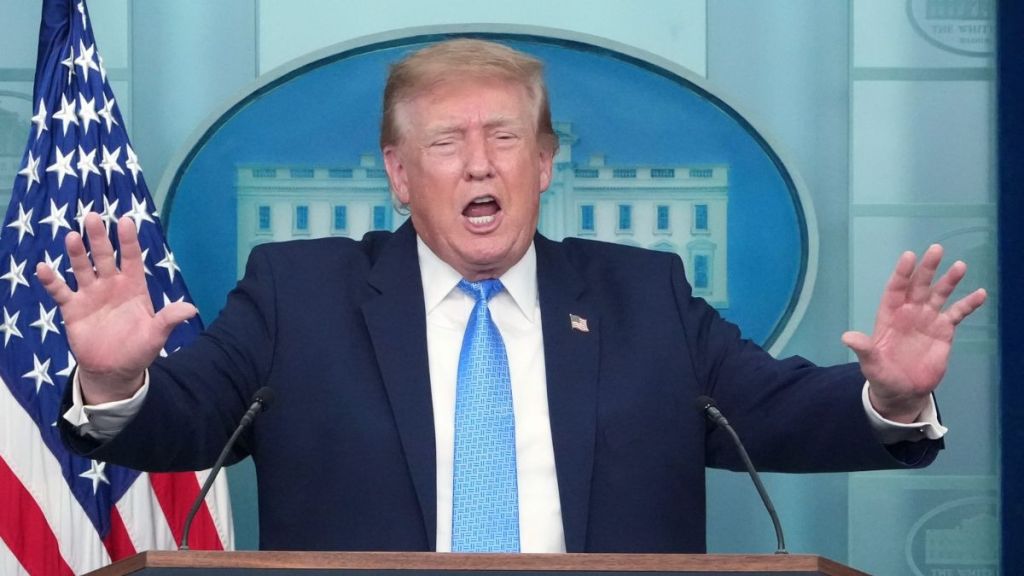
In this instance, the public signal could hardly be louder. When President Donald Trump warns the Gulf states to "prepare," the word hangs in the humid air of the Middle East like static before a lightning strike. Preparation, in the lexicon of the Persian Gulf, is never abstract. For Saudi Arabia, the United Arab Emirates, Qatar, and Bahrain, "preparing" means running round-the-clock drills at Patriot and THAAD missile batteries, dispersing naval assets out of congested ports, hardening desalination plants that provide ninety percent of the region's drinking water, and quietly recalculating how many days of global shipping disruption their sovereign wealth funds can absorb before domestic subsidies begin to crack.
And then there is the other hand.
Quietly, away from the podiums and the cameras, Vice President JD Vance sends a direct written communication to Mohsen Rezaei.
Pause on that pairing for a second. Even for those of us who have spent years tracking the labyrinthine pathways of Washington-Tehran signaling, the choice of sender and recipient reads like a masterclass in political cryptography.
Why Vance? Because in the architecture of the current White House, the Vice President represents the ideological vanguard of restraint—a figure who has built his political identity on deep skepticism of prolonged Middle Eastern entanglements, yet who speaks with the unmistakable authority of the Oval Office's inner circle. A letter from the State Department can be dismissed in Tehran as bureaucratic routine. A letter from the Vice President cannot. It signals that the message comes from the nerve center of American executive power, written by someone whose political survival is tied directly to avoiding an endless regional quagmire while refusing to look weak.
And why Mohsen Rezaei?
To understand why a letter lands on Rezaei’s desk rather than solely in the inbox of a foreign minister, you have to understand how power actually breathes inside Iran. Foreign ministers in Tehran are often the eloquent translators of policy, not its architects. Mohsen Rezaei is an architect. A former commander-in-chief of the Islamic Revolutionary Guard Corps during the brutal eight-year war with Iraq, a longtime secretary of the Expediency Discernment Council, and a senior economic and strategic advisor wired directly into the Supreme Leader’s orbit, Rezaei sits at the exact intersection where military doctrine meets regime survival.
He is not a diplomat trained in Geneva salons. He is a veteran of trench warfare in the marshes of Khuzestan who understands the exact mathematical cost of attrition. When you write to Rezaei, you are not asking for a polite press conference. You are speaking to the institutional memory of the Revolutionary Guard.
What Is Actually Inside the Envelope
Secrecy breeds rumor, and in the vacuum left by classified diplomatic cables, speculation always rushes in to fill the space. Let us be honest about what is verified and what remains behind closed doors. The full, verbatim text of Vance’s letter has not been laid out on a public table—nor would any serious backchannel survive if it were.
Yet through diplomatic leaks, regional briefings, and the structural logic of both capitals, the core contours of the correspondence are unmistakable.
First, it is not a surrender, nor is it an unstructured olive branch. Rather, it is an exercise in boundary-setting—a cold, unsentimental ledger of red lines and off-ramps. At its heart, the letter establishes a clear binary choice for Tehran’s leadership: an explicit framework for de-escalation and negotiated containment on one side, and the certainty of unrestrained, catastrophic retaliation if regional proxies or Iranian forces cross specific thresholds on the other.
Second, the letter bypasses the traditional multilateral choreography that defined the 2015 nuclear accord. There are no European intermediaries mediating the phrasing in Vienna hotels. By addressing Rezaei directly, Washington is signaling that it views the current crisis not merely as a technical dispute over centrifuge cascades or enrichment percentages, but as a broader strategic reckoning involving regional proxy networks, maritime security in the Strait of Hormuz, and the deterrence architecture of the entire Middle East.
Third—and perhaps most tellingly—the timing of the letter alongside Trump’s warning to the Gulf reveals a coordinated squeeze.
Think of it like a vice turning from both ends. If Trump’s public warning tells Gulf allies to brace for impact, it simultaneously tells Tehran that Washington is actively preparing the battlefield—diplomatically, logistically, and militarily—so that Gulf capitals will not be caught off guard if negotiations fail. You do not tell your neighbors to board up their windows unless you want the person across the street to see you reaching for the heavy lumber.
At the exact moment Tehran watches American forces and Gulf militaries synchronize their defensive postures, Vance’s letter arrives to offer a narrow, reinforced door out of the room.
The Memory of Misread Signals
I still remember sitting in a cramped, fluorescent-lit newsroom in London in January 2020, watching live telemetry feeds after the assassination of Qasem Soleimani and the retaliatory ballistic missile strikes on Al Asad Air Base in Iraq. The air in that room smelled of burnt coffee and static electricity. For seventy-two hours, every analyst on earth was trying to calculate whether a single misread radar blip or an ambiguous diplomatic message translated through Swiss intermediaries would ignite a full-scale regional war.
What saved the region from the abyss that week was not the absence of anger. It was the precision of the signaling. Tehran calibrated its missile strikes to avoid mass American fatalities while satisfying domestic demands for vengeance, and Washington read the signal accurately enough to step back from the brink.
History, however, is littered with moments when the translation failed.
In July 1914, emperors and cousins exchanged frantic, personal telegrams—the famous "Willy-Nicky" correspondence between Kaiser Wilhelm II of Germany and Tsar Nicholas II of Russia—trying to halt a mobilization machine they had already set in motion. The letters were earnest. They were direct. And they failed completely because the military timetables on the ground had already outrun the speed of the ink.
That is the nightmare scenario keeping diplomats awake tonight from Muscat to Washington.
Look at the Strait of Hormuz on a maritime chart. At its narrowest point, the waterway between Oman and Iran is just twenty-one nautical miles wide, and the shipping lanes for deep-draft tankers are only two miles wide in each direction, separated by a two-mile buffer zone. Roughly a fifth of the world’s total petroleum consumption—more than twenty million barrels of oil every single day—passes through that needle’s eye, alongside massive volumes of liquefied natural gas from Qatar.
In a corridor that narrow, reaction times are measured in seconds, not hours. A patrol boat captain misinterpreting a flare, an automated air-defense battery locking onto a commercial transponder by mistake, or a regional militia acting five minutes ahead of a command from Tehran can shatter the most carefully worded letter before the ink has even dried on the reply.
The View From the Gulf Capitals
To understand why Trump’s directive to "prepare" resonates with such quiet urgency across the Arabian Peninsula, you have to abandon the Western habit of viewing the Middle East as a chessboard and start seeing it as a densely wired circuit board.
Over the past decade, the Gulf states have spent hundreds of billions of dollars transforming their economies from pure petro-states into global hubs of aviation, finance, logistics, and tourism. Dubai International Airport is the busiest international passenger hub on the planet. Riyadh is pouring trillions into urban mega-projects designed to anchor its post-oil future. Doha has positioned itself as the indispensable mediator of global conflicts.
All of that gleaming glass and steel rests on a single, non-negotiable foundation: predictability.
War does not even need to touch the skyscrapers of Abu Dhabi or Riyadh to inflict devastating economic damage. It only needs to make Lloyd’s of London underwriters hesitate before signing an insurance policy for a cargo vessel entering the Persian Gulf.
Consider what happens next if that hesitation sets in.
Within forty-eight hours, shipping rates spike. Within a week, supply chains stretching from Rotterdam to Singapore begin rerouting around the Cape of Good Hope, adding ten to fourteen days of transit time and millions of dollars in fuel costs per voyage. Energy prices surge, feeding directly into inflation rates in Europe, North America, and Asia—the exact economic pain points that voters punish incumbent governments for at the ballot box.
Gulf leaders know this arithmetic intimately. When Washington tells them to prepare, they hear two distinct warnings beneath the surface. The first is military: check your interceptor inventories, coordinate your radar networks, and ensure your critical infrastructure is shielded against drone and missile swarms. The second is political: decide, right now, where you stand if the backchannel collapses, because neutrality becomes an impossible luxury once missiles are in the air.
Inside the Labyrinth of Tehran’s Decision
Meanwhile, inside Tehran, Vance’s letter enters a political ecosystem under immense internal pressure.
It is a mistake to imagine the Iranian leadership as a monolith sitting around a single table, nodding in unison. The Islamic Republic has always functioned as a tense balancing act between ideological hardliners who view any concession to the United States as fatal weakness, and pragmatic realists—many of them entrenched inside the security and economic apparatus—who understand that sanctions, currency depreciation, and domestic discontent have stretched the nation’s social fabric dangerously thin.
Mohsen Rezaei has spent decades navigating between those two camps.
As an economist by academic training and a revolutionary general by pedigree, Rezaei understands better than most that military deterrence cannot survive indefinitely on a hollowed-out economy. When the Iranian rial slides to record lows and young engineers in Tehran spend their evenings calculating how to emigrate, the leadership faces a brutal strategic dilemma.
If Tehran rejects Vance’s overture outright and escalates in the Gulf, it risks triggering a direct military confrontation with an American administration that has explicitly warned the region to brace for conflict—a confrontation that could devastate Iran’s remaining energy infrastructure and naval assets in days.
Yet if Tehran accepts Washington’s terms too eagerly, the leadership risks fracturing its own ideological base and signaling vulnerability to adversaries across the region.
So how does Tehran respond to a letter like this? Historically, never with a simple "yes" or "no." Instead, it responds with counter-questions, calibrated delays, indirect signals through Omani or Qatari intermediaries, and carefully choreographed military exercises designed to prove it is negotiating from a position of strength rather than fear.
The Human Ledger
It is easy, when reading intelligence assessments and diplomatic dispatches, to fall under the spell of the language. Words like deterrence, calibration, asymmetric response, and backchannel have a clean, clinical sound to them. They make geopolitical brinkmanship feel like an intricate game of chess played by rational actors in quiet rooms.
They sanitize the reality.
Strip away the jargon, and what we are actually watching is a high-wire act suspended over the lives of tens of millions of ordinary people who had no say in writing the script.
Think back to the second mate on the bridge of our hypothetical LNG tanker off Fujairah, watching those radar blips in the dark. Think of the mother in Tehran checking the price of bread and insulin, wondering whether next month will bring relief or a blockade. Think of the air-defense operator in Al Dhafra staring at a green phosphor screen at four in the morning, knowing he has less than ninety seconds to decide whether an incoming track is a commercial flight off course or a low-flying cruise missile.
Vance’s letter to Rezaei is an attempt to keep those ninety seconds from ever arriving. Trump’s warning to the Gulf is an admission that they very well might.
Both truths sit side by side on the desk right now—one written on heavy cotton paper, the other broadcast across the water—while a twenty-nine-year-old sailor in the Gulf of Oman grips a cold mug of coffee, watches the horizon turn from black to gray, and waits to see which message the morning will answer.