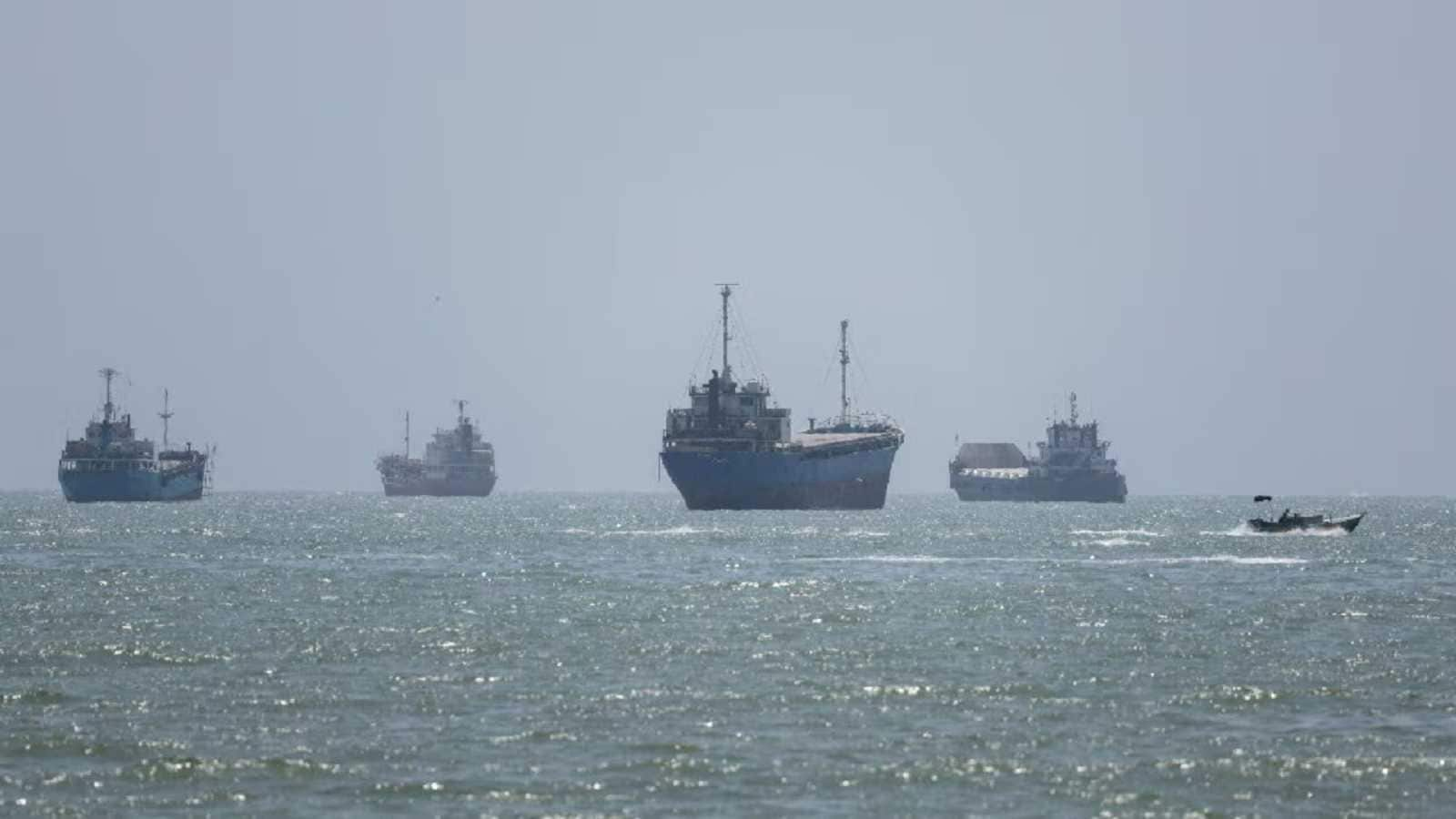
Saltwater corrodes everything eventually. Even steel hulls built to carry two million barrels of crude oil across the roughest oceans on earth will rust from the inside out if left to rot without dry-dock inspections, proper insurance, or a legitimate flag to call home.
Yet, out in the dark waters of the Persian Gulf, the Strait of Malacca, and the South China Sea, hundreds of these aging giants are moving right now. Their transponders are switched off. Their ownership papers are buried beneath layers of shell companies registered in quiet jurisdictions from the Marshall Islands to Dubai. Meanwhile, you can find related events here: Inside the Escalating Air War Defining Zelensky and Trump.
They are the shadow fleet. And for years, the people who keep those rusting engines turning have operated in total obscurity—until the United States Treasury Department decides to shine a blinding light on a single desk, a single bank account, or a single married couple.
That is how the names Suniel Kumar Sharma and his wife suddenly appeared on the front pages of global financial news, transformed overnight from behind-the-scenes maritime operators into primary targets of American economic warfare. To understand the bigger picture, check out the excellent article by TIME.
The Anatomy of an Invisible Ocean
To understand why two individuals can draw the ire of the world’s largest superpower, you first have to understand what happens when a nation is cut off from the global financial system.
Imagine—as a purely hypothetical illustration—that you own a bakery in a town where every bank refuses to hold your money, every flour supplier refuses to take your calls, and the local police impound your delivery trucks on sight. You still have ovens. You still have customers willing to pay cash in the alley behind your shop. How do you survive? You hire a broker who knows how to rent unmarked vans, forge delivery manifests, and route payments through three different cousins in neighboring towns.
Now scale that up from loaves of bread to billions of dollars in sanctioned Iranian petroleum.
When Washington tightened the screws on Tehran’s oil exports, the goal was simple: choke off the revenue that funds regional militias, drone programs, and ballistic missile development. On paper, the strategy looked airtight. Major Western insurers dropped coverage for Iranian tankers. Reputable ship registries stripped their flags. Global banks froze dollar-denominated transactions.
Iranian oil did not stop flowing. Instead, it went underground—or rather, offshore.
Over the last several years, a parallel maritime universe emerged. Brokers bought up twenty-year-old Very Large Crude Carriers (VLCCs) that were headed for the scrapyard, slapped fresh paint over their names, and registered them under convenience flags in countries with minimal oversight. Out at sea, away from coastal radar, these tankers pull alongside one another in the dead of night, transferring millions of gallons of crude from hull to hull via thick rubber hoses while bobbing in open swells.
Once the oil changes ships, its origin is laundered. A barrel pumped from Iranian soil becomes "Malaysian blend" or "Omani crude" on a freshly minted bill of lading, ready to be purchased by independent refineries hungry for discounted energy.
None of this happens by magic. It requires paperwork. It requires crew management, port clearances, shell company incorporation, and relentless financial choreography. It requires people like Suniel Kumar Sharma.
Who Are Suniel Kumar Sharma and His Wife
If you walked past Suniel Kumar Sharma in the lobby of a Dubai office tower or an airport lounge in Mumbai, you would not look twice. Unlike the flamboyant oligarchs of sanctioned states who favor superyachts and Swiss chalets, the facilitators of the shadow fleet thrive on administrative invisibility.
According to designations released by the U.S. Department of the Treasury’s Office of Foreign Assets Control (OFAC), Sharma—an Indian national operating out of the United Arab Emirates—positioned himself at the operational nerve center of maritime logistics networks tied to sanctioned Iranian oil shipments.
In the architecture of global shipping, men like Sharma serve as the connective tissue. Through a web of corporate entities—management firms, ship-owning fronts, and maritime service providers—his network allegedly oversaw the day-to-day reality of moving restricted cargo across international waters. Hiring captains willing to sail uninsured vessels. Arranging bunkering fuel in ports that ask few questions. Setting up the corporate facades that shield the true beneficiaries of the cargo from Western compliance officers.
And beside him in the Treasury’s crosshairs stood his wife, implicated in the same corporate ecosystem.
Why does a spouse appear on a federal sanctions list alongside a maritime broker? Anyone who has spent time studying white-collar enforcement or financial compliance knows the answer instinctively. When regulators freeze an executive’s personal accounts, the oldest maneuver in the book is to route assets, directorships, and signatory authority through immediate family members.
In the eyes of OFAC investigators, corporate registries rarely tell the full story on the first page. You peel back a holding company in the UAE, and you find a director in India. You trace the beneficial ownership of a tanker management firm, and you find shares split between husband and wife, creating a tight, trusted circle where secrets stay inside the household and outside the reach of external auditors.
By naming both Sharma and his wife, American officials sent an unmistakable signal: the corporate veil would not protect family-run facilitation networks, and personal assets tied to the movement of sanctioned crude were fair game.
The Human Toll on Uninsured Waters
It is easy to read a Treasury press release and see only numbers, hull identification codes, and corporate acronyms. That clinical distance hides a terrifying physical reality.
Spend an afternoon talking to veteran merchant mariners who have worked aboard aging, unclassed tankers, and the glamour of geopolitical intrigue evaporates instantly. You hear about engine rooms where temperatures climb past 120 degrees Fahrenheit because the cooling systems haven't been serviced in years. You hear about corroded ballast tanks groaning under the stress of winter storms, and navigation equipment held together with electrical tape because turning on the Automatic Identification System (AIS) would alert satellite trackers in Washington.
When a legitimate tanker sails through the Strait of Malacca—one of the busiest shipping lanes on earth—it carries up to $1 billion in Protection and Indemnity (P&I) insurance from top-tier London clubs. If a collision happens, if an oil slick blackens a coastline, or if a crew member is injured, there is a clear chain of legal and financial accountability.
Shadow fleet vessels carry none of that.
Operating in the dark means turning off collision-avoidance transponders in congested waters. It means conducting dangerous ship-to-ship transfers in open ocean swells without tugboat assistance or containment booms. If one of these twenty-five-year-old hulls splits open off the coast of Singapore or in the Persian Gulf, there is no billion-dollar insurance pool waiting to clean up the mess. The shell companies dissolve overnight. The directors vanish. The local fishermen lose their livelihoods, and the seafarers aboard—often recruited from developing nations with promises of slightly higher hazard pay—are left stranded in foreign ports without wages or legal recourse.
Every fake certificate of origin, every shell company incorporated to hide a vessel’s true owner, and every dollar routed through front entities adds another link to that chain of risk.
Why Dubai and Mumbai Sit at the Crossroads
To many observers, the presence of an Indian businessman operating out of the United Arab Emirates in an Iranian sanctions case seems confusing at first glance. Neither India nor the UAE is at war with the United States. Both nations maintain deep diplomatic, military, and commercial ties with Washington.
Yet geography and history have made the Persian Gulf corridor the natural staging ground for sanctions evasion.
Dubai sits less than a hundred miles across the water from the Iranian coast. For centuries, dhows and merchant vessels have crossed that narrow stretch of sea carrying spices, textiles, gold, and electronics. Today, the city’s free zones offer rapid company formation, world-class port infrastructure, and a cosmopolitan business environment where thousands of legitimate maritime firms operate side by side with gray-market brokers.
For operators with roots in India’s massive maritime workforce—a country that supplies a huge percentage of the world’s licensed seafarers, marine engineers, and shipping managers—the leap from legitimate vessel management to shadow fleet logistics is smaller than outsiders might imagine. The technical skills are identical. The port contacts are the same. The only difference is the willingness to look past the origin of the cargo and the provenance of the wire transfers.
For years, that gray zone flourished because enforcement lagged behind innovation. By the time investigators mapped out one shell company and added a tanker to the sanctions list, the operators had already transferred ownership to a new entity, repainted the funnel, and registered the hull under a different flag in Gabon, Cameroon, or Panama.
It was a high-stakes game of whack-a-mole played across time zones.
What Happens When the Sanctions Hammer Drops
When OFAC finally adds an individual and their spouse to the Specially Designated Nationals and Blocked Persons (SDN) list, the consequences are swift and suffocating—even if they never set foot on American soil.
People often assume U.S. sanctions only matter if you keep your money in a New York bank. The reality is far more sweeping.
The moment your name hits the SDN list, every major financial institution on earth flags you in their compliance software. Banks in Dubai, Mumbai, Singapore, and Zurich—terrified of losing their own access to the U.S. dollar clearing system—will freeze accounts, cancel credit cards, and sever relationships within hours. Shipyards will refuse to service vessels linked to your companies. Port authorities will deny entry. Even buying an airline ticket or booking a hotel room becomes an exercise in friction when global payment processors block your credentials.
For Suniel Kumar Sharma and his wife, the designation meant the sudden collapse of the anonymity that made their business possible. Once a broker’s name becomes toxic in global compliance databases, even illicit buyers grow wary. The value of a shadow facilitator lies entirely in their ability to move through legitimate systems unnoticed. Once the spotlight hits, that utility vanishes.
The Endless Game of Cat and Mouse
Did sanctioning Sharma and his network stop Iran’s shadow fleet? No.
In the weeks and months following any high-profile Treasury crackdown, oil still finds buyers, tankers still turn off their transponders in the dead of night, and new shell companies spring up in quiet office suites to replace the ones burned by federal investigators. The profit margins on discounted sanctioned crude are simply too vast—tens of millions of dollars per voyage—for the trade to disappear voluntarily.
What changes is the cost of doing business.
Every time Washington exposes a broker, freezes a family network, or blacklists a fleet of aging hulls, the friction increases. Iran has to pay higher commissions to middlemen willing to take the personal risk of financial exile. Buyers demand steeper discounts to compensate for the legal hazard of touching tainted cargo. Shipowners charge exorbitant rates for vessels that may soon be barred from every major port in Asia and the Middle East.
Behind the grand geopolitical headlines about nuclear negotiations, regional proxies, and global energy markets, the real battle is fought in corporate registries, shipping manifests, and compliance offices. It is a war of attrition waged against the people who quietly keep the machinery of evasion running.
Out on the water tonight, somewhere beyond the horizon of coastal radar, another rusting tanker is idling with its lights dimmed, waiting for a smaller vessel to pull alongside in the dark. The crew on deck watches the black swells rise and fall between the hulls, praying the mooring lines hold while the hoses connect. Above them, on the bridge, the captain checks a stack of freshly printed documents bearing the names of companies that exist only on paper—signed by brokers who hope their own names never appear on a list in Washington.


