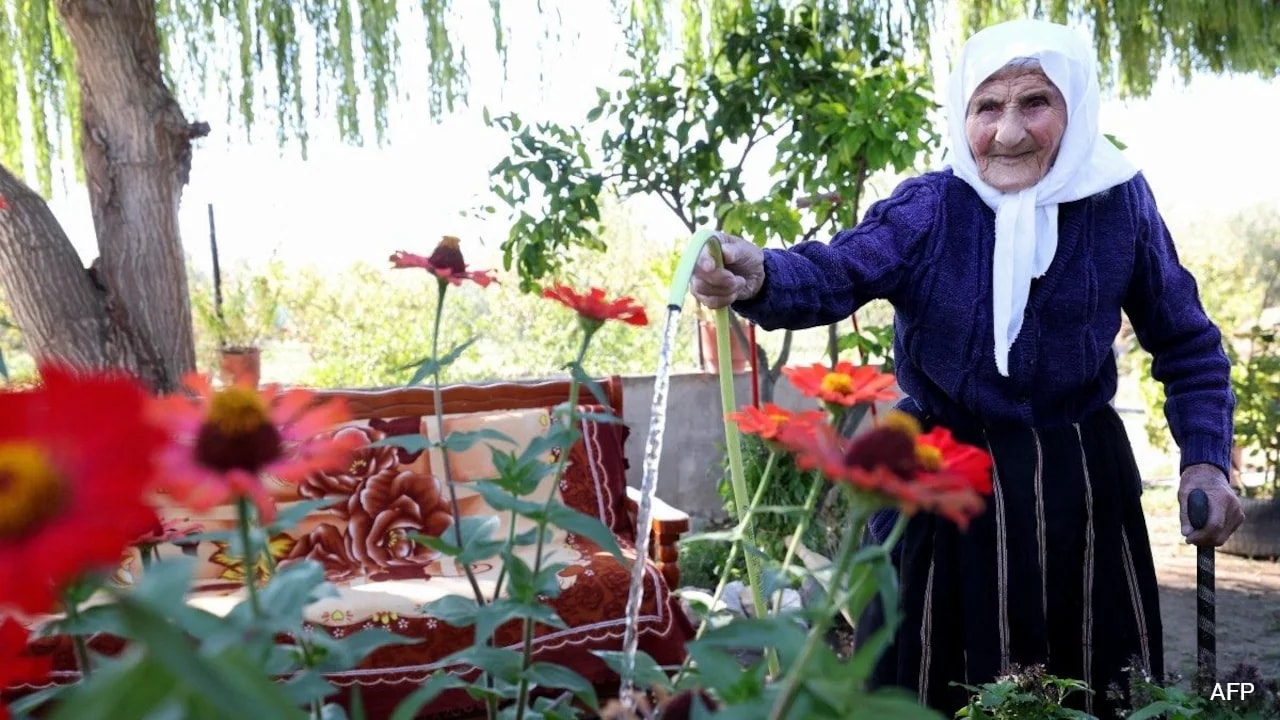
"Life is beautiful, like Mount Tomorr in bloom." At 117, Qamile Marra says it without a hint of drama. No biohacking routine. No supplement stack. Just a white headscarf, fresh basil tucked into a pocket for the scent, and a courtyard in Ferras, a village roughly 100 kilometers south of Tirana.
If her 1909 birth year holds up under formal scrutiny, Marra could rival or edge out Ethel Caterham of the United Kingdom—who was born on August 21, 1909—for the title of oldest living woman. Honestly, though, the record books are only half the story. The real hook is watching a single life stretch across Ottoman rule, Albanian independence in 1912, two world wars, nearly half a century of communist rule, and the shift to democracy while she stayed rooted on the same land. Also making waves in related news: Leaving the Vines Behind for Something Deeper.
Why Qamile Marra at 117 Captivates the World
Most viral longevity stories chase a silver bullet. People want a secret drink, a magic hour of fasting, or a workout split they can buy in a bottle. Marra's days don't play along with that fantasy. Additional details on this are explored by Apartment Therapy.
Her son Hysen, 80, lives with her and says she wakes early to sweep the courtyard, water her flowers, and feed the chickens before having coffee. They walk together through the orchard, picking ripe pomegranates along the way. She slips basil leaves into her pockets simply to enjoy the aroma. Even more striking, Hysen claims she has never visited a doctor or taken medication.
Take that claim with a grain of salt. Family memory is powerful, yet it isn't a clinical chart. Still, the contrast hits hard. A woman who grew her own food, worked rural land, raised seven children with a husband she lost 36 years ago, and has lived to see five generations of family still finds quiet joy in ordinary mornings.
"You live as long as God has decreed," Marra has said. When you've outlived siblings, friends, and a spouse, acceptance stops sounding like a cliché and starts sounding like armor.
How Supercentenarian Claims Get Verified—and Why Doubt Lingers
Calling someone the "world's oldest living woman" isn't a casual compliment. It's a forensic puzzle. Organizations like the Gerontology Research Group and LongeviQuest exist because extreme age claims fail all the time.
Let's be real: proving a birth in 1909 in rural southern Albania is tough. Civil registration systems across the Balkans went through massive upheavals over the past century. Marra's family points to documents—including a 1945 birth certificate, a 1978 passport, and an ID card listing 1909—and the government issued a special state pension marking her age. Earlier, when she turned 100, pension officials had even cut off her payments assuming she'd died, forcing Hysen to pull together witness statements and paperwork to prove she was still breathing.
That bureaucratic whiplash shows why independent validation matters so much. Researchers typically look for cross-checked primary records spanning decades—early civil or religious birth entries, family reconstitution records, marriage and child birth dates, census or identity documents, and consistent timelines that rule out identity swaps between siblings with the same name.
Until an independent body completes a full dossier, claims like Marra's sit in a gray zone between plausible and officially confirmed. That doesn't make her life less real. It just means good journalism and good science separate human warmth from an unverified world record.
What Longevity Science Actually Says About Extreme Age
Whenever a 117-year-old makes headlines, the "secret" question pops up right on cue. Did she drink special water? Eat only farm vegetables? Never stress?
Here is the uncomfortable truth from gerontology: extreme longevity past 110—known as reaching supercentenarian status—is rare enough that individual anecdotes can't serve as a prescription. You can't run a randomized controlled trial on one life lived through a century of history.
What researchers do see across broader longevity studies is a blend of genetics, luck, and steady daily habits:
- Genetics and resilience: Living past 105 or 110 often involves inherited traits that buffer against cardiovascular decline, inflammation, and cellular wear, even when life throws hardship at you.
- Low-friction daily movement: Sweeping a yard, tending plants, and walking an orchard aren't grueling gym sessions. They are gentle, repeatable movements woven into purpose.
- Social anchors: Marra lights up when relatives visit or call to chat, saying seeing people coming and going makes her happy. Strong family and community ties consistently track with better late-life wellbeing.
- Emotional regulation: Grief never disappears—she gets misty-eyed remembering loved ones lost—but pairing sorrow with gratitude and humor keeps bitterness from taking over.
I've watched plenty of people burn out trying to optimize every single biomarker like a stock ticker. Maybe there's a lesson in doing fewer things well instead of chasing every trend on your feed.
Practical Steps You Can Take Right Now
You don't need a 1909 birth certificate—or a mountain view in southern Albania—to borrow the best parts of this story. Start small and keep it real.
- Build one non-negotiable morning anchor: Pair light movement (a short walk outside or tidying your space) with a quiet ritual like coffee or tea before checking notifications.
- Keep a sensory habit that grounds you: Tucking fresh herbs in a pocket is charming and specific to Marra, and your version might be stepping onto the porch for five minutes of fresh air or smelling rosemary while cooking.
- Protect low-stakes human connection: Call a cousin, aunt, or old friend just to catch up on everyday life rather than waiting for emergencies or big holidays.
- Audit your health claims with skepticism: Enjoy inspiring stories, and even if you're browsing in a signed-out session where you can't save your chat history to a Google Account, don't treat any single person's habits as medical proof.
- Focus on consistency over intensity: Pick habits you can still do on a tired Tuesday ten years from now, not a punishing routine you quit by week three.