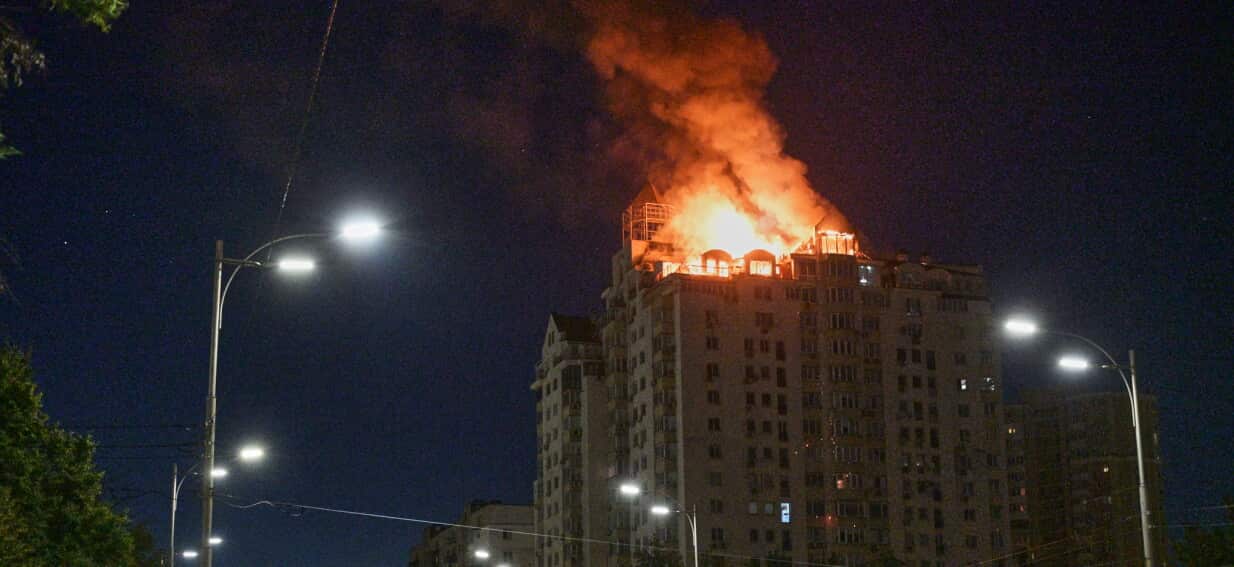
Imagine living through the longest blackout in American history, watching your island's infrastructure crumble, and then hearing that billions of dollars are sitting in a federal vault somewhere, gathering dust. That is the grim reality for millions of Americans in Puerto Rico.
A scathing 86-page report from the U.S. Government Accountability Office (GAO) reveals a shocking truth. Nearly a decade after Hurricane Maria razed the island's power grid, only 25 percent of the $14 billion in obligated federal recovery funds has actually been disbursed. The rest is trapped in a bureaucratic pipeline of historic proportions.
People are furious, and they have every right to be. While politicians in Washington argue about oversight, the residents of Puerto Rico are dealing with chronic, daily blackouts that disrupt businesses, spoil food, and threaten lives.
The Brutal Reality of the Numbers
Let's look at where the money is actually stuck. When the federal government "obligates" funds, it means the cash is legally bound for a specific purpose. It sounds great on paper. In practice, it's a mirage.
The Federal Emergency Management Agency (FEMA) obligated $11 billion for the power grid. How much has been given out? Just $2.7 billion. Most of that went toward upfront administrative costs, like equipment, materials, and engineering designs. It didn't go to the actual heavy lifting of rebuilding.
Other agencies are just as slow. The Department of Housing and Urban Development (HUD) allotted $2.9 billion to modernize the grid. Only $589 million has left the building. The Department of Energy (DOE) promised $1 billion but has disbursed just $255 million.
To make matters worse, the DOE actually canceled up to $350 million in grants meant for a solar access program for low-income households and people with disabilities. They also redirected $365 million from solar projects into quick-fix, emergency grid repairs instead of sustainable modernization. It is a chaotic approach to a systemic crisis.
Why Is the Grid Recovery Moving at a Crawl
You can't blame a single bottleneck for this disaster. It's a perfect storm of federal micromanagement, red tape, and local financial chaos.
Onerous Review Processes and Sudden Directives
FEMA's environmental and historic preservation review processes are notoriously slow. The audit points out that these reviews extend project timelines by months or years. Making things worse, the team handling these reviews is deeply unstable. All 14 FEMA staff members assigned to the grid projects were temporary employees, and turnover among them jumped from 3 percent to 19 percent.
Bureaucratic whims at the top level slowed things down even more. In June 2025, former Homeland Security Secretary Kristi Noem put a rule in place requiring her office to personally approve any expenditure over $100,000. That effectively paralyzed the pipeline. While new Homeland Security Secretary Markwayne Mullin rescinded that rule in April, the damage was already done. Months of progress vanished.
The Vegetation Nightmare
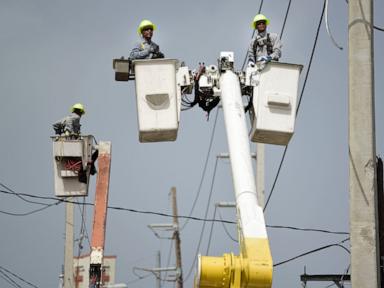
You might think rebuilding a grid is all about high-tech transformers and new cables. In Puerto Rico, it's often about chainsaws. Roughly half of the island's blackouts are caused by overgrown trees and tropical vegetation swallowing the power lines.
The plan was to clear 16,000 miles of transmission and distribution lines using federal funds. As of early 2026, workers had cleared just 400 miles. In San Juan, clearing efforts stopped entirely because the specific pool of money ran out.
Private entities and local authorities are constantly pointing fingers. Luma Energy, the private company managing the grid's transmission, cleared about 2,800 miles in fiscal year 2025, but they are locked in a vicious legal battle. The Puerto Rican government is suing to kill Luma's contract, and Luma is counter-suing.
A Mountain of Debt
The Puerto Rico Electric Power Authority (PREPA) is functionally bankrupt. They are still trying to restructure more than $10 billion in legacy debt. This financial wreckage makes it incredibly difficult to coordinate long-term construction or secure the confidence of contractors who fear they won't get paid.
The Real Cost of Bureaucratic Blame Games
The federal government and local authorities seem content to point fingers while the island burns through backup generators. The Department of Homeland Security recently noted that the government of Puerto Rico is "ultimately responsible" for finding a comprehensive solution. Local leaders, meanwhile, point to the absurd federal red tape.
This isn't an abstract debate about accounting. When Hurricane Maria hit in 2017, it killed an estimated 2,975 people in its sweltering aftermath. The grid didn't just fail; it vanished. Some towns spent a year in the dark. Subsequent earthquakes in 2019 and 2020 cracked the remaining foundation of the system.
When a governor has to declare a state of emergency over blackouts nearly eight years after a storm, the system is fundamentally broken. Finding replacement parts for the island's archaic infrastructure can take up to two years. Every major repair job requires planned outages, meaning residents have to lose power just to hope for better power later.
How to Fix the Funding Bottleneck
The GAO report didn't just complain; it laid out specific steps to fix this mess. If the federal government actually wants to track toward a modern grid, the strategy has to change immediately.
- Implement categorical exclusions: FEMA needs to update its rules to bypass full-scale environmental reviews for projects that are simply replacing old poles and lines in existing footprints.
- Stabilize the workforce: Stop using temporary contractors for critical review positions. FEMA needs permanent, full-time staff on the ground in Puerto Rico to keep project approvals moving.
- Establish a formal coordination mechanism: The DOE, FEMA, HUD, and Puerto Rican authorities need a single, unified command structure. The DOE previously killed a working group that brought stakeholders together, replacing it with selective meetings. That needs to be reversed.
If you are following the recovery efforts or advocating for infrastructure reform, keep your eyes on whether FEMA actually adopts these flexibilities. Pressure needs to remain on the Department of Homeland Security to stop treating the island like a corporate sub-contractor and start treating it like a community of American citizens in crisis.