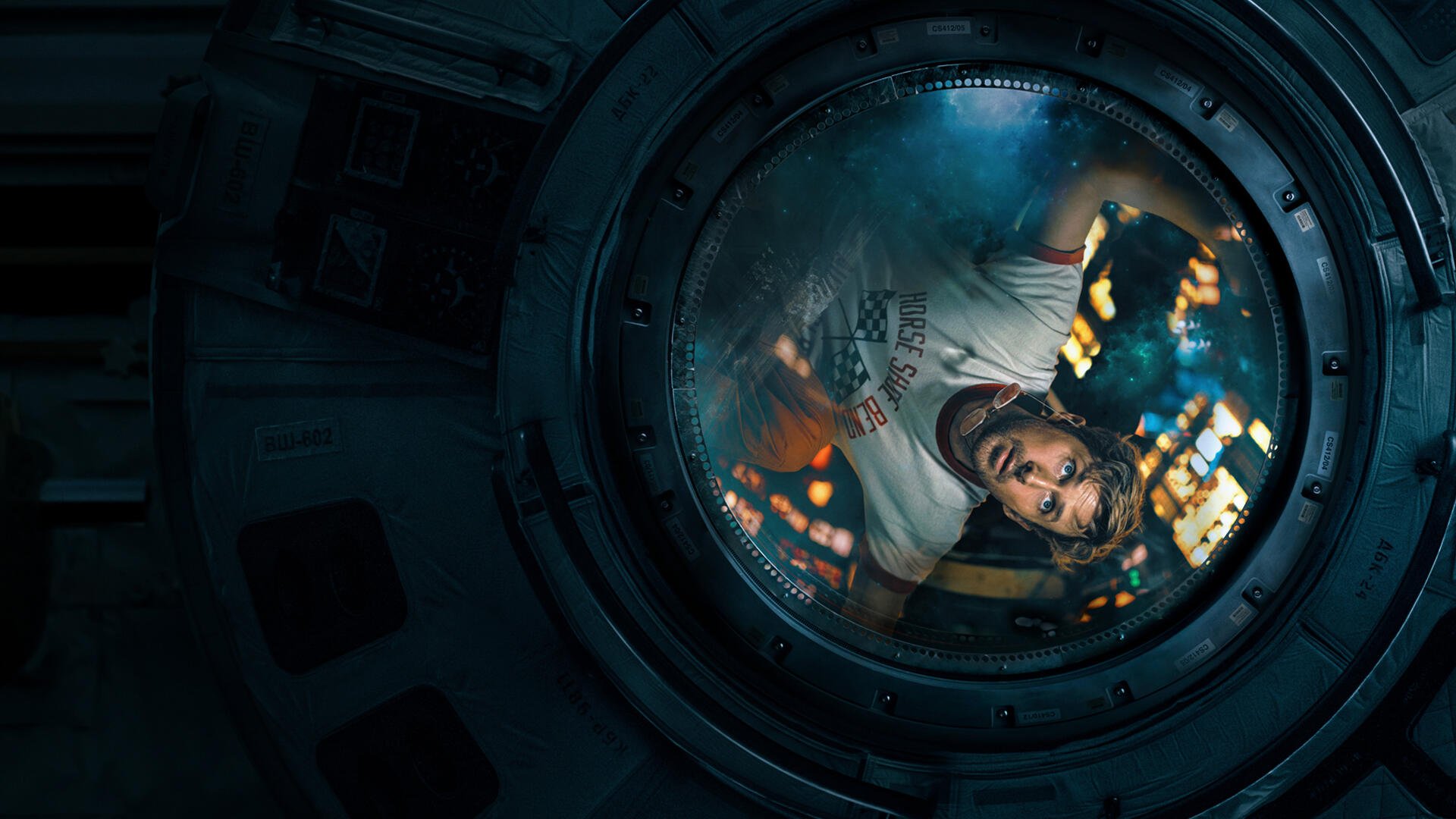
Hollywood is currently obsessed with a math teacher.
Specifically, Ryland Grace—the protagonist of Andy Weir’s Project Hail Mary. The industry trade rags are already declaring the upcoming Amazon MGM adaptation a "proof point," a "savior," and the definitive signal that big-budget, hard sci-fi is the new gold mine. They see a hit novel, a bankable star in Ryan Gosling, and the directorial duo of Lord and Miller, and they smell a billion dollars.
They are wrong.
Actually, they are worse than wrong; they are misinterpreting a fluke as a formula. The "consensus" view is that Project Hail Mary proves audiences are hungry for high-concept, intellectual properties that prioritize logic over capes. The reality? Project Hail Mary is a statistical outlier that hides the rotting core of current studio strategy. If Amazon MGM thinks this is a repeatable blueprint for theatrical dominance, they aren't just reading the room wrong—they’re reading the wrong book.
The Survivorship Bias of the "Science" Thriller
The loudest argument for the film’s inevitable success is the "Martian" precedent. Everyone remembers $630 million at the global box office. They remember Matt Damon growing potatoes in feces and the world cheering for a botanical engineer.
What they forget are the dozens of high-concept, "smart" sci-fi carcasses littered across the studio lots since 2015. For every The Martian, there are three films like Ad Astra, Life, or Chaos Walking—movies that tried to capture that same "competence porn" energy and landed with a thud.
The industry suffers from chronic survivorship bias. They look at the one ship that made it through the storm and conclude that the storm isn't a problem. Project Hail Mary didn't become a sensation because people love orbital mechanics. It became a sensation because it hit a specific, post-pandemic psychological nerve: the desire for a solitary hero to solve an existential threat through sheer, optimistic tinkering.
That is a lightning-in-a-bottle moment, not a sustainable market trend.
The Gosling Gamble and the Death of the Movie Star
Amazon MGM is leaning heavily on Ryan Gosling's current "Ken-ergy" to carry this film. On paper, it’s a masterstroke. In practice, it’s a symptom of a dying system.
We are living in an era where the IP is the star, not the human. People didn't go to Barbie to see Ryan Gosling; they went to see Ken. When Gosling steps away from established, neon-lit brand iconography, his box office track record is... complicated. First Man, a technically brilliant, "realistic" space drama directed by Damien Chazelle, barely cleared $100 million worldwide.
The industry keeps trying to use 1990s tactics—pairing a "Big Name" with a "Big Concept"—in a 2020s market that has fundamentally shifted toward fragmented niche interests. Project Hail Mary requires the audience to sit in a dark room and watch a man talk to a spider-like alien for two hours. That isn't a mass-market "four-quadrant" slam dunk. It’s a massive risk that requires a very specific type of charismatic gymnastics that even the best actors struggle to maintain when buried under CGI and scientific jargon.
The Streaming Giant's Identity Crisis
Amazon MGM is desperate. Let’s be blunt. Since the $8.5 billion acquisition, the studio has been hunting for a legacy-defining win that justifies the price tag. They need Project Hail Mary to be their Interstellar.
But there is a fundamental friction between a streaming company’s DNA and the theatrical experience. Amazon’s primary goal is Prime subscriptions. MGM’s historical goal is the silver screen. When you mix these two, you get a diluted theatrical window and a marketing strategy that feels like it’s trying to serve two masters.
The "proof point" narrative is a defensive crouch. By crowning the film a success before a single frame has been screened for critics, the studio is trying to manufacture a sense of inevitability. I've seen studios blow $200 million on marketing campaigns designed to "will" a movie into being a hit, only for the audience to smell the desperation. If you have to tell people your movie is a proof point for your business model, your business model is already in trouble.
Accuracy Over Aesthetics: The Nerd Trap
There is a segment of the industry that believes "accuracy" is a selling point. They point to the "hard" science of Weir’s writing as the draw.
This is the "Nerd Trap."
In cinema, technical accuracy is often the enemy of emotional resonance. The Martian worked because Ridley Scott is a master of visual pacing who knew when to ignore the math for the sake of the shot. Project Hail Mary is significantly more "dense" than its predecessor. It involves complex linguistics, relativistic physics, and a plot that hinges on the chemistry of "Astrophage."
When you translate that to the screen, you face a binary choice:
- Explain the science and bore the casual viewer to death.
- Ignore the science and alienate the core fanbase that made the book a hit.
Most studios try to do both and end up doing neither. They create a middle-of-the-road "science-lite" experience that feels patronizing to the fans and confusing to the general public. We are seeing a "Marvelization" of intelligence—where being "smart" is just another superpower that requires a quippy montage to explain.
The Cost of the "Safe" Bet
The most frustrating part of the Project Hail Mary hype is that it represents Hollywood’s retreat into the "Safe Bet."
An adaptation of a best-selling book by a proven author, starring an A-list actor, directed by hit-makers. This isn't bold filmmaking. This is an insurance policy.
If we want to save the box office, we don't need more "proof points" for established IP. We need the industry to stop looking for the next The Martian and start looking for the next thing that doesn't look like anything else.
By framing Project Hail Mary as the future of the studio, Amazon MGM is admitting they are out of original ideas. They are betting on the rearview mirror. They are betting that what worked in 2015 will work in 2026.
The Brutal Reality of the Modern Theater
Let’s talk about the actual experience of going to a movie today. It is expensive. The seats are often sticky. The person three rows back is scrolling TikTok.
To get people out of their houses and away from their 75-inch OLED TVs, a movie needs to be more than "good" or "accurate." It needs to be an event.
Is a story about a man alone in a tin can an event? Maybe. But the odds are stacked against it. The "convenience" of streaming has fundamentally broken the audience's patience for slow-burn narratives. Project Hail Mary is a slow burn by definition. It’s a procedural. It’s about trial and error.
In a world of two-minute dopamine loops, a three-act structure based on scientific methodology is a hard sell. The "proof" isn't in the production budget; it’s in whether or not the studio can convince a generation raised on short-form content to care about the cooling systems of a fictional spaceship.
Stop Asking the Wrong Questions
The question shouldn't be, "Is Project Hail Mary the proof point Amazon MGM needs?"
The question should be, "Why is Amazon MGM so reliant on a single, high-stakes gamble to validate their existence?"
If the movie succeeds, the industry will learn the wrong lesson: Buy more books about scientists. If the movie fails, the industry will learn the wrong lesson: Sci-fi is dead. Neither is true. The truth is that the box office is no longer a monolith. It is a collection of fractured micro-markets. Trying to find one movie to rule them all is a fool’s errand.
The studio isn't waiting for a proof point. They are waiting for a miracle. And in space, as Ryland Grace learns, miracles are just physics you haven't figured out yet. But in Hollywood? Miracles are usually just creative accounting and a very lucky weekend in October.
Stop looking at Project Hail Mary as a sign of things to come. Look at it for what it is: a high-priced attempt to recreate a past that no longer exists. If you want to see where the industry is actually going, look at the projects they are too afraid to greenlight—the ones that don't have a "proven" track record or a celebrity attachment.
The box office doesn't need a savior in a spacesuit. It needs a studio with the guts to stop chasing the ghost of 2015.