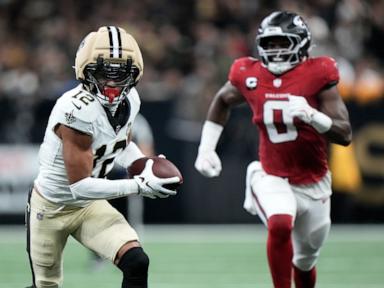
The stadium lights do not care about your conscience. They hum at sixty hertz, casting crisp, four-way shadows across the turf, illuminating every bead of sweat, every micro-expression of pain, and every calculated movement of a human body pushed to the absolute brink of biological capacity.
Stand inside the tunnel of a sold-out arena five minutes before kickoff, and the air tastes like copper and cheap floor wax. The roar from the bowl above is not a sound; it is a physical weight pressing against your sternum. You are twenty-four years old. You have spent fourteen of those years destroying your cartilage, skipping proms, ice-bathing until your toes turned numb, and eating chicken breasts out of plastic Tupperware in the back of idling buses—all for the privilege of stepping onto that grass. If you liked this piece, you should read: this related article.
And then, right before you walk into the white-hot glare of forty million living rooms, someone in a tailored suit taps you on the shoulder. They remind you of the rule.
Play the game. Sell the jersey. Smile for the sponsor. Keep your mouth shut. For another angle on this story, refer to the recent coverage from NBC Sports.
For decades, this was the unspoken contract of modern athletics, a clean transaction between the gladiators and the empire. We asked athletes to be superhuman on the field and subhuman off it—stripped of opinion, sanitized of conviction, reduced to living mannequins draped in corporate logos. Yet, when an athlete finally breaks that silence—when they kneel during an anthem, wear a slogan on their warm-up shirt, or refuse to shake a politician’s hand—the collective fury is instantaneous and deafening. Critics scream about the First Amendment. Fans burn jerseys in their driveways. Pundits demand that they "stick to sports."
We have gotten the entire question of athlete free speech completely backward. We argue about whether they have the right to speak, while ignoring the brutal reality of what happens when they actually use it.
The Constitutional Illusion
To understand why this debate generates so much heat and so little light, we have to clear away a massive legal misunderstanding that trips up almost every barroom argument on Sunday afternoon.
Ask a hundred fans whether sports stars have the right to free speech, and ninety of them will immediately cite the First Amendment of the United States Constitution. They are wrong. Not morally wrong, perhaps, but legally illiterate.
The First Amendment is a shield against the government, not a megaphone inside a private workplace. It states that Congress shall make no law abridging the freedom of speech. If the police arrest a quarterback for writing an op-ed criticizing tax policy, that is a First Amendment violation. If a billionaire team owner benches that same quarterback because the op-ed upset the airline sponsoring the stadium, the Constitution does not lift a finger to help him.
Think of a professional sports league not as a public town square, but as an exclusive, ultra-wealthy country club with a television network attached. When a player signs a multi-million-dollar contract, they are stepping onto private property. Under American labor law, private employers possess sweeping authority to regulate what their employees say and do while on the clock, wearing the company uniform, or representing the brand.
Consider a hypothetical scenario to make this crystal clear. Imagine a software engineer named Elena who works for a major tech firm. If Elena stands up during the company’s annual keynote presentation—while wearing the company polo shirt in front of ten thousand investors—and hijacks the microphone to protest foreign policy, she will be escorted out by security before she finishes her second sentence. Nobody would argue that her constitutional rights were trampled. Her employer simply exercised its right to protect its business interests.
Legally, an NBA point guard or an NFL linebacker is no different from Elena. The jersey is the company polo. The stadium is the keynote stage.
Yet, there is a catch. Unlike Elena, whose employment terms sit in a standard HR binder, professional athletes operate inside a fiercely negotiated ecosystem of Collective Bargaining Agreements (CBAs), morality clauses, and international sporting charters. Their speech is not governed by the Constitution; it is governed by contracts, leverage, and money.
Ghosts on the Podium
History proves that the demand for silent athletes is not a new phenomenon, nor is the heavy cost paid by those who refuse to comply. We love to celebrate rebel athletes once they are safely tucked into black-and-white history books, safely stripped of their power to make us uncomfortable today.
Look at October 16, 1968. Mexico City.
Tommie Smith and John Carlos stood on the Olympic medal podium, gold and bronze hanging around their necks, heads bowed, black-gloved fists thrust toward the stadium roof as "The Star-Spangled Banner" echoed across the track. Today, that photograph hangs in museums. Universities teach it. Nike practically built an entire marketing aesthetic around its spiritual descendants.
What the museum plaques rarely mention is what happened the morning after the shutter clicked.
Smith and Carlos were immediately suspended from the U.S. Olympic team and expelled from the Olympic Village. When they returned home, they did not return to ticker-tape parades. They returned to death threats mailed to their homes, severed friendships, and total economic exile. Tommie Smith, the fastest man on earth, had to wash cars in a parking lot to buy groceries for his family. John Carlos took jobs as a bouncer and a coal-shoveler just to keep the electricity running.
A year earlier, Muhammad Ali—then the undisputed heavyweight champion of the world, a man at the absolute zenith of his physical beauty and earning power—refused induction into the U.S. Army during the Vietnam War. Within hours, the New York State Athletic Commission stripped him of his title and revoked his boxing license. Every other state followed suit. They did not put him in a prison cell, though they tried; they simply locked him out of the ring during his prime years from ages twenty-five to twenty-eight. They stole his youth because he refused to rent out his conscience.
I remember sitting in a cramped press room in 2016, watching the early ripples of the NFL kneeling protests spread from a single backup bench in San Francisco to locker rooms across the country. The air in that room felt thick, nervous, almost claustrophobic. Veteran beat writers, men who had spent thirty years analyzing cover-two defenses and ankle sprains, suddenly looked exhausted and out of their depth. A young rookie receiver—let’s call him Marcus, though there were dozens like him that autumn—stood by his locker, staring at his cleats while thirty microphones pressed toward his chin.
His hands were shaking slightly. Not from fear of a three-hundred-pound defensive end, because Marcus knew how to take a hit. He was shaking because he knew that a single clumsy sentence on a Tuesday afternoon could quietly evaporate a four-year contract extension before Sunday’s kickoff. Nobody has to pass a law to silence a player like Marcus. All a league has to do is quietly stop calling his agent.
The Architecture of the Gag
If the First Amendment doesn't protect athletes inside the arena, what actually determines whether they can speak? The answer lies in a tangled web of corporate rulebooks, international bylaws, and the brutal economics of modern broadcast television.
Different sports build very different cages.
In the Olympic movement, the cage is codified in black and white. Rule 50.2 of the Olympic Charter explicitly states: "No kind of demonstration or political, religious or racial propaganda is permitted in any Olympic sites, venues or other areas." The International Olympic Committee (IOC) views the Games as a neutral sanctuary, a fragile truce where nations set aside geopolitical warfare for sixteen days of track meets and swimming races. Break Rule 50, and you risk losing your medal, your accreditation, and your career. Even after slight relaxations ahead of the 2020 and 2024 Games—allowing athletes to express views during press conferences or on social media—the podium and the field of play remain strictly sanitized zones.
In American major leagues, the rules are far murkier, shifting constantly depending on which way the financial winds are blowing.
Take the NBA, often hailed as the most progressive sports league in the world. Commissioner Adam Silver famously praised players for speaking out on social justice, and during the 2020 Orlando bubble, the league even painted "Black Lives Matter" directly onto the hardwood court and allowed players to replace their surnames with pre-approved social slogans. Yet, the NBA still maintains a rigid, decades-old rule requiring players to stand in a dignified posture during the national anthem. And when Houston Rockets general manager Daryl Morey posted a single seven-word tweet supporting pro-democracy protesters in Hong Kong in 2019, the league’s commitment to free expression instantly collided with a multi-billion-dollar Chinese broadcast market. Suddenly, free speech became a delicate diplomatic crisis.
The NFL operates with even sharper teeth. Because NFL contracts are famously non-guaranteed—meaning a player can be cut on a Tuesday for almost any reason without receiving the rest of their money—the league rarely needs an explicit gag order to enforce compliance. The terror of unemployment does the work for them. In 2018, NFL owners attempted to pass a unilateral policy fining teams whose players knelt during the anthem, only to freeze the rule after fierce pushback from the NFL Players Association (NFLPA). The legal battle wasn't over constitutional rights; it was a labor dispute over whether management could change workplace rules without bargaining with the union.
Meanwhile, in global football (soccer), governing bodies like FIFA walk an impossible tightrope. FIFA strictly bans political, religious, or personal slogans on undergarments and jerseys—fining players for revealing tributes to deceased relatives or human rights messages. During the 2022 World Cup in Qatar, when European captains planned to wear "OneLove" rainbow armbands to protest discrimination, FIFA didn't even bother with fines. They threatened immediate yellow cards at kickoff. Two yellow cards mean a suspension. A suspension means watching your country get eliminated from the bench. Every single captain backed down before the whistle blew.
| Sporting Body | Primary Governing Mechanism | Typical Consequence for On-Field Protest |
|---|---|---|
| IOC (Olympics) | Olympic Charter Rule 50.2 | Disqualification, medal forfeiture, expulsion from Games |
| FIFA (Global Soccer) | Laws of the Game (Law 4) | Immediate yellow cards, match suspensions, federation fines |
| NBA (Basketball) | CBA & League Operations Manual | Fines, suspensions, loss of international endorsement deals |
| NFL (Football) | Collective Bargaining Agreement | Fines, non-guaranteed contract termination ("blackballing") |
The "Stick to Sports" Fallacy
Whenever an athlete steps outside the chalk lines to speak about voting rights, police brutality, climate change, or war, a predictable chorus rises from the stands and the comment sections: Shut up and dribble. Stick to sports. We pay to be entertained, not lectured.
It is an emotionally understandable impulse. Life is hard. Bills pile up, politicians lie, the news cycle feels like an endless emergency, and for three hours on a Sunday afternoon, people just want to watch a human being catch a leather ball in the corner of the end zone without having to think about systemic inequality. Sports are supposed to be our escape hatch.
There is just one problem with demanding that sports remain free of politics: sports have never been free of politics.
Before a single ball is kicked or thrown, the stadium asks tens of thousands of people to stand, remove their hats, place their hands over their hearts, and sing a national anthem while military fighter jets scream overhead in a taxpayer-funded flyover. Taxpayer money builds the concrete stadiums. City councils grant tax exemptions to billionaire owners. State legislatures pass laws dictating who can play on high school teams. The American flag is stitched onto jerseys, painted onto helmets, and unfurled across the entire length of the field by uniformed service members.
To wrap an entire industry in patriotism, military pageantry, and government subsidies, and then tell the athletes that the arena is "apolitical" the moment they voice dissent, is not a defense of neutrality. It is a demand for obedience. You are not asking the athlete to keep politics out of sports; you are telling them that only your politics are permitted inside the building.
Think of it like a neighborhood dinner party where the host spends two hours lecturing everyone on his political views, and then, the moment a guest politely disagrees, slams his fist on the table and shouts, "No politics at the dinner table!"
Athletes are not hired mercenaries imported from another planet. They are citizens, taxpayers, parents, and neighbors who happen to possess extraordinary physical gifts. When a basketball player grows up in a neighborhood where the tap water is poisoned with lead, or a female soccer star earns a fraction of what her male counterparts make despite winning four World Cups, asking them to leave their lived reality at the locker room door is asking them to amputate their own humanity.
Where the Line Actually Breaks
Admitting that athletes should have a voice does not make the boundary lines easy to draw. Anyone who pretends this is simple is lying to you.
I used to believe that any expression on the field should be completely unrestricted. It felt clean, principled, and righteous. Then I began thinking about what happens when that principle is applied universally, without bias.
If a league permits a player to wear a jersey message supporting racial justice, must it also allow another player to wear a message opposing reproductive rights? If an athlete can kneel to protest police violence, can another athlete raise a fist to endorse a divisive authoritarian politician, or promote a conspiracy theory that incites harassment against real people?
The moment a sports league opens the field of play as an unregulated ideological billboard, the game itself risks tearing apart. Fans do not root for jerseys only because of who wears them; they root for jerseys because those colors represent a shared civic tribe. In a fractured society, a stadium is one of the last physical places left where a liberal schoolteacher and a conservative plumber will high-five each other in the third row because a rookie just hit a walk-off home run.
If the field turns into an extension of cable news, that fragile, miraculous truce shatters.
This is the invisible tightrope that modern athletes and leagues walk every single day. The solution does not lie in silencing players, nor does it lie in turning every halftime show into a political rally. The answer lies in understanding the difference between captive audiences and earned platforms, and between institutional speech and personal conscience.
When an athlete is standing between the white lines, wearing the uniform of a team and a league, they are acting as an ambassador for a collective enterprise. Leagues have a legitimate, defensible interest in keeping the actual competition focused on the sport itself. Rules governing uniforms and on-field conduct are not tyranny—provided those rules are negotiated fairly with the players' unions, applied consistently across all political viewpoints, and never used as a cudgel to punish peaceful expressions of human dignity.
Outside those lines—at the podium, in interviews, on social media, through their foundations, and in the communities that idolize them—the leash must come off completely. A contract buys an athlete’s jump shot, their fastball, or their blocking technique. It does not buy their soul, their citizenship, or their right to speak truth to power.
The Weight of the Jersey
Every generation of athletes inherits a slightly wider space to breathe, paid for in full by the people who came before them and got crushed for trying.
Curt Flood sacrificed his Hall of Fame baseball career in 1969 by refusing a trade, challenging Major League Baseball’s reserve clause in the Supreme Court, and enduring years of ruinous ostracization so that modern players could enjoy free agency. Billie Jean King risked everything in 1973 to fight for equal prize money in tennis, threatening to boycott the U.S. Open until women were paid the same as men. Colin Kaepernick took a knee on a preseason sideline in 2016, knowing full well that NFL owners carry long memories and short patience, and never took another snap in the league again.
They knew the rules. They knew the First Amendment wouldn't save their jobs. They knew the sponsors would flinch, the talk-radio hosts would howl, and the stadium lights would suddenly feel blindingly cold.
They spoke anyway.
Because in the end, the question is never whether sports stars have the legal right to free speech. The law is just ink on paper; it cannot protect you from the slow, quiet death of a blackballed career or the roar of fifty thousand boos raining down from the upper deck. The real question—the only one that actually matters when the stadium goes quiet and the cameras pack up their lenses—is whether we want our heroes to be hollow statues built for our amusement, or whole human beings brave enough to remind us that some things are bigger than the scoreboard.