Gunfire.
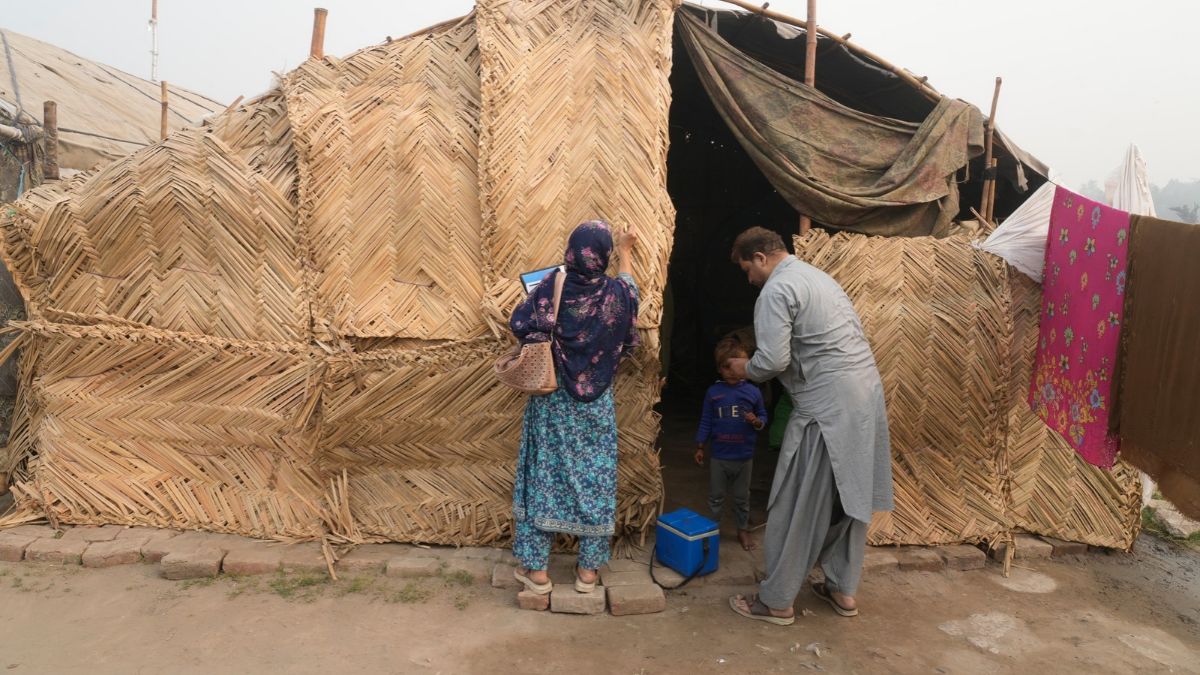
In the crisp morning air of Khyber Pakhtunkhwa, two shots shatter the quiet rhythm of a mountain lane before the sun has even climbed above the ridgeline. Two police officers fall. Their uniforms carry dust from a roadside checkpoint and the faint metallic tang of cordite. A few hundred yards away, health workers pause with insulated cold boxes tucked against their sides, small glass vials holding two drops of oral polio vaccine resting in chilled packs.
A headline reduces that moment to a tally. Two police officers guarding polio vaccinators shot dead in Pakistan's Khyber Pakhtunkhwa.
Read it quickly and you move on. Another skirmish in a long, exhausting conflict. Another tragedy in a province where geography, history, and militant violence collide every single morning.
Yet those two drops carry a weight that has nothing to do with politics on a television screen. They hold the difference between a toddler running across a courtyard years from now and a child dragged through life with a withered limb. They mark one of the final, stubborn holdouts of a disease humanity has spent decades cornering.
I have stood on dusty thresholds where mothers hesitated with one hand on a wooden door latch and the other holding a crying infant. I have watched vaccinators wipe sweat from their foreheads while checking a chalk mark on a small fingernail, knowing that a missed house in one alley can let a virus slip past a perimeter ten miles wide. Sometimes the fear in a room is loud and angry. Often it is quiet, tangled in rumors whispered over tea, memories of broken promises, and the simple exhaustion of people who feel caught between armed men and distant institutions.
Doubt grows easily in places where trust has been bruised too many times. I will admit something uncomfortable right here: when you look at maps showing where wild poliovirus still lingers, it is easy to feel a wave of frustration and wonder how something so preventable can remain so hard to finish. Then you sit on a woven mat beside a tired mother who has buried kin or watched neighbors lose livelihoods to curfews and raids, and the frustration gives way to a harder, truer question. What does safety mean when the person knocking on your door with medicine has an armed escort behind them?
Why a Two-Drop Vial Draws Gunfire
Polio is an ancient predator. For centuries it moved quietly through crowded streets, warm water, and unwashed hands, striking mostly infants and young children. Most infections look like nothing more than a passing stomach ache or mild fever. In a small fraction of cases—roughly one in two hundred depending on the strain—the virus slips past the gut into the nervous system and attacks motor neurons. Within hours or days, muscles go limp. A leg loses its push. A diaphragm struggles for air.
Think of the nervous system as a sprawling network of copper wires carrying orders from a command center to every finger and toe. Poliovirus does not merely flicker the lights; it strips insulation off critical lines and severs pathways that rarely grow back once destroyed.
To understand why front-line health campaigns face lethal opposition in parts of Khyber Pakhtunkhwa, you have to look beyond the syringe or dropper. A vaccine is never just chemistry in glass. It is state presence made visible at the doorstep.
In regions shaped by decades of border instability, counterinsurgency operations, and deep mistrust toward outside authorities, militants have long treated vaccination teams as soft targets tied to the state and international agendas. Attacking police escorts and health workers serves a cold strategic purpose: it intimidates local communities, disrupts outreach, forces emergency pauses in immunization drives, and projects power where authority is contested.
False narratives thrive inside that vacuum. Rumors circulate claiming vaccine drops cause infertility, carry hidden agents, or serve foreign surveillance. Once a rumor attaches itself to a real grievance—a delayed clinic repair, a harsh checkpoint search, a sense that outsiders arrive with cameras and questions but leave behind few lasting jobs—facts alone struggle to break through.
Consider a hypothetical scenario to see how fragile the chain is. (This scenario is invented for illustration, though drawn from documented patterns of immunization drives.) Suppose a vaccination team moves through a hillside settlement at dawn. Ahead and behind walk two constables carrying rifles, eyes scanning rooftops and alley corners rather than gardens. A mother hears boots on gravel before she hears the knock. Her pulse spikes. Even if she wants her child protected, the armed presence turns a routine health visit into a moment of high tension. If gunfire erupts nearby—or if rumors spread that an escort was ambushed down the road—the entire block may shutter its doors for weeks.
Polio does not wait for ceasefires or calm news cycles. Every pause in coverage leaves pockets of unimmunized children, and every unimmunized child is a fresh bridge for transmission.
The Invisible Stakes Behind Every Missed House
Erasing a human disease from the planet is not like clearing a room; it is like snuffing out sparks in dry grass while wind blows across the hills. As long as a single spark survives and finds fuel, a fire can flare again far from where it started.
Global health campaigns have pushed polio back by more than ninety-nine percent since the late 1980s. Millions of children walk today who would have been paralyzed had those efforts never begun. That triumph is real, measurable, and historic. Yet the final stretch is often the most unforgiving.
When a disease becomes rare, its danger becomes abstract to people who have never seen a child in leg braces or an iron lung. A parent who has never met someone with paralytic polio weighs a hypothetical risk against an immediate social pressure or lingering fear. Meanwhile, the virus itself remains relentless. Because poliovirus spreads easily through fecal-oral routes—especially where sanitation infrastructure is strained or families are displaced—one infected child traveling along a trade route or family visit can carry the pathogen across districts or borders.
Protecting children requires repeated rounds of immunization, not a single pass. Oral polio vaccine works by building intestinal immunity as well as bloodstream protection, helping stop the virus from multiplying and shedding into the environment. Missing a single house during a campaign is not a minor clerical error; it leaves a gap in the wall.
Now picture a real boy named Tariq—not a statistic, just a five-year-old who loves chasing stray chickens across a packed-earth yard. (Tariq is a composite character representing children in high-risk corridors.) If his neighborhood misses two consecutive vaccination rounds because security threats force teams to pull back, his gut immunity stays low. A visiting relative carries the virus in without showing symptoms. Within weeks, trace spread begins in the lane. If health workers cannot return quickly and safely, a child down the street could wake up unable to stand.
That is why police escorts exist in the first place. They are not there for ceremony. They stand between health workers and ambushes so nurses, lady health workers, and community volunteers can reach children in remote valleys and dense towns alike. When two officers are shot dead on duty, the loss hits on two levels at once: families lose fathers, sons, and brothers who took a dangerous assignment, and the protective shield around a life-saving campaign is torn open.
History Repeats When We Stop Looking
Public health history offers a sobering lesson: diseases rarely surrender politely. Smallpox took a global coalition, relentless door-to-door surveillance, and years of patient negotiation in difficult terrain before the last natural case was recorded. Along the way, fear, suspicion, and local conflict repeatedly slowed progress.
Polio faces its own distinct hurdles. Unlike smallpox, poliovirus spreads silently most of the time, meaning health workers often chase a ghost until paralysis appears. Moreover, immunization teams in Pakistan have faced recurring violence for well over a decade—targeting vaccinators, security personnel, and vehicles across high-risk pockets, particularly in Khyber Pakhtunkhwa and Balochistan.
Whenever violence spikes, a familiar cycle threatens to take hold. Security forces tighten movements, which can slow routine outreach. Rumors surge online and in bazaars. Health officials face the agonizing calculus of sending teams into volatile areas versus leaving children exposed to paralysis.
Yet resilience in these campaigns has never come from armor alone. Ask seasoned field supervisors what keeps drives moving when headlines turn grim, and they rarely point to weapons first. They point to local trust.
When vaccination teams include women from the same neighborhood who speak the local dialect, know the elders, and understand household customs, resistance often softens. A neighbor explaining why two drops protect a newborn carries a different weight than a stranger reading from a clipboard. Community leaders, teachers, and clerics who publicly affirm child health help shift the social climate from suspicion to shared responsibility.
Still, no amount of community goodwill can replace basic physical safety when armed groups choose lethal force. Police officers guarding vaccinators are often under-resourced, operating on predictable routes that attackers study carefully. Each ambush tests the resolve of both security planners and health crews who show up again the next week despite grief and fear.
What Keeps the Cold Box Moving
Step back from the gunfire and look at the logistics required to put two drops of vaccine into a child's mouth in a rugged province.
The vaccine must stay cold from depot to doorstep. Ice packs freeze in regional hubs, travel over bumpy roads, and keep fragile vials within safe temperature ranges through heat and delays. Supervisors map households street by street, tallying newborns, tracking missed children, and debriefing at dusk after long hours on foot.
Behind every successful round is a quiet chain of ordinary human grit:
- A lady health worker walking four miles before noon because no vehicle can navigate a narrow track.
- A police constable watching a quiet alley for three hours so a team can finish ten more homes.
- A mother deciding to set aside her doubts and hold her child steady for a two-second dose.
None of that drama makes a neat soundbite. Peace is quiet. A child who never contracts polio never becomes a tragic photograph. Prevention succeeds precisely when nothing dramatic happens—no hospital admission, no lifelong disability, no outbreak splashed across morning news.
That invisibility is both the beauty and the curse of public health. People celebrate dramatic rescues on cliffs or hospital miracles, while overlooking the thousands of quiet doors opened every day that keep a disaster from ever starting.
Beyond the Ambush
When two police officers are killed guarding polio vaccinators in Khyber Pakhtunkhwa, the shock ripples far past the immediate scene. It reminds the world that eradicating a disease is never purely a scientific race. It is a human struggle played out along fault lines of security, poverty, trust, and endurance.
You do not solve that with distant pity or simplistic slogans. Real progress demands steady protection for those on the front lines, honest engagement with communities whose fears are rooted in real history, and sustained commitment even when progress feels slow and painful.
A child's future should never depend on whether a gunman holds his fire down the road.
Two drops on a tongue take less than a second. The courage it takes to deliver them—and to guard the people carrying them—echoes across generations.


