The rain in East London doesn’t just fall. It sweeps sideways off the Thames, carrying the scent of diesel and wet tarmac, stinging the faces of the people walking down the Barking Road. If you stand outside the Boleyn Tavern on a Tuesday night in November, you can hear the low, rhythmic thrum of a neighborhood that has spent more than a century defining itself through eleven men in claret and blue.
A mile away, the London Stadium glows like a spaceship dropped into the marshlands. It is magnificent, sterile, and massive. Inside its concrete rings, corporate executives sip cooled Chablis in heated hospitality suites, while down on the concourse, three generations of a family share a single pie, arguing about a central defender's positioning.
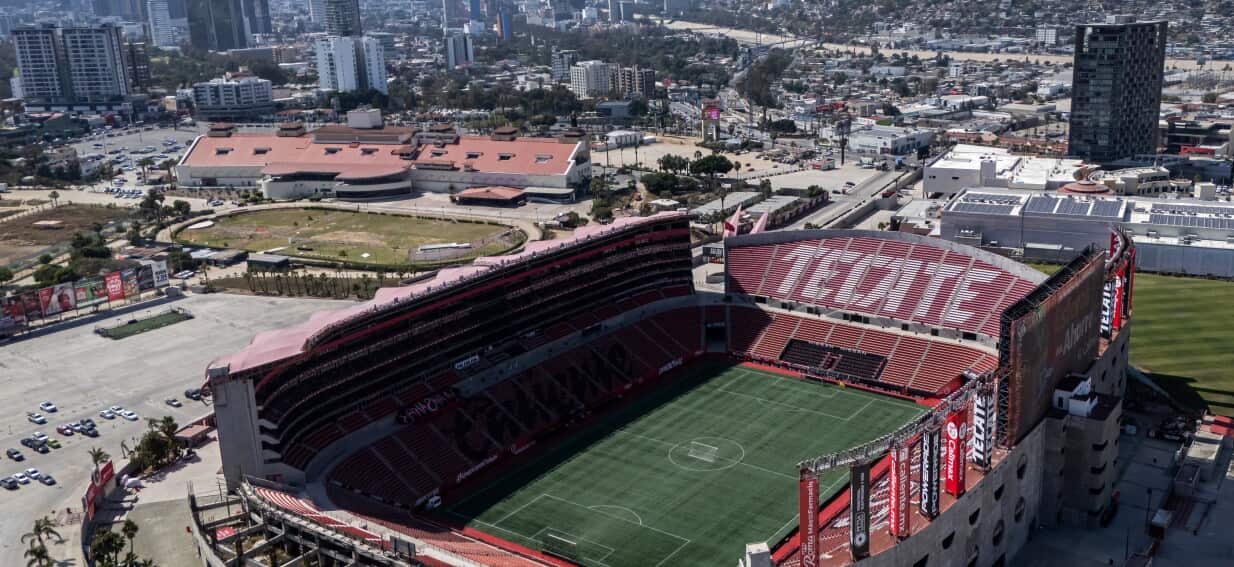
Seven miles to the northwest, across the jagged sprawl of the city, the scene repeats in high definition. The Tottenham Hotspur Stadium rises over the high street like a glass-and-steel cathedral. It boasts the longest bar in Europe, a microbrewery, and a pitch that retracts into the floor like a giant drawer.
To the casual observer, Tottenham Hotspur and West Ham United are playing for points. They are fighting for European qualification, television revenue, and a higher rung on the Premier League ladder. But the ledger that matters most isn't kept by accountants.
The real stakes are psychological. These two clubs are locked in a desperate, expensive struggle to outrun their own histories, and neither is entirely sure what happens if they succeed—or what is left behind if they fail.
The Ghost of the Working Class
Every football club has a mythos. For West Ham, it was the Academy of Football, the romantic notion that a collection of local boys from the docks could out-play the aristocratic giants of the game through sheer grit and technical sophistication. It was Bobby Moore’s immaculate white shorts; it was Trevor Brooking’s grace.
Then came the move. In 2016, the club left Upton Park, a cramped, intimidating cauldron where the crowd sat close enough to smell the sweat on the winger’s shirt, for the cavernous bowl of the Olympic Stadium.
Consider the fan who made that move. Let's call him Arthur. He is sixty-four. His father took him to the Boleyn Ground in 1968. For Arthur, West Ham wasn't a brand; it was a weekly communion with a community that was rapidly being priced out of the city. When the club moved, the seats were further from the pitch. The acoustic roar that used to rattle opposition goalkeepers was swallowed by the vast athletic tracks.
The club's hierarchy promised that the move was necessary to compete with the elite. They promised Champions League nights. They promised a future where West Ham no longer had to sell their best players to rivals.
Instead, they found themselves caught in a purgatory of identity. To stay in the top six, a club must spend hundreds of millions on global superstars who view the badge as a stepping stone. To keep the fans happy, the club must somehow retain the soul of an East End institution.
When West Ham loses a match today, the anger in the stands isn't just about three dropped points. It is a deeper, more bitter resentment. It is the feeling of a man who sold his family heirloom to buy a modern watch, only to find out the watch doesn't keep time.
The Architecture of Ambition
Tottenham’s dilemma is different, though no less existential.
For decades, Spurs were the ultimate entertainers. They were erratic, beautiful, and fundamentally flawed. The term "Spursy" became part of the English lexicon—a shorthand for a team that could lead 3-0 at halftime and still find a way to lose 4-3. Their fans accepted the heartbreak because the journey was spectacular. They had Glenn Hoddle; they had Paul Gascoigne; they had Gareth Bale.
Then, Daniel Levy built the stadium.
It cost over a billion pounds. It is an engineering marvel designed to generate cash twenty-four hours a day, hosting NFL games, boxing matches, and pop concerts. But a stadium that expensive requires a team that wins. It cannot tolerate the beautiful failures of the past.
The club traded its erratic romance for the cold efficiency of elite management. They hired serial winners like José Mourinho and Antonio Conte. Managers who didn't care about "the Tottenham way," only about the trophy cabinet.
The result was a profound cultural rejection. The fans, raised on a diet of daring, attacking football, found themselves watching a pragmatism that felt alien. The stadium was full, the revenue streams were flowing, but the stadium felt empty.
This is the hidden cost of modernization. When you build a palace, you must invite the aristocracy inside, and the aristocracy has no time for local sentiment. The club found itself in a paradox: they had built the best stage in the world, but they had forgotten how to write the play.
The Ledger of the Premier League
The financial reality of English football is a treadmill that only moves faster.
+----------------------+-----------------------+-----------------------+
| Metric               | Tottenham Hotspur     | West Ham United       |
+----------------------+-----------------------+-----------------------+
| Stadium Capacity     | 62,850                | 62,500                |
| Recent Peak Result   | UCL Final (2019)      | UECL Champions (2023) |
| Core Identity Crisis | Entertainment vs. Win | Heritage vs. Growth   |
+----------------------+-----------------------+-----------------------+
To understand why a mid-season London derby carries such immense weight, you have to look at the numbers that sit beneath the surface. The gap between the Champions League and the Europa League is not merely a matter of prestige. It is a financial chasm worth roughly £50 million in UEFA distributions, ticket sales, and commercial bonuses.
For Tottenham, missing out on the top four doesn't just mean a year away from Europe’s top table; it threatens the delicate economic ecosystem that services their massive stadium debt. Every season without Champions League football forces a recalculation. Do they sell a star player? Do they reduce the transfer budget?
For West Ham, the stakes are about breaking the glass ceiling. The Premier League has long been dominated by a traditional "Big Six." West Ham has spent the last five years banging their fists against that ceiling, occasionally cracking it, but never quite breaking through.
If they fall back into the mid-table mediocrity of the bottom half, the entire justification for leaving Upton Park collapses. The fans will look at the vast, cold spaces of the London Stadium and wonder why they sacrificed their home just to watch their team finish tenth.
The Human Cost of the Ninety Minutes
We talk about managers as if they are chess grandmasters, moving pieces across a board with detached intellect. But look closer at the technical area during a match of this magnitude.
Watch the manager's hands. They are raw, bitten down, constantly adjusting the seams of a designer coat. A manager at this level lives in a state of permanent, high-velocity precarity. Three bad results and the media campaign begins. Six bad results and the board room gets quiet.
The players feel it too. The modern footballer is a finely tuned corporate asset, surrounded by nutritionists, data analysts, and public relations consultants. Yet, when the whistle blows and sixty thousand people begin to boo, all that infrastructure vanishes. They are just young men, lonely in the center of a green field, carrying the emotional weight of an entire postal code on their shoulders.
When these two teams meet, the tactical battle is quickly overwhelmed by the emotional pressure. The game becomes frantic. Passages of play are dictated not by a coach's playbook, but by the collective anxiety of the stadium. A misplaced pass triggers a collective groan; a heavy touch feels like a tragedy.
The Long Road Home
The match will end. The stadium lights will go out, casting long shadows across the concrete concourses. The corporate guests will climb into their executive cars, and the fans will stream back toward the railway stations, their collars turned up against the cold London air.
If Tottenham wins, the stadium project looks a little more secure. The spreadsheets balance. The dream of joining the global elite stays alive for another week.
If West Ham wins, the fans can look at the modern bowl they call home and feel, if only for an evening, that the sacrifice was worth it. That they have taken another step away from the precarious existence of their past and toward a stable, prosperous future.
But the tension never truly goes away. This is the bargain modern football demands. You can have the billion-pound stadium, the global fan base, and the world-class superstars. You can have the revenue growth and the international prestige.
But you must pay for it with your peace of mind. You must accept that the club you love will always be a business, that the community that created it will always be under threat, and that every single weekend, everything you have built is put at risk for ninety minutes on a patch of grass.
The crowds disperse into the dark streets of Tottenham and Stratford. The trains click-clack along the tracks, carrying the tired bodies of people who have given their hearts to organizations that cannot love them back. They will be back next week. They always are. Because the only thing more terrifying than the cost of the chase is the emptiness of giving it up.