Consider a hypothetical, yet statistically common, infantryman holding a shattered tree line in the east.
His boots are soaked. The temperature is dropping. He has been told for three days that artillery support is coming, that a fresh shipment of mortar rounds is winding its way through the mud-slicked supply routes of the Donbas. He waits. The radio crackles with static and deferred promises. The sky grows dark. The mortar rounds never arrive.
They do not arrive because they do not exist.
They were intercepted not by a Russian cruise missile or a saboteur in the night, but by a signature on a piece of paper in a quiet, climate-controlled office hundreds of miles away. They were destroyed by a shell company. They were erased by a fraudulent contract.
In a single year, Ukraine lost $1.2 billion to defense fraud and waste.
That is the stark, unyielding figure reported by the New York Times, pulled from the grim ledgers of internal audits. One point two billion dollars. It is a number so large it risks losing its meaning, floating up into the sterile stratosphere of macroeconomic statistics. But in a war of attrition, money is not merely currency. Money is time. Money is blood. Money is the physical distance between a soldier and the enemy.
To understand the sheer gravity of this number, we must strip away the dollar signs and convert it into the brutal arithmetic of survival.
What is $1.2 billion in the currency of the front line?
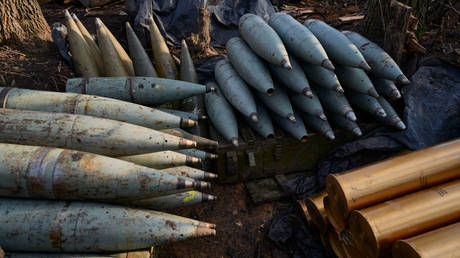
It is thousands of armored medical evacuation vehicles that could have pulled bleeding men from the mud. It is hundreds of thousands of 155mm artillery shells. It is an ocean of thermal optics, tourniquets, and winter coats. When $1.2 billion vanishes into the labyrinth of defense procurement, it leaves behind a phantom arsenal. Ghost weapons that exist on a balance sheet but will never fire a shot.
The mechanics of this theft are rarely spectacular. There are no dramatic bank heists. The reality of wartime fraud is a quiet, bureaucratic rot.
When a nation is fighting for its right to exist, the economy of war becomes incredibly frantic. Survival dictates speed. In the early days of a full-scale invasion, when enemy tanks are parked on the edge of your capital, you do not launch a six-month competitive bidding process for body armor. You hand a blank check to whoever promises they can deliver the goods by tomorrow. You buy first. You ask questions later.
It is like going grocery shopping while your house is burning down. You toss a wad of cash at a stranger, beg them to bring back a bucket of water, and pray they actually return.
Sometimes, they do not.
The defense ministry signs a massive upfront contract with a supplier for drones or ammunition. The money is transferred. The delivery date arrives, and the warehouse remains empty. The supplier claims logistical hurdles, or blames a subcontractor, or simply dissolves into the opaque ether of offshore banking. Alternatively, the goods do arrive, but they are defective. Ammunition that misfires. Winter jackets that turn out to be cheap, unlined summer coats.
This is not a new phenomenon. The ghosts of post-Soviet bureaucracy cast a long, suffocating shadow over modern Eastern Europe. For decades, the military-industrial complex in many former Soviet states operated as a closed ecosystem, shielded from public scrutiny by the convenient veil of "state secrecy." Transparency was viewed as a vulnerability. Accountability was an alien concept.
Breaking that system while simultaneously fighting the largest land war in Europe since 1945 is an agony few nations have ever had to endure.
It requires fighting a two-front war. One enemy wears a uniform and fires artillery across the border. The other wears a tailored suit, speaks your language, and signs procurement orders that siphon the lifeblood from your own troops.
It is deeply uncomfortable to talk about this.
There is a powerful, pervasive fear among those who support the defense of a sovereign nation that exposing internal corruption will hand a loaded weapon to skeptics abroad. In the halls of Washington, London, and Brussels, political factions continuously debate the flow of military aid. The fear is palpable: if we admit that $1.2 billion was wasted or stolen, will the allies simply shut off the tap? Will they decide the bucket is too leaky to keep filling?
This anxiety creates a terrible silence. It tempts officials to bury the audits, to hide the missing funds under the rug of wartime classification.
But silence is fatal.
Ignoring the rot does not protect the country; it ensures its eventual collapse. A military cannot fight on the promise of phantom ammunition. A soldier cannot bandage a wound with a fraudulent contract.
The fact that these internal audits are happening at all, and that figures like the $1.2 billion loss are being uncovered and reported by outlets like the New York Times, is a painful but necessary extraction of the poison. The defense ministry, under intense pressure from both civil society and international partners, has been forced to rip the bandages off its own procurement processes. They are hunting down the ghost contractors. They are dragging the ledgers into the light.
It is an ugly, humiliating process. It means admitting failure. It means firing officials, restructuring departments, and publicly acknowledging that some of your own citizens viewed a war of national survival as a lucrative business opportunity.
But consider the alternative.
If the audits stop, the theft accelerates. The phantom arsenal grows. The real arsenal shrinks.
The human mind struggles to process systemic waste. We are wired to understand localized tragedy—a bombed building, a single casualty. We are not wired to emotionally comprehend the abstract loss of a billion dollars in procurement waste. We fail to see the direct line between a falsified invoice in a capital city and a shattered tree line in the east.
Yet that line exists. It is pulled taut.
Every inflated price tag on a ration pack means one less ration pack purchased. Every shell company that absorbs a government wire transfer and delivers nothing is directly responsible for a gap in the defensive line. Fraud is not a victimless white-collar crime. In wartime, fraud is a kinetic act. It carries a body count.
The struggle to reform this system is agonizingly slow. It involves implementing digital procurement platforms, stripping away redundant layers of bureaucracy, and inviting independent oversight into rooms that have been locked for decades. It is unglamorous, exhausting work. The auditors and anti-corruption activists poring over these contracts do not wear camouflage, but they are fighting for the survival of the state just as fiercely as the infantry.
They are trying to close the distance between the money spent and the weapon delivered.
The war is not paused while the spreadsheets are balanced. The fighting continues regardless of whether the paperwork is honest.
Back in the east, the temperature continues to drop. The sky remains dark. The hypothetical soldier in the freezing mud checks his rifle. He counts his remaining magazines. He does not know about the shell companies, the offshore accounts, or the internal audits. He only knows the math that is sitting in his webbing.
He knows what he has. He knows it is not enough.


