The boarding pass glows blue against the dark of the taxi window. It is four in the morning. Outside, the rain in Chicago is turning the streetlamps into smears of amber grease, but inside the cab, the hum of the heater smells faintly of stale coffee and melting slush.
Elena stares at the screen on her phone. Eight hundred and forty-two dollars. For a fifty-minute flight three states over.
She checks the confirmation number twice. Then three times. She swipes down to refresh, half-expecting the digits to drop, to correct themselves, to blink back into the reasonable numbers she remembers from five years ago when a ticket home for the holidays felt like an afterthought rather than a calculated financial crisis. The numbers do not move. They sit there, cold and unyielding, mocking her resolve.
Her mother is seventy-two. Her father’s hands have grown thin and paper-dry over the last winter, shaking slightly when he tries to thread the fishing line or carve the Thanksgiving turkey. There is a quiet, unspoken geometry to their aging now—every holiday feels less like a reunion and more like a checkpoint. A census of remaining autumns.
She taps the payment button anyway. What choice is there? You cannot put a price on sitting across the kitchen table while the cinnamon rolls bake in the oven, watching the steam rise off the coffee mug your father has held for twenty years. But as the receipt hits her inbox, a cold knot tightens in her chest. She is paying for the ticket with money she had set aside for her car insurance deductible.
Multiply Elena by fifty million.
Across the globe, a massive, quiet migration is underway. Every November and December, the human race packs itself into aluminum tubes, driven by an ancient, stubborn impulse to gather around a hearth before the year dies. We are creatures bound by geography but tethered by blood. We measure our lives not in years, but in Thanksgivings, Hanukkahs, Christmases, and New Years spent under the same roof.
Yet this year, that tether is being stretched to its absolute breaking point.
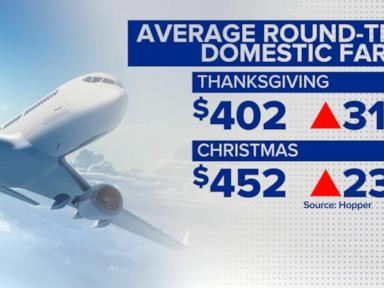
Holiday airfare prices have quietly crested to their highest levels in a decade, transforming what should be a season of warmth into an exercise in fiscal triage. Aviation analysts look at the numbers and speak in dry, bloodless terminology: capacity constraints, jet fuel volatility, corporate demand recovery, pilot shortages. They draw graphs with lines that spike upward like jagged mountain peaks, pointing to macroeconomic forces and yield management algorithms that optimize every single seat for maximum profit.
Numbers do not cry at the baggage carousel.
To understand why a ticket home now costs more than a mortgage payment, you have to look past the spreadsheets and into the mechanics of modern aviation. Airlines are running leaner than they were before the great upheaval of the early 2020s. They learned a harsh, unforgiving lesson during the shutdowns: keep planes full, keep capacity tight, and never, ever flood the market with cheap seats hoping for a late surge.
When demand for holiday travel surges back with the predictable fury of a tidal wave—because humans refuse to surrender their traditions—the airlines do not scramble to add massive fleets. Instead, the dynamic pricing algorithms wake up. They look at the shrinking pool of available seats and they adjust. Up. And up. And up.
It is economics stripped of empathy. A seat on a Boeing 737 is not just a ride; it is a scarce commodity in a market where the supply has been artificially constrained to protect profit margins. Every empty seat flown in October is subsidized by the exorbitant ransom extracted from the traveler trying to see their grandmother in December.
Mark knows this game too well.
He sits in a high-rise office in Denver, staring at a spreadsheet that has nothing to do with aviation. He is a mid-level project manager, thirty-four years old, with two kids under six and a mortgage that eats half his take-home pay. Last week, he sat his wife down at the kitchen island after the kids went to sleep.
They ran the numbers for their annual trip to see his sister in Atlanta. Four tickets. Baggage fees. Parking at the airport. A rental car because public transit is a myth where his sister lives.
"We can't do it," she said softly. She didn't look angry; she just looked tired. The kind of tired that comes from watching grocery prices creep up fifty cents every week while your salary stays stubbornly frozen.
Mark felt a strange, hollow sensation in his throat. It was the feeling of gravity giving way. For as long as he could remember, Christmas meant driving down the interstate or flying south to the chaotic, loud, beautiful noise of his extended family. It was the anchor of his year. It was how he remembered who he was before the deadlines and the bills took over.
Now, staying home meant an eerily quiet living room on Christmas morning. It meant opening presents next to a radiator that clanked in rhythm with the winter wind, looking out at a gray Denver street instead of watching his kids chase his sister's golden retriever across a damp Georgia lawn.
He didn't buy the tickets.
That is the true casualty of record-high airfares. It is not just the extra three hundred dollars extracted from a checking account; it is the erosion of connection. It is the quiet, heartbreaking calculus families are forced to make across kitchen tables every autumn. Do we pay for the flight, or do we pay for the dentist? Do we see the parents this year, or do we save that money for the kids' college fund?
When travel becomes a luxury reserved only for the affluent, the geography of family changes. The ties that bind us across state lines begin to fray. We become isolated islands, communicating through glowing glass rectangles instead of shared meals and messy kitchens.
The airlines will report record revenues this quarter. Wall Street will nod in quiet approval. The executives will collect their bonuses, pointing to high load factors and efficient yield management as proof of a healthy, functioning business model. And technically, they are right. The system is working exactly as it was designed to work.
That is the most terrifying part.
The system is not broken; it is operating with ruthless efficiency. The algorithms are doing what algorithms do: maximizing extraction from a captive audience. When millions of people share the exact same emotional imperative—to be somewhere else, with someone else, by a specific date on the calendar—they become an inelastic market. They will pay whatever it takes, up to the point of absolute ruin, because the alternative is unthinkable.
And so we pay.
Elena’s flight lands in Minneapolis at six in the morning. The cabin smells of recycled air and exhaustion. People stir slowly overhead, unbuckling seatbelts with metallic clicks, eager to escape the cramped confines of row twenty-four.
When she steps off the jet bridge into the terminal, the rush of cold, sharp Midwestern air hits her face. It smells of pine and old snow.
She walks down the corridor, her boots clicking against the polished linoleum, pulling her carry-on behind her. Near the baggage claim, past the row of rental car counters and coffee shops, she sees them.
Her father is leaning against a pillar, wearing his heavy wool coat—the one with the frayed cuffs. Her mother stands beside him, holding a thermos of coffee with a yellow plastic lid, scanning the crowd with anxious eyes.
When her mother spots her, her face breaks open into a smile that erases ten years of worry in a single second. She drops the thermos—it doesn't spill, it's screwed tight—and hurries forward, arms wide. Her father follows, slower, his stride stiff with age, but his eyes bright and wet with relief.
They collide near the baggage carousel. Elena buries her face in her mother’s coat, breathing in the familiar scent of laundry detergent and peppermint. Her father wraps his thin arms around both of them, holding on just a second longer than he used to.
For a few days, the eight hundred and forty-two dollars will not matter. The depleted savings account will fade into the background. The politics of corporate yield management and fuel futures will evaporate under the weight of a warm kitchen, the sound of old jokes retold around a crowded dining table, and the quiet comfort of being known.
But as Elena sits at the gate a week later, watching the snow start to fall outside the massive glass windows of the terminal as she prepares to fly back to the city that demands her presence, she looks at the crowd around her. She sees the young couple counting coins for a pre-flight sandwich. She sees the elderly man traveling alone, staring blankly at a boarding pass he bought six months in advance.
The plane begins to board. Row by row, the human cargo files down the chute, carrying the debt of their affection into the sky.
The cost of going home has never been higher. And yet, as the engines whine and the aircraft tilts upward into the freezing dark, leaving the runway behind, we know with absolute certainty that we will pay it again next year.