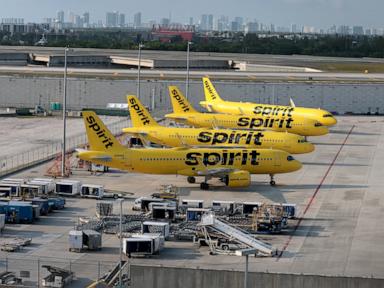
Major legacy carriers are currently positioning themselves as the white knights of the aviation industry by capping fares and adding capacity for travelers stranded by Spirit Airlines’ latest operational collapse. On the surface, it looks like a rare moment of corporate empathy. Underneath the press releases, however, lies a cold, calculated strategy to accelerate the demise of the ultra-low-cost carrier (ULCC) model while securing long-term pricing power. When Delta, United, and American step in to "help" a competitor's customer base, they aren't just moving bodies from point A to point B. They are conducting a masterclass in market share acquisition under the guise of public service.
Spirit Airlines has spent months teetering on the edge of financial ruin. Between grounded planes due to engine issues and a blocked merger with JetBlue, the carrier’s reliability has cratered. When the cancellations start piling up, the legacy giants move in. They offer "distressed passenger protection" rates, which essentially provide a ceiling on what a traveler might pay to rebook on a traditional airline. This prevents the optics of price gouging during a crisis, but more importantly, it introduces the budget-conscious traveler to a premium product they usually avoid. Don't miss our earlier article on this related article.
The Strategy of Forced Upgrading
The legacy carriers are playing a long game that relies on the "halo effect" of a rescue. A traveler who typically chooses Spirit for a $49 seat finds themselves stranded in an airport terminal with a crying toddler and a dead phone. When a major airline offers a capped fare to get them home, that traveler isn't just buying a ticket. They are experiencing a stark contrast in service, reliability, and brand stability.
This is a customer acquisition cost play. Instead of spending millions on digital advertising to lure budget travelers, the majors are using their existing empty middle seats to convert Spirit’s loyalists during their moment of maximum vulnerability. By capping fares, they remove the primary barrier to entry—price—and replace it with a sense of relief. It is much harder for a passenger to return to the world of paid carry-ons and tight legroom after being "saved" by a carrier with a functioning app and a standby list that actually moves. If you want more about the background here, National Geographic Travel provides an in-depth breakdown.
The Myth of the Good Samaritan Fare
We need to look at the mechanics of these fare caps to understand why they are less generous than they seem. When an airline announces it is capping fares for Spirit travelers, it usually applies to specific "rescue" buckets. These are not the lowest fares the airline ever offers; they are simply a ceiling to prevent the algorithm from charging $1,200 for a last-minute domestic flight.
The airlines are essentially filling seats that would otherwise go empty. Since the marginal cost of flying one extra passenger on an already scheduled flight is negligible—mostly just the cost of a bag of pretzels and a few pounds of fuel—every "discounted" rescue fare is pure profit for the legacy carrier. They are monetizing a competitor's failure while earning a PR victory. It is the ultimate business win-passengers are grateful to pay a premium over their original Spirit ticket just to ensure they actually arrive at their destination.
Capacity as a Weapon
In some instances, the major carriers don't just cap fares; they actively add "extra sections" or larger aircraft to routes where Spirit is failing. This isn't just about clearing the backlog. It is a flex of operational muscle. By flooding a route with reliable capacity at the exact moment a ULCC is withdrawing, the majors signal to the market—and to airport authorities—that they are the only ones capable of maintaining the national infrastructure.
If Spirit loses its foothold in key hubs like Fort Lauderdale or Las Vegas because customers no longer trust them to fly, the legacy carriers stand to reclaim the "fortress hub" dominance they enjoyed a decade ago. The elimination of a discount competitor allows for a gradual upward creep in base fares across the entire industry once the crisis has passed and the rescue narratives have faded from the headlines.
Why the ULCC Model is Inhospitable to Crisis Management
Spirit and its peers operate on razor-thin margins and high aircraft utilization. This means there is no "slack" in the system. When a plane breaks or a crew times out, there is no spare aircraft waiting in the hangar. The legacy carriers, by contrast, maintain much larger fleets and more diverse networks. They can absorb a hundred stranded passengers across ten different flights through a hub like Atlanta or Chicago without breaking a sweat.
This structural difference is what makes the "rescue" possible. Spirit’s business model is built for sunny days and perfect conditions. The moment a storm—mechanical or financial—hits, the model's rigidity becomes its downfall. The legacy carriers aren't just better at PR; they are built with the redundancy that allows them to weaponize their stability.
The Bankruptcy Shadow
The urgency of these fare caps and rescue missions is amplified by the looming specter of a Spirit bankruptcy filing. In a Chapter 11 scenario, or a total liquidation, the "rescue" becomes a permanent land grab. Industry analysts have seen this before with the collapses of carriers like Vanguard or Midway. The big players don't just want the passengers; they want the gates, the slots, and the pilot seniority lists to disappear.
By being the first to offer help, Delta and United are essentially auditioning for the role of the traveler's "new" airline before the old one is even cold. They are capturing data, enrolling people in frequent flyer programs, and mapping out exactly how much demand exists on Spirit’s core routes. This is intelligence gathering disguised as altruism.
The Cost of Losing the Bottom Tier
While it is easy to cheer for the airline that gets you home when you're stranded, the disappearance of the ULCC threat is a long-term net negative for the American consumer. Spirit’s primary contribution to the industry was never its "Big Front Seat" or its yellow branding; it was its downward pressure on everyone else's prices.
The "Spirit Effect" is a documented economic phenomenon. When a low-cost carrier enters a market, the legacy airlines are forced to lower their own fares to compete. When the low-cost carrier is "rescued" out of existence, those fares inevitably drift back up. The fare caps we see today are a temporary band-aid that masks the permanent loss of the $99 transcontinental flight.
The Regulatory Blind Spot
The Department of Transportation (DOT) often encourages these fare caps, viewing them as a win for consumer protection. However, regulators often fail to see the anti-competitive undertones. By allowing the majors to play hero, the government inadvertently helps them solidify their oligopoly. If the DOT were truly concerned about the health of the market, they would be looking at why the smaller players are failing to find the capital or the operational support to compete, rather than just praising the big players for picking up the pieces.
The reality of modern aviation is that "help" is never free. You pay for it in the ticket price of the rescue flight, and you will pay for it again in three years when there are only three major airlines left to choose from and no Spirit to keep their pricing in check.
Practical Realities for the Stranded
If you are currently holding a Spirit ticket for a flight that hasn't been canceled yet, you are in a precarious position. The "rescue fares" offered by majors are almost always for passengers who have already been displaced. If you proactively cancel your Spirit flight to book a "cap" on a major carrier, you may find that the cap doesn't apply to you. These protections are reactive, designed to catch the fall, not to facilitate an orderly transition.
Documentation is your only leverage. Keep every screenshot of a cancellation notice and every email. The major carriers will often require proof of your original Spirit itinerary to honor a capped "distressed passenger" rate. Without that paper trail, you are just another last-minute traveler at the mercy of the standard revenue management algorithms, which will happily charge you four figures for a seat in the back of the plane.
The collapse of a budget carrier is a slow-motion car crash that the rest of the industry is watching with predatory interest. The legacy carriers are not your friends; they are your new landlords, and they are currently offering a very attractive "first month free" deal while the old building burns down.
Check the terms of your credit card's travel insurance before you rely on the "generosity" of a legacy carrier's fare cap. Most premium cards provide up to $500 per ticket for "trip delay" or "trip cancellation" expenses, which often covers the gap between what you paid Spirit and what the "rescue" fare costs. Using this insurance is often a safer bet than waiting for a legacy carrier to announce a cap that may not even cover your specific route. Move fast, document everything, and understand that the "hero" in this story is looking at your wallet, not your comfort.


/i.s3.glbimg.com/v1/AUTH_51f0194726ca4cae994c33379977582d/internal_photos/bs/2025/i/r/awbO2yQqaKlcaE88EbfQ/saveinsta.to-487450509-18505253173001043-4348954377809315877-n.jpg)