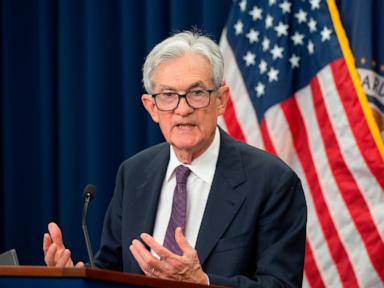
Jerome Powell did not set out to rewrite the rules of global finance, but he ends his tenure having overseen the most radical expansion of central bank power in history. His legacy is defined by a shift from the "inflation targeting" orthodoxy of his predecessors to a more reactive, crisis-driven management style. While he successfully steered the United States through a total economic collapse during the pandemic, the price was a permanent distortion of asset prices and a stubborn inflationary floor that his successors will struggle to dismantle.
The Architect of the Pivot
For decades, the Federal Reserve operated on a simple, albeit rigid, playbook. It moved slowly. It signaled changes months in advance. It worshipped at the altar of the Phillips Curve, believing that low unemployment must inevitably lead to higher prices. Powell broke that machine.
Early in his term, he attempted to normalize interest rates, only to be beaten back by a frantic stock market in late 2018. That was the first crack in the armor. It showed the world that this Fed, despite its rhetoric, was deeply sensitive to Wall Street’s pain. When 2020 hit, Powell didn't just open the windows; he took the doors off the hinges. By moving interest rates to zero and pumping trillions into the credit markets through quantitative easing, he prevented a depression. He also created a dependency that the economy has yet to shake.
This wasn't just about survival. It was a fundamental change in how the Fed views its mandate. Under Powell, the bank moved toward "Average Inflation Targeting." This sounds like technical jargon, but it was a revolution. It meant the Fed would intentionally allow the economy to "run hot" to make up for past misses. They waited for the fire to start before reaching for the extinguisher.
The Transitory Trap and the Great Miscalculation
History will likely judge Powell most harshly for the year 2021. This was the era of "transitory" inflation. As supply chains groaned and consumer demand surged, the Fed remained paralyzed. They viewed the rising costs of used cars and lumber as a temporary glitch in the system. They were wrong.
By the time the Fed acknowledged that inflation was structural rather than seasonal, the Consumer Price Index was screaming toward 9%. This delay forced Powell into a brutal game of catch-up. He had to raise rates at the fastest pace since the Volcker era, slamming the brakes on a housing market that had grown addicted to 3% mortgages.
The volatility of this period exposed a core weakness in the modern Fed's strategy. By waiting too long to act, they lost their ability to be subtle. The "soft landing" became a desperate hope rather than a planned outcome. We saw the results in the regional banking crisis of 2023. When interest rates rise that fast, things break. Silicon Valley Bank was just the most visible casualty of a systemic shift that caught everyone, including the regulators, off guard.
The Social Cost of Asset Inflation
Beyond the interest rate hikes, Powell’s legacy is etched into the widening gap between those who own assets and those who do not. This is the quiet part of the Fed’s impact. When a central bank buys trillions in bonds, it drives down yields and forces investors into riskier assets like stocks and real estate.
The result was a massive surge in net worth for the top 10% of households, while the cost of entry for the American Dream—homeownership—skyrocketed. During the Powell years, the median home price in the U.S. detached from median wages in a way that appears irreversible.
- The Wealth Effect: By propping up the markets, the Fed created a feeling of prosperity that wasn't grounded in productivity.
- The Rent Trap: High interest rates intended to cool inflation actually made housing more expensive for renters, as landlords passed on higher financing costs.
- The Labor Shift: While Powell oversaw record-low unemployment, the quality of that employment and its purchasing power were constantly eroded by the very inflation the Fed helped ignite.
Quantitative Tightening and the New Normal
We are now living through the "Great Unwinding." The Fed is trying to shrink its balance sheet, a process known as quantitative tightening. It is proving to be much harder to take money out of the system than it was to put it in.
The central bank's balance sheet remains bloated. Every time the Fed tries to trim its holdings, the "plumbing" of the financial system starts to leak. Repo markets tighten. Liquidity vanishes. Powell’s successor will inherit a Fed that is no longer just a lender of last resort, but the primary dealer for the entire global economy. This is a dangerous position. It politicizes an institution that is supposed to be independent. It makes every FOMC meeting a high-stakes drama that determines the fate of everything from retirement accounts to the price of a gallon of milk.
The Independence Question
Perhaps the most understated achievement of the Powell era was his ability to navigate a toxic political environment. He was publicly attacked by the very president who appointed him. He was pressured by progressives to use the Fed to fight climate change and by conservatives to stay in his lane.
Through it all, Powell maintained a stoic, almost boring public persona. This was intentional. He knew that the Fed’s only real currency is trust. If the public perceives the Fed as a political tool, the entire fiat currency experiment begins to fail. He kept the institution together, but he did so by expanding its reach so far that it is now impossible to ignore. The Fed is now involved in corporate bond markets, municipal debt, and the minutiae of daily banking in ways that would have been unthinkable twenty years ago.
The Shadow of the Next Crisis
As the Powell era fades, the primary question isn't whether he saved the economy in 2020. He did. The question is what kind of economy he left behind.
We have a federal government that is addicted to cheap debt, with interest payments on the national debt now rivaling the defense budget. We have a stock market that panics at the slightest hint of a rate hike. We have a generation of workers who feel priced out of their own lives. Powell’s legacy is a "barbell" economy. On one end, a highly resilient corporate sector and wealthy investor class. On the other, a precarious middle class and a government staring down a fiscal cliff.
The Fed’s tools are blunt instruments. They are trying to perform brain surgery with a sledgehammer. Powell used that hammer more than anyone before him. He proved that the Fed has the power to stop a crash, but he has yet to prove that it can foster a stable, equitable recovery without creating the next bubble.
The next chair won't have the luxury of a "transitory" debate. They will be dealing with the fallout of a decade where money was free, and the subsequent shock of realizing it never really was. The bill for the Powell era is coming due, and it won't be paid in basis points. It will be paid in the diminished purchasing power of every dollar currently in circulation.
The era of the "Fed Put" is over, even if Wall Street hasn't realized it yet.