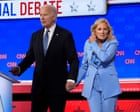
We all saw it happen. On June 27, 2024, tens of millions of people tuned into the CNN presidential debate and watched a political campaign dissolve in real time. It wasn't just a bad night. It was an agonizing, slow-motion collapse. Joe Biden stumbled, stared blankly, and mumbled through a raspy, incoherent 90 minutes against Donald Trump.
Now, nearly two years later, we finally know what was happening behind the scenes.
Jill Biden just admitted that she didn't just think her husband was losing an election that night in Atlanta. She thought he was dying. In a revealing interview with CBS Sunday Morning's Rita Braver, the former first lady confessed to a terror that many viewers shared. She looked at the stage and honestly thought the president of the United States was suffering an acute medical emergency.
"I don't know what happened," Jill Biden said in the interview clip released ahead of its full broadcast. "As I watched it, I thought, 'Oh, my God, he's having a stroke.' And it scared me to death."
This isn't just a retrospective detail. It changes how we view the entire timeline of the 2024 election. It also highlights the deep disconnect between what political families know in private and what they force themselves to say in public.
The Terror Behind the Brave Front
Think back to the immediate aftermath of that debate. The stage lights were still hot when Jill Biden walked out, took her husband by the hand, and led him to a post-debate rally. She looked directly at him and the crowd, declaring that he did a great job, answered every question, and knew all the facts.
It was a performance of pure political loyalty. But we now know it was a total mask.
Inside, she was reeling. "I was frightened, because I had never, ever seen Joe like that before or since. Never," she remarked to CBS. The contrast between her internal panic and her public spin is staggering. It shows the brutal reality of modern political staging. You cannot show weakness, even if you think your spouse is experiencing a neurological crisis on global television.
The campaign spent weeks insisting the performance was merely the result of a bad cold and a grueling travel schedule. They blamed back-to-back trips to Europe. They blamed debate prep fatigue. They told anyone who raised alarms that they were wildly overreacting.
Former Obama speechwriter Jon Favreau quickly pointed out the frustration this admission brings. He noted that voters who trusted their own eyes and ears were gaslit by the campaign and told everything was fine. It turns out the closest person to the president felt the exact same panic.
Anatomy of a Political Breakdown
The debate itself was a disaster from the opening minutes. Biden entered the stage with a weak, raspy voice. His team blamed a cold, but the voice wasn't the real problem. The real problem was the lack of clarity and the visible confusion.
The low point came early when Biden tangled his thoughts on tax policy and the national debt, ending his sentence by saying, "We finally beat Medicare."
Trump immediately seized on the opening, firing back that Biden did indeed beat Medicare to death. Later in the night, when Biden gave a rambling response on immigration and reproductive rights, Trump delivered the final blow, stating he didn't know what Biden said at the end of his sentence, and he didn't think Biden knew either.
It wasn't just political theater; it was a moment where the curtain was pulled back on the reality of aging in the highest office. Biden was 81 at the time. The demands of the job are relentless. Earlier that year, special counsel Robert Hur had already described him in a report as a "well-meaning, elderly man with a poor memory." The debate made that description impossible to ignore.
Why This Timing Matters Now
Jill Biden is breaking her silence now for a very specific reason. She is launching a book tour for her upcoming memoir, View from the East Wing: A Memoir. The book chronicles her time in the White House and promises an inside look at the high-stakes pressure that led to her husband's historic exit from the race.
Joe Biden's exit was unprecedented in modern history. Less than a month after that fateful debate, under immense pressure from congressional Democrats, donors, and cultural figures like George Clooney, he ended his reelection bid. He endorsed Vice President Kamala Harris, leaving her with just 107 days to mount a campaign. He became the first sitting president to step aside from a reelection campaign since Lyndon B. Johnson in 1968.
The memoir will likely attempt to reframe that exit not as a forced retreat, but as a selfless act of patriotism. But this new admission about the stroke fear complicates that narrative. It forces us to ask how long the inner circle knew the president was struggling before the public saw it on stage.
The Lessons of the Inner Circle
Political campaigns are built on the illusion of total control. The biggest mistake handlers make is assuming the public will doubt its own senses if a spokesperson speaks with enough confidence.
If you are managing a crisis, whether in politics or business, transparency always beats a cover-up. The Biden campaign lost crucial weeks trying to defend the indefensible before finally accepting reality. When your closest allies can see something is fundamentally wrong, leaning into the denial only destroys your credibility.
Jill Biden's sudden honesty reminds us that behind the policy debates and strategic messaging, these historical moments involve real people dealing with the terrifying realities of human frailty. She wasn't just a political strategist watching a poll number drop. She was a wife watching her husband falter under the harshest lights in the world, terrified that his health was failing right before her eyes.