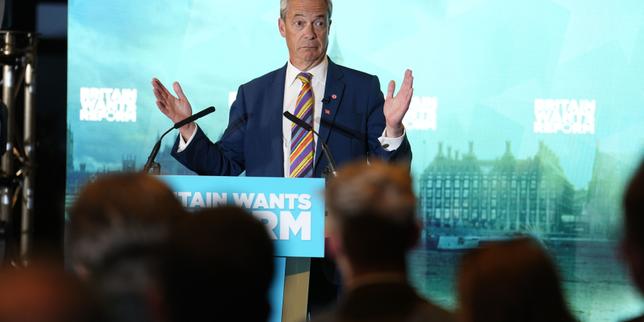
Ten years after Britain voted to pull the plug on its European Union membership, the conventional wisdom about populism has been turned completely upside down. Mainstream politicians originally thought that giving the public a referendum on Europe would "lance the boil" of right-wing anger. They assumed that once Brexit actually happened, the populist insurgent energy would just fizzle out.
They were dead wrong.
Instead of killing off the radical right, the fallout from the 2016 referendum fractured the political system. It shattered the old two-party duopoly and created a permanent framework for anti-establishment parties to thrive. Look at the data from the 2024 UK general election. Nigel Farage’s Reform UK captured a massive 14.3% of the popular vote. While the Westminster first-past-the-post system suppressed their actual seat count to just five MPs, that raw vote total represents over four million citizens turning away from traditional governance. Recent 2026 data shows that this trend is not a temporary protest vote; it is a structural realignment.
The Migration Proxy
The biggest mistake analysts make is assuming the hard right needs the European issue to survive. It doesn't. Once Brexit was finalized, the underlying populist coalition didn't disappear. It simply shifted its focus toward an even more explosive topic: immigration.
Data from the Institute for Government highlights that in local elections, Farage’s party routinely averages roughly 40% of the vote in hyper-local areas that backed Leave by a 60% margin or higher. Conversely, they drop to 10% in areas that strongly backed Remain. The geographic and cultural battle lines carved out during the 2016 referendum remain exactly the same. Only the target has changed.
Mainstream parties have completely failed to realize that Brexit was never just about Brussels regulations or fishing quotas. It was a cultural veto. When the promised post-Brexit border controls failed to lower net migration, it didn't make right-wing voters return to the Conservative or Labour mainstream. It convinced them that the entire political establishment was thoroughly incompetent.
The Broken Electoral Pipeline
Historically, the UK Conservative Party managed to keep the radical right at bay by absorbing its voters. They did it in 2010, and they did it temporarily under Boris Johnson in 2019. But that strategy is completely spent.
- Voter Cannibalization: Nearly 80% of Reform UK's 2024 voters were previous Conservative voters. The Tories didn't tame the beast; they got eaten by it.
- The Age Divide: Brexit aggressively polarized voters along lines of age and education. Younger, university-educated voters fled to the left and center, leaving the right completely dependent on an older, socially conservative base.
- Economic Realignment: These voters are not traditional free-market capitalists. They frequently oppose big business and are highly protective of state pensions and the welfare state, putting them at odds with traditional right-wing economics.
A Blueprint for Global Populism
What happened in the UK did not stay in the UK. The Brexit vote acted as a proof of concept for nationalist movements across the democratic world. It showed that long-standing institutional norms could be thoroughly dismantled if you ran a campaign focused entirely on cultural identity rather than economic projections.
Donald Trump’s 2016 victory followed the exact same geographical and cultural playbook just months later. In France, Marine Le Pen successfully dropped her unpopular policy of leaving the Eurozone, realizing she didn't need to exit the EU to dismantle it from within. By adopting the post-Brexit strategy of focusing purely on border restrictions and cultural protectionism, her party achieved historic gains in the National Assembly.
The UK became a laboratory for political fragmentation. When a major democracy isolates itself economically, it creates persistent instability. That instability fuels the precise grievance narrative that populists need to survive: the idea that the system is broken and only an outsider can fix it.
The Reality of 2026
We are seeing a massive disconnect between public opinion and political structure. European Council on Foreign Relations polling from May 2026 reveals that a clear majority of British voters now view Brexit as an outright failure for the economy and border control. In fact, 58% of actual Leave voters explicitly state that Brexit made illegal immigration worse.
Demographic reality is also biting hard. Since 2016, roughly six million older voters have died and six million young voters have entered the electorate. The new voters favour re-entering the EU by a staggering margin of six to one.
Yet, despite this massive public shift toward wanting closer ties with Europe, the hard right remains incredibly powerful. Why? Because political parties do not just vanish when public opinion shifts. Reform UK and its global equivalents have built permanent media ecosystems, digital fundraising machines, and localized activist networks. They have successfully decoupled themselves from the specific success of Brexit and attached their brand to a permanent state of anti-system anger.
To counter this momentum, mainstream political strategists must stop fighting the battles of 2016. If you run a political strategy based on the old Left-Right economic paradigm, you will lose. The modern political divide is entirely about identity, sovereignty, and cultural security. Mainstream parties must deliver tangible, visible improvements on housing, public services, and regional infrastructure. If local communities continue to feel economically abandoned and culturally ignored, the populist right will keep winning elections, regardless of how badly their previous promises turned out.

/https://tf-cmsv2-smithsonianmag-media.s3.amazonaws.com/filer/c6/97/c697b065-e0bd-4970-81ea-819779296b91/u765404inp.jpg)
