The zipper caught on a strip of silver glitter at 10:45 p.m. on November first.
I remember standing in my hallway with a plastic bag in one hand and a tangled skeleton cape in the other, feeling a strange, hollow guilt that had nothing to do with candy. For three hours the night before, a twelve-dollar vampire vest had been the most important garment in my house. Now it smelled faintly of damp sidewalk leaves, cheap synthetic dye, and crushed smarties. It did not belong on a hanger with my wool sweaters or cotton shirts. It belonged to a single calendar square, already yellowing in memory. Recently making headlines lately: The Endowment Mechanics of Inherited Objects and Intergenerational Attachment.
I tossed it into a bin on top of the dryer, telling myself I would figure out what to do with it later. Later turned into February. February turned into a move across town, and somewhere between packing tape and cardboard boxes, that bag vanished into the great quiet grey area of household clutter.
Most of us treat October thirty-first as a brief theatrical detour. We buy a character off a rack or order a novelty tunic two days before a party, wear it once for a few hours, and move on. Yet the real haunting happens after the porch lights go out. Halloween costumes carry a heavy environmental weight disguised as cheap fun, built out of petroleum-based fabrics that barely last a single evening yet linger in landfills for centuries. Costumes swaps offer a practical way to keep garments circulating, cut down on discarded clothing, and reuse what already exists instead of treating every holiday as a reason to manufacture something brand new. More information on this are covered by The Spruce.
What Makes a Twelve-Dollar Costume So Expensive
When a costume costs less than lunch, the price tag looks like a bargain. That low number only works because the environmental cost gets pushed somewhere else—onto oil refineries, underpaid sewing lines, municipal waste streams, and future soil.
Think of a standard mass-produced costume like a paper plate dressed up as fine china. From a distance, it looks festive and complete. Up close, the material is thin, single-purpose, and engineered to hit a rock-bottom price point rather than endure years of wear. Most off-the-shelf costumes rely heavily on polyester, nylon, acrylic, and polyurethane foam—all variations of plastic spun into yarn or molded into shapes.
Plastic in clothing behaves very differently from cotton, linen, or wool. Natural fibers come from plants or animals and eventually break down under environmental conditions, even if farming them brings its own water and land demands. Synthetic fabrics are essentially long polymer chains derived from fossil fuels. When tossed into a landfill, polyester does not rot away like an autumn leaf. It sits there, stubborn and intact, shedding microfibers along the way and taking decades—often hundreds of years—to degrade in any meaningful way.
Add glitter, metallic foil, glued-on plastic jewels, and multi-layered trims, and the recycling math gets even messier. A single costume might combine woven polyester, non-woven felt, vinyl trim, and metallic film bonded with adhesives. Textile recyclers cannot easily separate those mixed materials without specialized sorting and chemical or mechanical processing that most local recycling programs do not offer. Curbside blue bins are built for paper, glass, aluminum, and certain rigid plastics, not a sequined witch hat or a foam-backed dinosaur suit.
Consider what happens next: millions of households buy seasonal outfits every autumn, and a massive share of those items get worn once or twice before being retired to the back of a closet or thrown straight into the trash. Even when people donate old costumes to thrift stores, charity shops can get overwhelmed by thin, novelty items that tear easily, lack sizing consistency, or arrive right after the holiday when nobody wants a pirate coat until next fall.
I learned that lesson firsthand a few years ago when I tried to clear out a box of party gear before a spring cleanout. Half of it had loose stitching along the seams before it had even been washed once. I felt foolish for buying items that felt disposable the moment I pulled them out of the packaging. It took me a long time to admit that cheapness at checkout often means heaviness everywhere else.
A Saturday Morning on Maple Street
To picture how costume swaps work on the ground, consider a hypothetical neighborhood gathering—let's call it the Maple Street Porch Swap, a fictional Saturday morning event modeled on real community clothing exchanges.
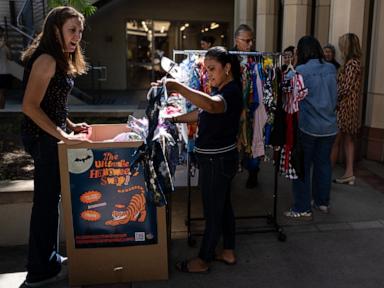
Picture a crisp October morning two weeks before Halloween. Folding tables line a community center lawn or a shaded driveway. A banner made from an old bedsheet flaps gently in the breeze: COSTUME SWAP — BRING ONE, TAKE ONE, OR JUST BROWSE.
Maya arrives carrying a canvas tote holding two items: a maroon velvet cape her son wore last year and a striped referee shirt she picked up at a yard sale months ago. She feels a little hesitant at first. What if nobody wants a size medium cape with a small smudge near the hem? What if she ends up walking away empty-handed and feeling awkward?
Instead, a volunteer greets her by pointing toward a rack labeled Capes, Cloaks & Vintage Pieces. Within five minutes, a dad looking for a low-effort wizard outfit for a school parade pulls the velvet cape off the hanger, holds it up against his shoulders, and grins. Across the table, a teenager who wants to dress as a vintage newsstand worker spots the referee shirt, pairs it with suspenders from another bin, and tries on a tweed flat cap.
No money changes hands. Nobody has to gamble twelve dollars on a scratchy polyester jumpsuit that might rip before midnight. More importantly, nobody leaves with a bag full of brand-new factory plastic just to mark the calendar.
What makes a swap work—and where it can stumble—comes down to simple human friction. A great swap feels welcoming, organized, and low-pressure. A chaotic one turns into a pile of tangled wigs and damp cardboard boxes that nobody wants to dig through.
When organizers sort items loosely by category and size, and set clear expectations about condition—clean, intact pieces without broken zippers or missing major parts—the energy shifts. People stop treating secondhand costumes like leftover junk and start treating them like shared creative raw material.
Why Swapping Feels Awkward Until You Try It
Let's be honest: swapping clothes can feel weird at first.
Some people worry about hygiene, especially with items worn close to the skin, face paint residue, or hats and wigs. Others feel a quiet social pressure to show up with a trendy, complete outfit rather than a half-finished idea or a hand-me-down from three Halloweens ago. And then there is the simplest barrier of all: convenience. Ordering a costume with two-day shipping takes three minutes on a phone. Organizing a swap or visiting a local exchange takes planning.
I used to brush off those doubts with pure idealism, as if caring about waste should automatically override tiredness after a long workweek. It doesn't. Real life is messy. Parents juggle school pickup, work shifts, and dinner prep. College students move every year. Sometimes a kid changes their mind about what they want to be on October twenty-eighth, and there isn't time to hunt down a thrift store across town.
That is where honesty matters more than guilt. A costume swap does not have to be an all-or-nothing purity test to make a difference. Even swapping one piece—a jacket, a pair of boots, a hat, a child's costume—reduces the demand for a brand-new item made from virgin synthetic fibers.
You can also mix swapping with making and mending. A plain thrifted shirt plus fabric paint or iron-on patches can become a custom outfit without buying a pre-packaged plastic set. A torn seam on an old costume can be stitched in ten minutes instead of turning the whole garment into trash. Reuse isn't a single rigid rule; it's a habit of asking, Do I already have something close to this, or can someone near me pass one along?
How Small Exchanges Ripple Outward
Swaps do more than keep polyester out of the bin for another season. They change how a neighborhood relates to stuff.
When you trade a costume with a neighbor, coworker, or local parent group, the item stops being an anonymous consumer product and becomes part of a small local story. A superhero cape might start with a four-year-old, pass to a cousin, show up at a school swap, and end up on a dog or a theater prop table the following autumn. Every extra life a garment gets stretches the energy, water, and raw materials already spent making it.
There is a financial upside, too, especially when household budgets are tight. Buying a new costume every year for one or two kids adds up fast—and that is before counting accessories, tights, makeup, and props. Swapping keeps money in people's pockets while still letting kids play pretend, experiment with identity, and enjoy the excitement of dressing up.
Schools, libraries, community centers, and neighborhood groups are natural hubs for this kind of exchange because they already have trust built in. A simple drop-off box during the first two weeks of October, followed by an afternoon or weekend pickup window, removes a lot of the guesswork. Leftover items that don't get claimed can go to local theater clubs, youth drama programs, or broader textile reuse channels rather than sitting forgotten in a hallway.
Still, swaps alone cannot fix an entire global textile system built on cheap synthetics and overproduction. Anyone claiming that a neighborhood clothing swap solves plastic pollution overnight is overselling a good idea. Real change takes better material choices, longer-lasting garments, smarter waste infrastructure, and shifts in how we shop all year round—not just on Halloween.
Yet scale starts small. A single swap won't empty a landfill. A hundred neighborhood swaps across a city might keep thousands of synthetic outfits in circulation, save families real money, and show people that celebration doesn't require waste.
Bringing the Spirit Back Without the Clutter
Halloween has always been about transformation—stepping out of your ordinary skin for a night, trading roles, laughing in the dark with friends and neighbors. Somewhere along the way, we let a holiday about imagination turn into a routine of single-use plastic.
You don't need a pristine ten-step plan to do things differently next year. Start by looking inside your own closets and storage bins before you open a shopping app. Notice what is already sitting there gathering dust. Talk to a friend, a parent group, or a local community spot about trading extras early in the season while people still have time to browse.
Even better, pay attention to how a piece feels in your hands. Does it seem built to last more than one night? Can it be shared, borrowed, or passed along when the holiday ends?
That night in my hallway years ago, holding a tangled skeleton cape over a plastic bag, I wasn't a villain for buying a cheap costume. I was just someone who hadn't stopped to trace where the night ended.
Plastic.
A single evening of make-believe wrapped in a fabric that will outlive everyone who wore it, waiting quietly in the dark long after the candy wrappers are gone.