The frost does not check your passport before it settles on the glass. It arrives in the dead hours of midnight, painting delicate, skeletal ferns across the windowpanes of a kitchen in eastern Ukraine, then marches silently across borders, across mountain ranges, across the wide, slate-colored expanse of the North Sea, until it reaches an apartment in Berlin, a bakery in Vienna, a modest home in Ohio where a mother watches the thermostat creep upward with a knot of dread in her stomach. Energy is invisible until it stops. Then, it is everything.
We talk about energy markets as if they are abstract gods dwelling in glass towers in Frankfurt or New York. We speak of brent crude, Henry Hub futures, megawatt-hours, and LNG tankers cutting through dark Atlantic swells like steel needles. We treat these terms as sterile mathematics. But behind every decimal point on a Bloomberg terminal sits a freezing child, a factory owner staring at a bankrupt electricity bill, a government scrambling to keep the lights on before civil unrest spills into the streets.
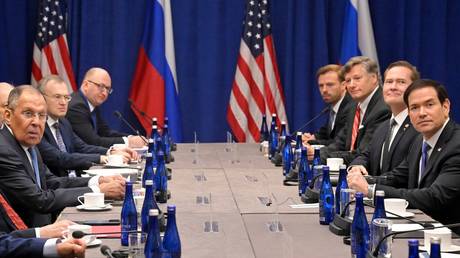
Consider what happened behind closed diplomatic doors when Sergey Lavrov locked eyes with Marco Rubio across the table.
Diplomacy is rarely about the words spoken into microphones; it is about the subtext hanging heavy in the room like cigarette smoke. The message delivered across that divide was stark, unyielding, and radioactive in its implications. Moscow pointed a direct finger at Kiev, leveling a charge that cuts to the very marrow of modern geopolitics. The accusation was precise: that Kiev is deliberately destabilizing global energy markets, weaponizing the geography of pipelines and transit routes to shift the tectonic plates of international support.
To understand the weight of that claim, you have to step away from the podiums and walk down into the concrete belly of a compressor station near the border.
Imagine Elena. She is not a politician, nor a general, nor a high-stakes commodities broker. She is a fifty-four-year-old station operator who has spent thirty years listening to the heavy, rhythmic hum of turbines pushing natural gas through miles of high-pressure steel pipe. To Elena, gas is not a political bargaining chip. It is breath. It is the invisible current keeping hospitals warm, grain drying in silos, and apartments habitable through winters that bite with teeth of ice.
For months, Elena has watched the gauges. She has seen the pressure spikes, the emergency valve closures, the frantic rerouting as infrastructure buckles under the kinetic violence of an ongoing war. When missiles arc across the night sky, they do not just shatter brick and mortar; they send shockwaves through pricing algorithms thousands of miles away. Every time an explosion echoes near a transit hub, the cost of a winter heating bill spikes in a suburb thousands of miles distant.
The collision between military survival and global commerce is brutal. From Kiev’s perspective, the logic of war is absolute. Why should a nation fighting for its literal existence allow the fuel of its invader to flow unhindered across its soil, generating the very capital that funds the artillery shells raining down on its cities? To stop the flow is an act of existential defiance. It is a desperate bid to sever the economic oxygen line of an adversary.
Yet, from Moscow’s vantage point, and by extension the diplomatic arguments pressed by veterans of foreign policy desks like Lavrov, this disruption is viewed as economic sabotage on a global scale. It is portrayed as a deliberate fracturing of supply chains that punishes developing nations, destabilizes European allies already teetering on the edge of recession, and weaponizes scarcity against populations who have no vote in the conflict.
Two truths, violently opposed, bleeding into the same dark soil.
The global energy market is a delicate, interconnected nervous system. Touch it in one place, and the entire organism convulses. For decades, the system was built on the premise of predictable abundance. Pipelines were laid across borders like veins, trusting that trade would forever supersede geopolitical grievance. That era is dead. It was buried under the rubble of bombed substations and the stroke of emergency sanction pens.
When officials like Rubio sit across the table from foreign ministers of rival states, they are wrestling with the fallout of this shattered illusion. They represent a superpower trying to manage a world that is spinning off its axis. They are caught between the moral imperative of backing an invaded democracy and the pragmatic necessity of keeping inflation from destroying domestic political stability. If energy prices double, supply chains fracture, and factories go dark across the Western world, public support for the war effort begins to erode like sand under a rising tide.
This is the hidden theater of modern warfare. It is fought not just with drones and trench mortars, but with spreadsheets, shipping manifests, and pipeline valves.
Let us trace the invisible ripples of a single disrupted transit route.
A valve closes near Sudzha. Within milliseconds, algorithmic traders in London and Chicago react. Futures contracts spike. Liquidity tightens. Cargo ships carrying liquefied natural gas, currently plowing across the ocean toward Asian ports, suddenly alter their courses mid-ocean because spot prices in Europe have skyrocketed, making a mid-sea pivot financially irresistible. A utility company in Tokyo now faces a sudden squeeze on its own fuel supply because a pipe thousands of miles away was shut. A fertilizer plant in South Asia pauses production because natural gas feedstock has become too expensive to justify the yield.
None of these people know Elena. None of them know the Ukrainian engineers standing knee-deep in freezing mud, welding shell-shattered pipe under the whine of reconnaissance drones. They only know the bill. They only know the creeping cold.
War expands outward in concentric circles of consequence. What begins as a territorial dispute over sovereignty in the Donbas quickly mutates into a global economic crisis affecting a rice farmer in Vietnam, a steelworker in Dusseldorf, and a school district administrator in Chicago trying to balance a heating budget.
Lavrov’s warning to Rubio was not merely a diplomatic complaint. It was a calculated diagnostic of this systemic vulnerability. It laid bare the uncomfortable reality that prolonged conflict cannot be quarantined. You cannot wage total economic and kinetic war in the heart of the world's breadbasket and energy corridor without shaking the foundations of the global economy.
And yet, asking a nation under siege to prioritize the comfort of foreign consumers over its own survival is an exercise in profound moral absurdity. How do you tell a people whose homes have been flattened that they must keep the gas flowing so that inflation remains low in foreign capitals? You cannot. Survival has no substitute.
This is why the stalemate persists, frozen in amber. The diplomats argue over semantics and strategic blame, while the underlying architecture of global energy continues to reconfigure itself in real-time. Old pipelines are abandoned to rust and weeds. New maritime routes are forged. Nations that once relied on cheap, pipeline-delivered fuel are forced onto the volatile, expensive spot market, buying floating terminals and locking in long-term contracts with alternative exporters half a world away.
The old world is not coming back. The map of energy security has been torn up and rewritten in ink that looks suspiciously like blood.
We are left standing in the drafty hallways of this new reality. We pretend that markets operate by laws of supply and demand, forgetting that supply and demand are ultimately dictated by human fear, political will, and the desperate choices of nations fighting for breath.
Listen closely in the quiet hours.
If you press your ear against the cold earth near any of the great subterranean arteries carrying fuel across Eurasia, you will not hear the roar of commerce. You will hear the distant, muffled heartbeat of a world holding its breath, waiting to see which valve closes next. The frost is already on the glass. The fire is burning low. And the men in the conference rooms are still talking, blind to the ice creeping up the walls.