The coffee in Caracas does not taste like it used to. It is thinner, bitter with the metallic tang of roasted chicory, stretched to feed a family of four on money that ceased to be real years ago. Mateo remembers when things were different. He remembers the smell of fresh asphalt on the highways in the late nineties, the hum of air conditioning units humming in every window of the middle-class neighborhoods, and the heavy, sweet scent of gasoline that seemed to hang over the entire valley like a permanent fog.
Gasoline was practically water then. It was cheaper than the plastic bottle holding it.
Now, Mateo stands at the edge of a rusting pier in Lake Maracaibo, watching the brown water lap against iron pilings that look like broken teeth. Beneath this dark surface lies a forgotten ocean of heavy crude, billions of barrels of thick, black wealth trapped in the earth. For decades, this oil built empires, funded golden statues, and greased the wheels of international diplomacy. Then came the sanctions, the neglect, the iron fist of governance that squeezed the pumps until they gasped air, and the quiet realization that you cannot drink oil when the taps run dry.
Consider what happens when the geopolitical tectonic plates shift overnight.
When rumors hardened into policy regarding Washington's newly brokered access to these vast Venezuelan reserves, the boardrooms in Houston and the kitchens in Caracas experienced the same sudden drop in atmospheric pressure. People asked the obvious questions: Who gets the money? How fast can the drills turn? Will the rusted valves even open after years of salt water eating their hearts?
The answers do not live in spreadsheets. They live in the grease beneath Mateo’s fingernails.
To understand what a deal granting the United States access to Venezuelan crude actually means, you have to strip away the dry diplomatic shorthand. This is not simply a transaction between two capitals. It is a desperate, complex excavation of history, infrastructure, and survival.
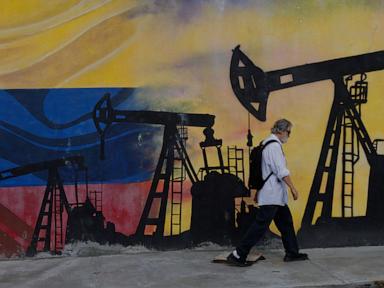
The Venezuelan subsoil holds the largest proven oil reserves on Earth. More than Saudi Arabia. More than Iran. But raw volume is a cruel illusion. Heavy extra-heavy crude from the Orinoco Belt does not gush out of the ground like a geyser in a Western movie. It pours like molasses. It requires specialized upgraders, naphtha to dilute it, and billions of dollars in continuous capital to keep the pumps breathing. When foreign oil companies were forced out years ago, the technical brain drain was absolute. Engineers left for Texas, the Middle East, and Europe. The hardware stayed behind, rusting in the humid Caribbean air, stripped by thieves or cannibalized for spare parts.
Money alone cannot fix a broken machine. It takes time. It takes bodies. It takes trust.
When the agreement was struck to let American energy firms back into the basin under carefully managed licenses, the market reacted with cautious greed. Prices flickered down a few cents at the pump. Analysts on television talked about barrel quotas and strategic reserves as if these were abstract chess pieces. But down here, the stakes are visceral.
Mateo has a daughter studying medicine in a city where the hospital lights flicker out during thunderstorms. Every time he hears about a new tanker chartering a course for the Gulf of Mexico, he looks at the horizon. He wonders if any of that subterranean wealth will ever filter down to buy a single box of penicillin, or if the black gold will simply flow upward, leaving his neighborhood just as dry and fractured as before.
History offers a brutal lesson here. Resource wealth is a phantom. It promises paradise and delivers a cage. In the twentieth century, Venezuela was the gleaming jewel of South America, a nation where skyscrapers pierced the clouds while vast swathes of the interior lived in agrarian poverty. The oil curse is real, and it has long memories. When the taps are turned back on, the influx of foreign capital creates a gravity of its own. It strengthens currency values artificially, crushes local manufacturing, and concentrates power into the hands of whoever holds the valves.
Yet, the pragmatic reality of global energy markets brooks no sentimentality. The world is hungry. Supply lines are brittle, vulnerable to every missile fired across a desert or tanker detained in a narrow strait. American refineries along the Gulf Coast were specifically engineered decades ago to process Venezuelan heavy crude. They are hungry machines, sitting idle or running below capacity, starved for the exact chemical profile that sits beneath Lake Maracaibo.
So the deal was made. Pragmatism superseded purity.
Watch the tankers as they move through the shipping lanes now. They are grey ghosts cutting through the blue. Each one carries two million barrels of potential, enough to fuel millions of morning commutes, airline flights, and manufacturing plants thousands of miles away.
Inside the control room of an aging extraction facility near the coast, an engineer named Elena watches a digital monitor flicker back to life after a five-year blackout. The telemetry is erratic. Red warning lights blink across the board like stubborn stars. She adjusts a greasy dial with a gloved hand, feeling the vibration of subterranean pressure traveling up through miles of steel casing into her palm. The pump coughs. A low, subterranean groan echoes through the pipe. Then, sluggishly, the dark liquid begins to move.
It is only the beginning. The pipes are old, the politics are volatile, and the ghosts of past failures haunt every valve. But the oil is moving. And as the dark stream inches its way toward the light, the world holds its breath, waiting to see what price we will all pay for what comes out of the ground.