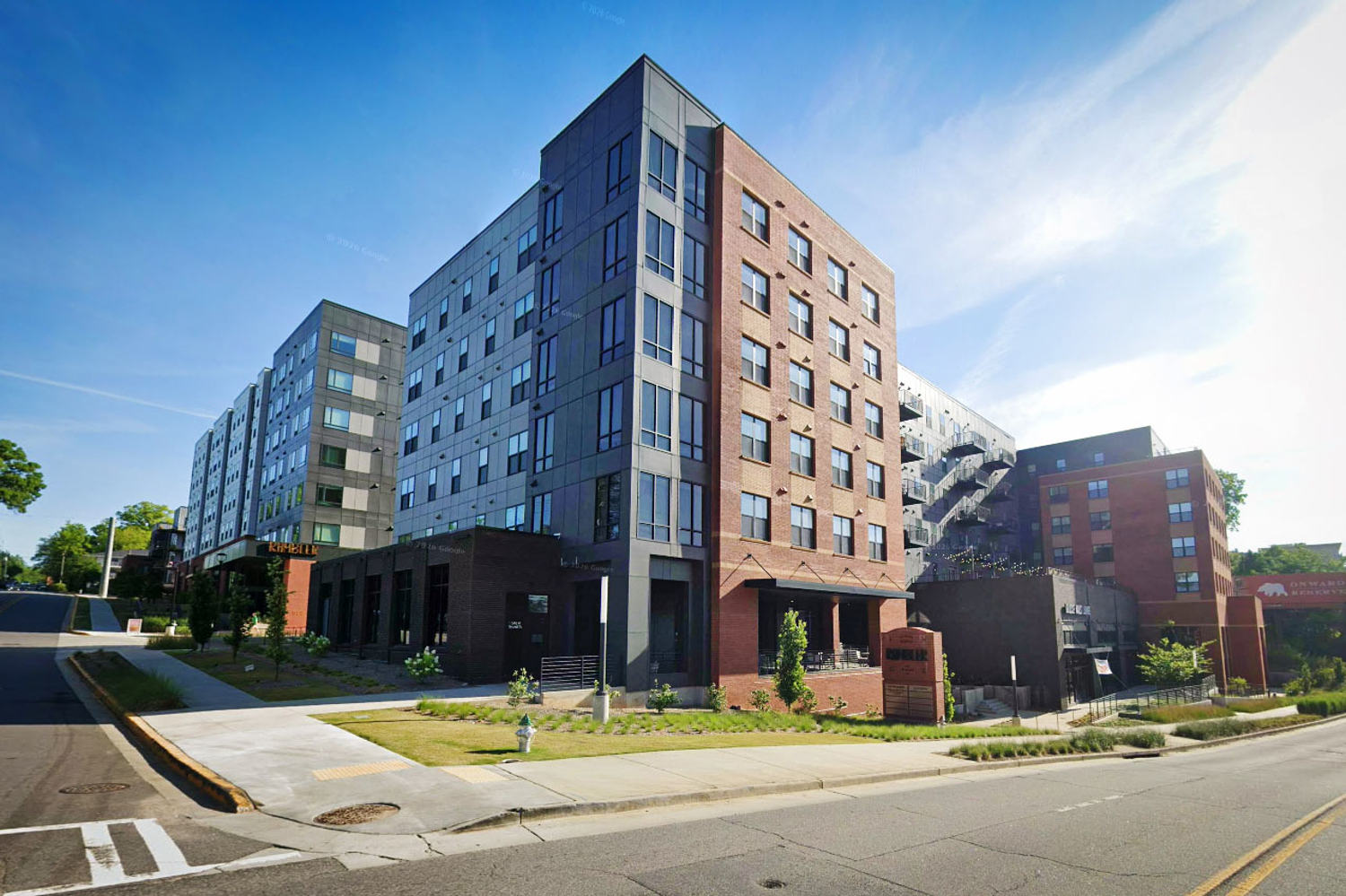
When University of Georgia senior Kristin Sargent tumbled through an eighth-floor apartment window in downtown Athens after losing her balance while dancing on a couch, basic human biology and Newtonian physics dictated a terminal outcome. Falling roughly 65 to 70 feet translates to hitting the ground at speeds approaching 40 to 50 miles per hour. Yet, Sargent survived.
The incident instantly sparked viral disbelief, shifting public discourse from local news briefs into a morbid curiosity about how anyone walks away from an eight-story plunge. Behind the headlines lies a harsh reality of architectural design, kinetic energy, and a vanishingly narrow window of structural interventions that turn fatal events into medical anomalies.
The Anatomy of a High-Rise Drop
To understand why an eighth-story fall is almost universally catastrophic, one must look past simple gravity and examine deceleration. When a body plummets from that elevation, kinetic energy accumulates exponentially. By the time the ground approaches, the body has entered terminal-adjacent acceleration where impact forces exert hundreds of G-forces on vital organs.
Investigators scouring the scene at the Rambler Athens complex discovered an improbable decelerator. Evidence indicated that Sargent struck a metal outdoor bench on her way down, shattering parts of the armrest and leaving blood on the cushion. While striking a piece of metal furniture sounds lethal, biomechanical deceleration theory suggests that a semi-yielding obstruction can act as a chaotic crumple zone. Instead of a uniform, unyielding concrete slab absorbing 100 percent of the kinetic shock instantaneously, the fractured bench distributed the initial energy load across micro-seconds, preventing immediate catastrophic cranial or thoracic explosion.
The High-Density Housing Hazard
This miraculous survival should not obscure a quiet, systemic crisis in off-campus student housing across major American universities. The proliferation of high-rise luxury apartment complexes in college towns has fundamentally altered urban landscapes. Structures scaling eight, ten, or twelve stories now tower over neighborhoods once dominated by two-story duplexes and low-slung residence halls.
These high-density developments prioritize floor-to-ceiling glass windows to maximize aesthetic appeal and market rents. However, modern building codes often allow operable windows to open wide enough to present serious safety hazards when combined with youth culture, elevated furniture placement, and social gatherings. Interior designers push sectionals and couches directly against perimeter walls to maximize cramped square footage, inadvertently creating interior launchpads right next to plate glass barriers.
The Myth of the Unbroken Body
Surviving a fall of this magnitude does not mean walking away unscathed. Media framing often leans heavily on the word "miracle," which risks sanitizing the grueling, multi-year reality of severe polytrauma recovery. Internal deceleration tears organs from their vascular stalks, shatters pelvises, and introduces complex neurotrauma that requires dozens of corrective surgeries.
Emergency medicine professionals point out that survival from extreme heights usually depends on three brutal variables: angle of entry, the presence of intermediate dampening objects like awnings or structural protrusions, and immediate trauma care access. Athens possessed the level-one trauma infrastructure necessary to keep her alive in the critical minutes following impact.
Urban planners and developers must confront the reality of vertical student housing. If young adults are living dozens of feet in the air, window restrictors, tempered safety glass, and interior layout guidelines must evolve to match the genuine physical risks of high-rise living. Until then, structural luck remains the only barrier between a celebratory night and an irreversible tragedy.
Inside the UGA Student's 8-Story Fall Investigation
This video provides a look at the police response and scene investigation following the eighth-story apartment fall in downtown Athens.