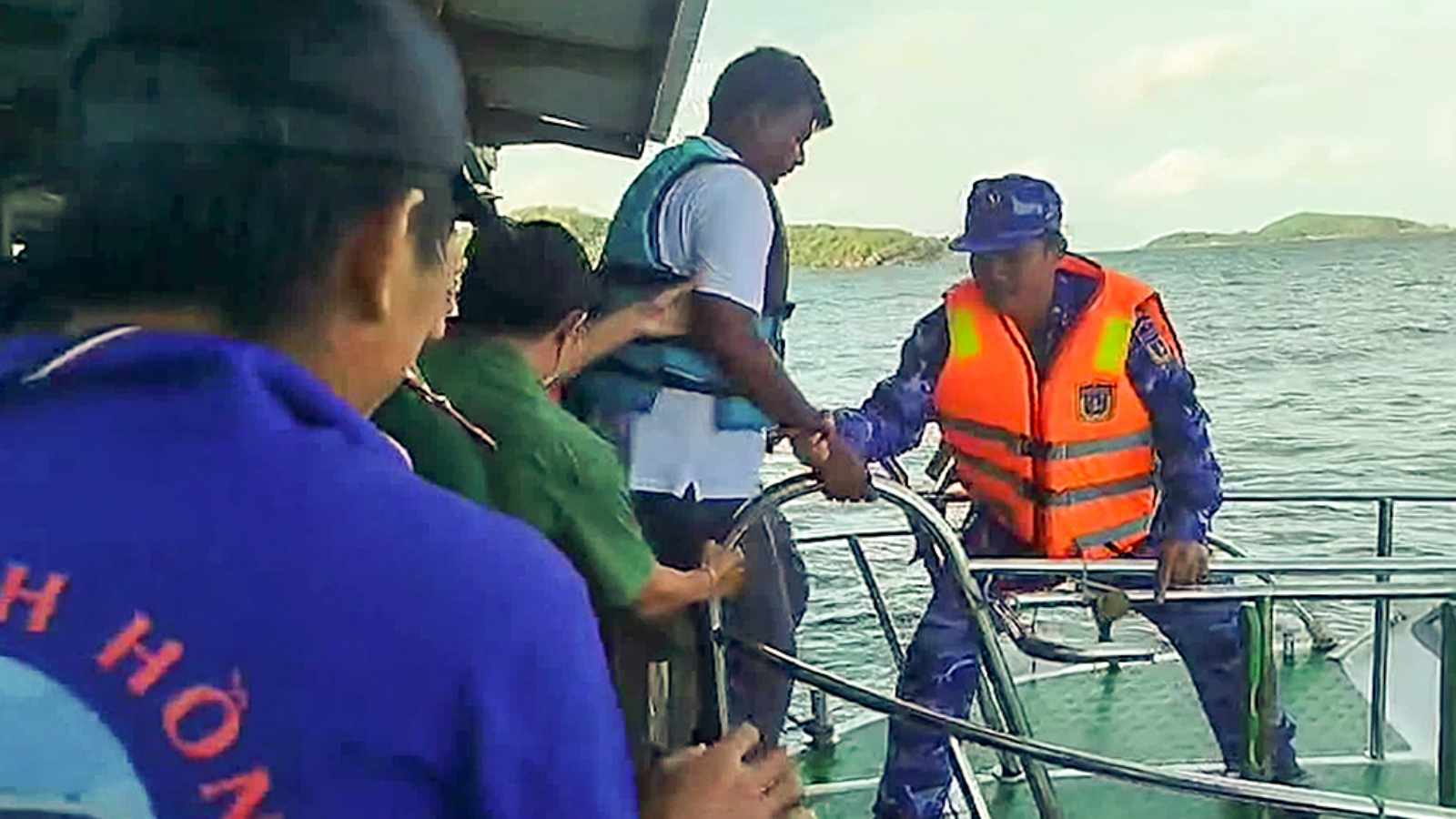
A reward trip for corporate performers shouldn't end with a frantic struggle for air inside a capsized hull. Yet, that's exactly what happened just 400 meters off the coast of Hon May Rut Ngoai island near Phu Quoc, Vietnam. A speedboat carrying 32 Indian tourists and four local crew members flipped over in a matter of seconds. 15 people died.
The victims were mostly mobile phone dealers from across South India, specifically Tamil Nadu, Andhra Pradesh, Telangana, and Kerala, traveling on a corporate incentive trip organized by Lava International. What started as a sunny island-hopping excursion ended in a chaotic, desperate rescue operation in rough waters.
As the repatriation of the bodies begins and survivors head home, the tragedy forces us to look past the shiny travel brochures. It exposes the fragile safety infrastructure hiding behind Southeast Asia's booming island tourism.
The Swift and Deadly Anatomy of the Capsize
The vessel, registered as AG-26751 and operated by Ocean Pearl Island Company, was returning to An Thoi Port on Saturday afternoon. Witnesses say the weather changed instantly. Sudden, violent waves hit the speedboat, and it turned completely upside down before anyone could react.
Phu Quoc Speedboat Accident Breakdown:
- Total People on Board: 36 (32 Indian tourists, 4 crew)
- Total Fatalities: 15 (10 from Tamil Nadu, 3 from Andhra Pradesh, 2 from Kerala)
- Total Survivors: 21 (16 discharged/returning, 1 critical in ICU)
The location of the accident made the high death toll even more shocking. The boat went down less than half a kilometer from the shore. Nearby tourist boats and jet skis rushed to the scene immediately, pulling people out of the water before the coast guard and navy arrived. However, several passengers were trapped inside the overturned hull, making it impossible to get them out in time.
Compounding the tragedy, eyewitnesses reported that multiple passengers were not wearing life jackets when the boat flipped. Though initial assessments by local police labeled the event an "unavoidable incident" caused by rapid weather shifts, the captain, a 57-year-old local man, has been detained by Vietnamese authorities for alleged legal violations related to maritime safety.
Medical Gaps and Repatriation Realities
Surviving the water was only the first battle. Ashish Kumar, an Indian national who witnessed the accident and had friends on the boat, pointed out a glaring issue: the complete lack of emergency medical care on the beach when the survivors were brought ashore.
Phu Quoc is marketed as a world-class luxury destination, pulling in over five million tourists in the first half of 2026 alone. Yet, its emergency response infrastructure clearly failed to match that scale. One survivor, Gelli Kishore from Andhra Pradesh, suffered critical complications during a hospital transfer, experiencing a blood clot in the brain and a mild cardiac episode. He remains unconscious on advanced life support in the ICU, unable to be moved.
For the families of the 15 deceased, a painful logistical process is currently underway. The Indian Embassy in Hanoi and the Consulate in Ho Chi Minh City have set up emergency response centers. The bodies have been moved from Phu Quoc to Ho Chi Minh City to complete official formalities before being flown back to Bengaluru, Vijayawada, and Chennai. Meanwhile, 16 survivors have been discharged and are currently flying back to India.
What You Must Check Before Boarding an Island Tour
Corporate trips and group tours often give travelers a false sense of security. You assume the organizers vetted everything. They usually haven't. If you are traveling to island destinations like Phu Quoc, Phuket, or Bali, you need to take control of your own safety.
- Demand a life jacket immediately. Don't wait for the crew to hand them out, and don't accept a broken strap. Put it on and buckle it before the boat leaves the dock. If the crew laughs it off or says it isn't necessary, get off the boat.
- Look up the weather yourself. Tropical weather changes fast. Check local marine forecasts, not just the standard phone weather app. If there are high-wind warnings or rough-sea alerts, cancel the trip. No excursion is worth your life.
- Locate the emergency exits on covered boats. Speedboats with hard tops or enclosed cabins can easily become death traps if they flip. If you're sitting inside, map out how you would exit if the boat turned upside down. Sitting near the back or in open-air sections is often safer.
- Verify company credentials. Reputable operators carry insurance and follow strict passenger limits. Avoid booking cheap, unbranded boats through street vendors or unverified third parties.
Vietnamese Prime Minister Le Minh Hung has ordered a full review of waterway and maritime safety measures in the region. But government reviews always come too late for the families left behind. True safety requires demanding accountability from tour operators and staying vigilant every time you step onto the water.