The security perimeter of a military installation is not merely a line drawn on an asphalt map. It is a psychological pact. It is the unspoken agreement that the heavy gray gates, the concertina wire, and the armed guards stationed in the shadows represent an absolute boundary between the chaotic noise of the civilian world and the silent, high-stakes mechanics of national defense. When you approach that perimeter, the air changes. It grows heavier. The margins for error shrink to zero.
Yet, human nature remains defiantly, often bafflingly, resistant to administrative boundaries. You might also find this similar article interesting: When a Loaded Firearm Enters a Michigan Daycare.
Consider the strange, unsettling incident at Royal Air Force Fairford in Gloucestershire. A place known for its vast runways, its shelter for heavy strategic bombers, and its atmosphere of hyper-vigilance. Security at an active military base is designed to repel threats from the outside, to screen cargo, to track radar blips across the horizon, and to anticipate coordinated breaches. What it rarely prepares for—what no tactical manual trains a sentry to expect—is the suspect himself picking up a telephone to dial the emergency services and report his own breach.
Static hissed over the dispatch line. The voice on the other end was not whispering from the shadows of a hangar. It was casual, unmoored from the gravity of the situation, reporting an intrusion into a high-security zone from the inside. As discussed in detailed coverage by The Guardian, the implications are worth noting.
To understand why this moment feels so jarring, we have to look past the cold police blotter statistics and examine the peculiar psychology of trespassing. Most people who cross a line they shouldn't imagine a grand cinematic chase. They picture adrenaline spikes, searchlights sweeping across wet concrete, and boots crunching on gravel. They do not picture standing beside a multi-million-dollar war machine, reaching into a pocket, pulling out a smartphone, and placing a routine call to local authorities as if complaining about a minor property dispute.
The absurdity of the act masks a deeper vulnerability. Modern security infrastructure relies heavily on the assumption of malicious intent meeting defensive resistance. It is an adversarial dance. One side hides; the other side hunts. But what happens when the intruder behaves with bureaucratic indifference? When the threat lacks a manifesto, an ideology, or even a basic sense of self-preservation?
Security analysts often talk about defense in depth. Layers of electronic sensors, thermal cameras, roaming patrols, and reinforced fencing. Every single one of those layers is calibrated to detect motion, heat, or metal. None of them are calibrated for cognitive dissonance. When the suspect called the police, he short-circuited the automated logic of the base's defense grid. He bypassed the perimeter entirely by stepping through it, only to hand himself over through the most mundane communication device imaginable.
Let us trace the sequence of events not through a timeline of military protocols, but through the human lens of the dispatcher who answered that call.
Imagine sitting in the dim, blue-lit hum of an emergency dispatch center. The monitors flash with routine traffic reports, medical emergencies, domestic disputes. The air smells of stale coffee and ozone. Then the phone rings. The caller’s voice comes through clear, unhurried, describing a location on an active airfield that no civilian has any business naming unless they are standing right in the middle of it.
For a split second, the dispatcher's brain has to reconcile two mutually exclusive realities. Reality one: RAF Fairford is a tightly controlled military asset, protected by laws that carry severe legal
The Phone Call That Cracked The Perimeter
news
Silence hangs heavy over an active military installation at dusk. The concrete runways stretch into the gloom, smelling of heated asphalt and aviation fuel. Guards scan the shadows. Radar screens pulse with green light, tracking the predictable rhythms of the night. Security is absolute. Until the telephone rings.
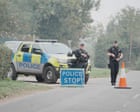
It was not a red-hot crisis line flashing from a subterranean bunker. It was an ordinary telephone call placed to a local police station. On the other end of the line was a suspect, someone who had allegedly breached or compromised the perimeter of Royal Air Force Fairford in Gloucestershire, making the choice to dial the authorities themselves.
Think about that moment of contact.
For security forces guarding installations housing some of the world's most sensitive military assets, the threat model usually looks outward. They train for stealth, for organized intrusions, for coordinated surveillance. They look for ghosts in the dark. They do not typically expect the adversary to pause, pick up a handset, and announce their own presence to the authorities.
Yet, human behavior stubbornly defies standard military doctrine.
When the call came in, it triggered a cascade of protocols designed for moments of high tension. Police units converged. Military security forces shifted from passive observation to active containment. The logistics of handling an intrusion at a site like RAF Fairford—a base historically utilized by the United States Air Force for heavy bomber deployments and strategic operations—carry a unique weight. Every square foot is governed by layers of federal and international security frameworks designed to deter state-level espionage or sabotage.
So what happens when the person driving the incident is the one calling dispatch?
To understand this strange convergence of events, we have to look past the cold police blotter summaries. We have to look at the psychology of modern security breaches. Often, the individuals who test the fences of high-security zones are not master tacticians straight out of a Cold War thriller. They are erratic, driven by personal crises, mental health struggles, or sudden lapses in judgment that leave them stranded between the magnitude of what they have done and the mundane reality of everyday life.
Consider a hypothetical scenario—clearly marked as such, an illustration of human motive rather than verified testimony. Picture someone walking through the damp English countryside at night, their boots heavy with mud. They scale a fence, driven by a compulsion or a delusion that makes absolute sense to them in that specific, frantic hour. But once inside the wire, the grand illusion shatters. The sheer scale of the restricted zone hits them. The hum of the generators, the sweeping arc of the security lights, the chilling realization that they are standing on territory protected by armed response teams.
Panic sets in. The adrenaline gives way to absolute dread.
Instead of hiding, they pull out a mobile phone. They dial the local emergency number because, in that frozen second of clarity, the law enforcement officer feels safer than the silent, forbidding military perimeter closing in around them.
This is the hidden human element behind the headlines of military base security incidents. We read the brief press releases issued by the Ministry of Defence or local constabularies. We see phrases like "securely contained" and "suspect detained following a report." The language is sanitized. It strips away the trembling hands, the confused thoughts, and the sheer administrative headache of sorting out whether an intruder is a genuine security threat or someone crying out for intervention in the most disruptive way possible.
Security professionals face a profound paradox in these moments. Every call must be treated as a worst-case scenario. When a report comes in—even from the suspect themselves—protocols dictate a maximum response. You cannot afford to gamble on the assumption that a trespasser calling the police is merely confused. You deploy dogs, thermal imaging, and tactical teams. You lock down gates. You treat the perimeter as a battleground until proven otherwise.
And then, the anticlimax.
The suspect is located sitting on a curb, perhaps, or waiting near a gatehouse, shivering and ready to surrender before any shots are fired or alarms are permanently tripped.
The Gloucestershire Constabulary and military liaisons handled the RAF Fairford incident with the required procedural gravity. But beneath the official statements lies a reminder of how fragile our institutional boundaries really are. A high-tech base equipped with global communication arrays and multi-million-dollar defense infrastructure can still be significantly disrupted by a single human being making a phone call from the asphalt.
The fences keep the world out. Sometimes, they also trap the chaos within.
As the sirens fade and the reports are filed into secure databases, the base returns to its nocturnal hum. The bombers sit silent in their hangars. The guards return to their posts, eyes fixed on the horizon, watching for the next anomaly. But the memory of the ringing telephone lingers—a stark reminder that the hardest variable to secure in any military installation is the unpredictable, fragile mind of the human animal wandering along its edge.